Get Full Government Meeting Transcripts, Videos, & Alerts Forever!
Get email alerts on the General Plan Progress Report topic
No spam. Unsubscribe anytime.
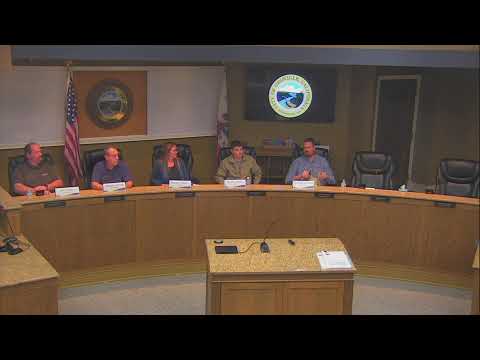
Planning commission accepts general‑plan progress report, staff recommends targeted rezoning and a 2028 update window
Summary
The Oroville Planning Commission reviewed and accepted the city’s annual general‑plan progress report March 27, received staff recommendations to defer a full update until about 2028 and flagged targeted rezoning and zoning‑code cleanups (including areas near Walmart and along Feather River Boulevard) for earlier action.
Oroville — The Oroville Planning Commission accepted the city’s annual general‑plan progress report March 27 and discussed a set of follow‑up recommendations, including targeted rezoning, expanded use of overlays and a recommendation that the next comprehensive general‑plan update not begin until about 2028.
Planning staff summarized the report as an annual review of the city’s general plan (adopted in February 2009, updated in February 2015), its policy elements and maps. Staff said the update is required periodically but noted the plan remains broadly sound and that only targeted changes and follow‑up actions are recommended now.
‘‘It is an annual report…The recommendation in here is when to begin the next update,’’ a planning staff presenter said, and recommended not starting a full update for several years, suggesting 2028 as a reasonable target.
The report reviewed required general‑plan elements (land use, circulation, open space, safety), optional elements and several overlay maps and specific plans (including a Foothill overlay, downtown historic overlay and the Oro Bay specific plan). Staff recapped changes since 2015: four annexations, 11 general‑plan amendments, and the city’s replacement of level‑of‑service with vehicle‑miles‑traveled (VMT) in the circulation element and an updated safety element tied to the local hazard mitigation plan.
Commission discussion focused on more immediate, targeted actions that staff could handle within existing bandwidth. Commissioners suggested rezoning or code cleanups in several neighborhoods where zoning does not match current land uses — for example, areas near Walmart and along portions of Feather River Boulevard — and recommended streamlining a process for periodic small‑scale rezones or overlays that could be delivered in batches rather than waiting for a full general‑plan overhaul.
‘‘I’m recommending that we don't start the next update until about 2028,’’ the presenter said, noting the staff view that the plan’s goals and policies remain largely current and that smaller, prioritized changes would better use limited staff resources.
Commissioners also discussed encouraging downtown revitalization, revisiting height limits in certain industrial zones where taller stacks or facilities might be proposed, and the potential for a medical or hospital overlay near the hospital. Staff said larger changes—like a comprehensive zoning code rewrite or major rezones—would require substantial public input and consultant resources, while smaller corrections could be scheduled and undertaken sooner.
The commission indicated consensus to accept the annual report and asked staff to present the report to city council. Staff said it would email commissioners a list of suggested minor code changes and zoning areas for potential rezoning work and continue to pursue larger items on a longer timeline.
The report will be presented to Oroville City Council on April 1, and staff said the next comprehensive general‑plan update is recommended to begin around 2028 unless circumstances necessitate an earlier review.
Background: The general plan, adopted in 2009 and updated in 2015, provides the city’s vision and policies on land use, transportation, safety and other elements. Staff noted the city’s growth has been uneven since 2015 (including a temporary population increase after the Camp Fire) and that the plan’s circulation and safety elements were previously updated to comply with state guidance on VMT and hazard mitigation.