Get Full Government Meeting Transcripts, Videos, & Alerts Forever!
Get email alerts on the Mobile Food Vending Villages topic
No spam. Unsubscribe anytime.
Planning commission approves two mobile food-vending village permits subject to staff conditions after weeks of negotiation
Summary
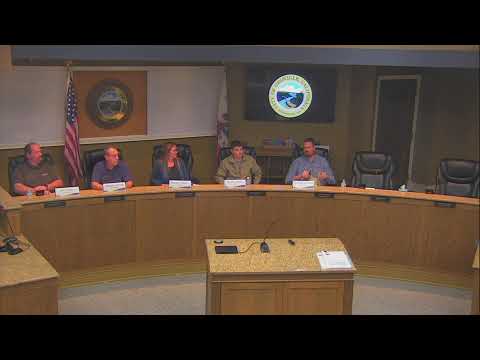
Oroville — The Oroville Planning Commission voted unanimously March 27 to approve two conditional use permits for mobile food–vending villages, subject to staff’s recommended project‑specific and ongoing conditions.
Oroville — The Oroville Planning Commission voted unanimously March 27 to approve two conditional use permits for mobile food–vending villages, subject to staff’s recommended project‑specific and ongoing conditions. The commission’s action clears the applications to move forward so long as applicants meet a detailed list of conditions before issuance of building permits and as ongoing operational requirements.
The use permits implement a recent amendment to Title 17 that allows up to three food‑truck vending villages in Oroville; staff recommended the permits be approved on the condition that applicants provide a site plan staff can analyze and that the projects meet a set of project‑specific and ongoing conditions intended to protect public health, safety and welfare.
Planning staff told the commission the city has no active food‑vending villages and that the ordinance is new. Staff said it could not determine whether the proposed layouts met the intent of Title 17 without clearer site plans and asked that approval be conditioned on submission of a site plan showing truck locations, dedicated truck parking, pedestrian circulation, restroom placement and accessible routes of travel.
‘‘We are recommending approval of this subject to the draft resolutions next step, which would be a site plan that we feel comfortable analyzing and working with,’’ a planning staff member said during the public hearing.
Applicant Scott Hubbard, who described himself as an operator of food‑truck businesses and a local gas station owner, said he reduced his original proposal from a larger number of trucks down to six and that most of the dispute was legal, not practical. Hubbard argued the Americans with Disabilities Act (ADA) and California building code requirements generally do not apply to food trucks that operate on vacant lots without a certificate of occupancy.
‘‘The ADA doesn't apply to food trucks parked on vacant lots,’’ Hubbard said. He said many food‑truck operators are single‑person businesses and that imposing full building‑type accessibility requirements on a mobile operation would be difficult to implement.
Building plans examiner Rick Malden, who identified himself as a city building consultant and certified access specialist, told the commission the city’s adopted accessibility code (California Building Code Title 24, Chapter 11B) and its amendments require that sites and facilities established as public accommodations provide accessible routes and features. Malden said the trucks themselves may be temporary but the site improvements the applicant proposes create a public accommodation that must provide on‑site access.
‘‘The site itself has to be accessible to for persons with disabilities,’’ Malden said, and described a compromise staff and the applicant had reached: include at least one hard‑surfaced, van‑accessible parking space with an access aisle, signage, a short accessible route to a common seating area and an accessible single‑user restroom on site or accessible by an accessible route.
The city attorney (unnamed in the record) told commissioners the city has discretion to impose conditions on conditional use permits to protect public health, safety and welfare and to prevent discrimination, even where strict ADA or building‑code triggers are debated. The attorney noted the question before the commission was partly legal interpretation and partly discretionary land‑use judgment.
Commissioners questioned which specific accessibility elements would be required and whether requiring a single hardscaped, marked van‑accessible stall and an operational plan for vendor service to persons with disabilities would satisfy both safety and liability concerns. Staff said project‑specific conditions (listed in the draft resolutions) are normally provided later in the review process but asked the commission to require them up front because these would be among the city’s first such vending villages.
Public comment included a brief statement from a nearby resident who said the site plan did not appear to allow sufficient parking or safe on‑site vehicle maneuvering.
After discussion about legal risk, practical enforcement and the amount of compromise already made in the recommended conditions, a commissioner moved ‘‘that we follow staff's direction on this item exactly as it is written’’ for both pending use permits; another commissioner seconded. The motion passed unanimously by the commissioners present.
The approvals are conditioned on the project‑specific and ongoing conditions contained in the draft resolutions, including: submittal of a versioned site plan that clearly shows truck locations, customer parking and pedestrian circulation; at least one designated hard‑surfaced van‑accessible parking space with signage and an accessible route to a common seating area; provisions for an accessible single‑user restroom or an accessible route to restrooms; and an operational plan describing how vendors will serve customers with mobility or other access needs. Staff said the city would process notice of exemption as infill for both sites subject to those conditions.
The applicant said he remains willing to negotiate detailed language with staff and the zoning administrator but that he disagrees with the legal view that the full technical building‑access standards must apply; staff and the building consultant said the site improvements creating a public accommodation bring accessibility obligations into play. The commission’s unanimous vote adopts staff’s recommended conditions pending the required site plans.
Next steps: the applicants must submit the detailed site plans and other items specified in the resolutions before the city issues permits. The commission noted parties may seek administrative appeal or bring the matter to city council if they disagree with the commission’s interpretation or conditions.
Votes at a glance: The motion to approve both use permits subject to staff-recommended conditions passed unanimously. The record shows five commissioners present for the vote: Chair Jenkins, Commissioner Hamilton, Commissioner Zilic, Commissioner Jensen and the Vice Chair (name not specified).