
Tribes seek Tribal Health Authority Council to coordinate Medicaid, access and federal relationships
Get AI-powered insights, summaries, and transcripts
Sign Up Free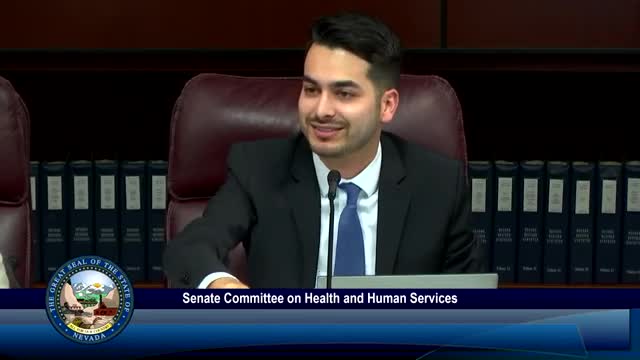
Summary
SB312 would create a Tribal Health Authority Council to improve coordination between Nevada tribes and state agencies on Medicaid enrollment, managed care participation and Indian health care delivery; tribes framed the change as strengthening government‑to‑government collaboration.
CARSON CITY — Tribal leaders and health‑care administrators told the Senate Committee on Health and Human Services that Senate Bill 312 would create a Tribal Health Authority Council to improve coordination among Nevada tribes, the state and federal partners on Medicaid, managed care and Indian health‑care delivery.
What the bill would do: SB312 would establish a statutory Tribal Health Authority Council as an advisory and coordinating body, create an account to support the council’s operations, authorize the Department of Health and Human Services to work with the council to develop Medicaid reinvestment recommendations and allocate start‑up funds to the Department of Native American Affairs to staff the council.
Why supporters want it: Tribal speakers said the council would provide sustained, government‑to‑government collaboration on access, reimbursement and Medicaid enrollment for American Indian and Alaska Native beneficiaries. They argued better state‑tribal coordination can increase federal Medicaid reimbursement rates to the state when tribal clinics furnish services and can help tribes expand in‑state specialty care and pharmacy access.
Key details and clarifications
- Tribal sovereignty and federal trust responsibility: Testimony emphasized the political (not race‑based) nature of the federal‑tribal relationship and noted that many federal benefits and exemptions (for cost sharing, provider enrollment and federal tort claims act coverage) apply to Indian health programs.
- Medicaid mechanics: Speakers said tribes generally can help enroll Medicaid‑eligible members and that when American Indian and Alaska Native beneficiaries get services in Indian health or tribal clinics the state can receive federal medical assistance percentage (FMAP) reimbursement. Nevada tribes described a successful state‑plan amendment enabling expanded pharmacy reimbursement and a recent CMS approval that will increase state FMAP reimbursements tied to tribal clinic billing.
- Council composition and operations: The bill text provided for voting membership by Indian health, tribal health and urban Indian programs (ITUs), ex officio members from state agencies, quarterly meetings, a coordinator appointed by the Department of Native American Affairs and an account to accept state, federal and private funds. Sponsors and tribal leaders said they will continue to refine membership, meeting logistics and reimbursement mechanics.
Status and next steps: Tribes, the Department of Native American Affairs and state health agencies said they plan to continue technical work to finalize appointments, quorum and operational details. Committee members asked about member participation and access; sponsors indicated remote participation and representation through ITUs would be considered to ensure broad involvement.
Provenance
- Topic intro evidence: block_700 ("I will open the bill hearing on senate bill 3 12. This bill enacts provisions relating to the health of American Indians, Alaska natives, and native Hawaiians.") - Topic finish evidence: block_879 (closing the hearing and moving on)