Get Full Government Meeting Transcripts, Videos, & Alerts Forever!
Get email alerts on the In Response Crisis Response topic
No spam. Unsubscribe anytime.
Santa Rosa—s In Response crisis teams: commissioners hear data on calls diverted and effect on police response times
Summary
Commissioners asked for follow-up data and heard staff say the In Response crisis program diverted thousands of mental-health-related calls from police in 2024, helping lower priority 1 police response times to under six minutes in recent months.
Commissioners asked for detailed outcomes from Santa Rosa—s In Response crisis team during the planning commission discussion of the 2024 general plan annual report. City public-safety staff and the program—s liaison described call volumes, diversion metrics and the program—s role in coordinating follow-up services.
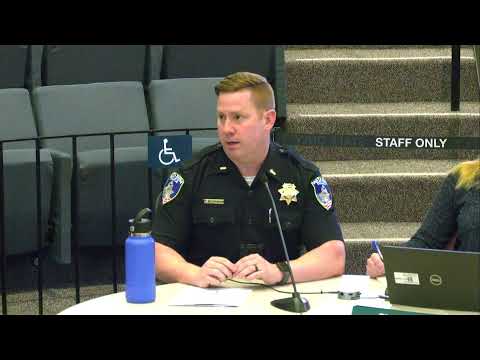
Program scope and performance: Lieutenant Chris Mahurin, the In Response liaison, told commissioners that In Response handled 4,977 calls in 2024. "In 2024, In Response responded to 4,977 calls, and the vast majority of those officers never responded," Lieutenant Mahurin said. He added staff estimates officers did not respond to roughly 4,300 of those calls because the crisis team addressed them directly, allowing police to remain available for other calls.
Effect on police response times: staff and department leaders said the diversion contributed to improved priority 1 response times. "For the first time in as long as I can remember, we're actually sub 6 minutes for a response time on a priority 1 call," Mahurin said. City police staff earlier noted year-end priority 1 response averaged about six minutes, 31 seconds in 2024, improving from 6:57 the prior year.
Follow-up and navigation services: commissioners were told the program includes system navigators who follow up on calls and help connect people to services. Mahurin said In Response received an additional roughly 600 unique client calls to the office for resource navigation beyond the dispatched calls. The city also operates a hospital liaison navigator position to coordinate discharge planning and placement with Memorial Hospital social workers.
Funding and staffing: commissioners were told the program began under ARPA funding; ongoing support now includes a Measure O allocation of $1,450,000. Staff said In Response moved to a 24/7 operational model in December 2024, though commissioners and staff noted periodic staffing gaps remain that affect overnight/weekend coverage.
Geography and client profile: staff said In Response activity is citywide but with higher concentrations downtown in areas with clustered unsheltered services. City staff said about one-third of clients served over a year are new contacts; the remainder are recurring contacts.
Metrics requested: commissioners asked staff to return with more detailed diversion and outcome metrics, including post-drop-off status for clients and longer-term outcomes. Staff said they would gather diversion-rate analytics, hospital liaison outcomes and other statistics for future briefings and for the general plan review in April if available.
Ending: commissioners praised the program—s work and asked staff to present more granular performance data in a future meeting so the public and policymakers can judge long-term impact and cost-effectiveness.