Get Full Government Meeting Transcripts, Videos, & Alerts Forever!
Get email alerts on the Rural Healthcare Clinic Contract topic
No spam. Unsubscribe anytime.
Northern Nye trustees extend Frontier Medical Group contract 60 days as community pushes to keep clinic open
Summary
The Northern Nye County Hospital District voted 4-0 on March 27 to extend an emergency contract with Frontier Medical Group for 60 days while the district and provider negotiate a longer-term agreement and seek ways to stabilize clinic operations and billing.
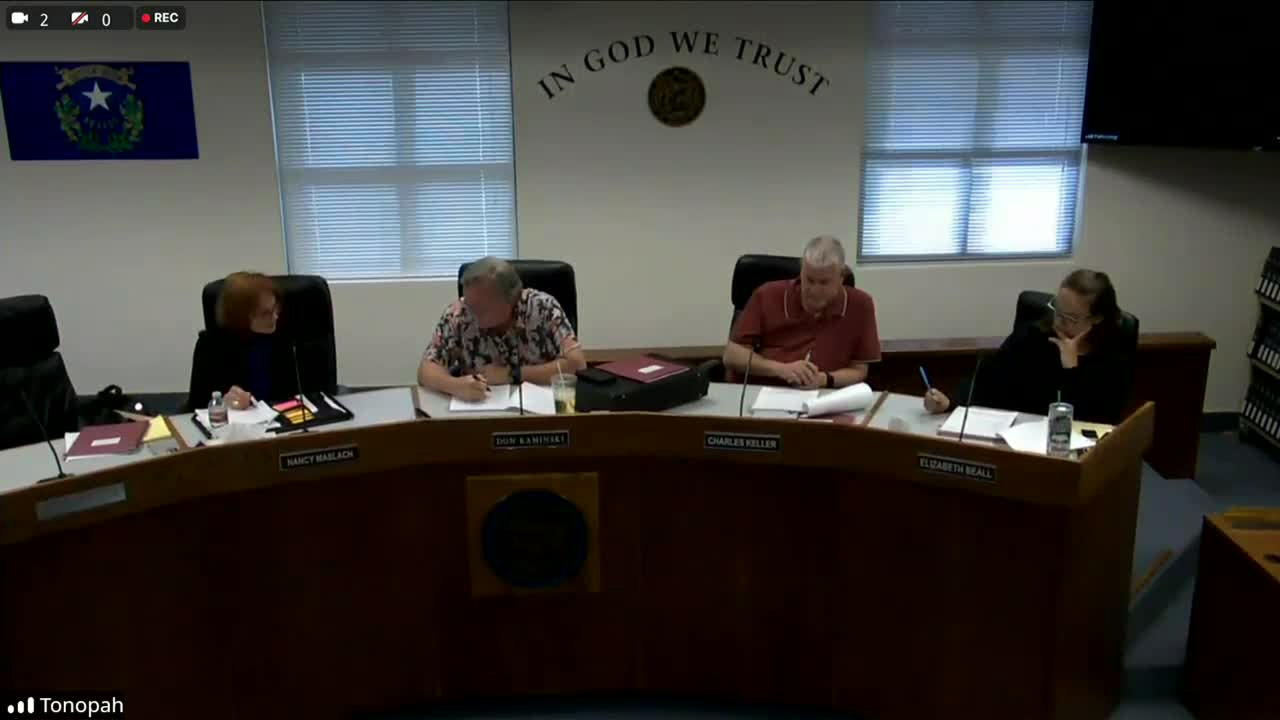
The Northern Nye County Hospital District Board of Trustees voted 4-0 on March 27 to approve a 60-day emergency extension of its contract with Frontier Medical Group, the company that operates the urgent-care clinic in Tonopah.
The extension, approved as an emergency measure, incorporates the current signed contract’s terms and runs through May 30, 2025. The board directed its attorney to work with Frontier to draft a more detailed, longer-term agreement and asked staff and the provider to prepare a prioritized “wish list” of services and staffing the community needs.
Trustees and public commenters repeatedly framed the vote as aimed at avoiding a gap in local primary and urgent-care access while the district and provider sort out funding, billing and staffing. Dr. Govan Coker, who oversees Frontier’s operations in Tonopah, told the board he needs an assurance of 12 months of funding before he can reliably recruit and hire full-time providers: “So I need, a 1 year worth of money, not all at once. It can come every month.” He said a year of funding would let him offer stable positions instead of relying on higher-cost locum or travel providers.
Public commenters urged the board to keep Frontier in place. Multiple speakers, including residents Joseph Greber, Carmen Greber and Paul Campos, said they rely on Frontier for timely care and worried that finding a different provider would set the community back. Commissioner Bruce Jabbour told the board the district and community partners needed to work together to preserve services and warned of legal and grant-management risks if contracts are not properly structured.
Board discussion focused on three practical constraints: (1) legal limits the district faces under Nevada Revised Statutes on how it may provide funds to private contractors, (2) the clinic’s inconsistent cash flow and billing setup that has delayed some payments, and (3) the local ambulance/REMSA arrangements that affect where patients can be transported. District counsel highlighted the need for measurable performance requirements and records (billing, visit counts, hours) so the district can audit performance before providing further public funds.
Frontier’s current service pattern discussed at the meeting is two telemedicine days (Tuesday and Wednesday) and two in-person days (Thursday and Friday). Dr. Coker said that, with consistent funding, he could expand to three or four in-person days depending on the provider hired; without that year of commitment he cannot promise a full-time hire.
District staff and trustees asked Frontier and other local providers to produce a prioritized list of services, hours and staffing the board should require in a longer-term agreement. The board also asked clinic operators to address billing issues identified by the attorney and community members, and to explore cooperative arrangements with REMSA crews and with Tonopah Primary Care (Marie Peterson) to avoid duplicative services and to maximize coverage.
The board called out several financial facts cited at the meeting: the district has an active HRSA (federal) grant of about $2 million restricted for hazardous-material remediation at the old hospital property (staff said the grant must be used by August 2025 for specified demolition/reclamation work), and Frontier had previously been paid unevenly while contract language was revised after legal review. Commissioner Jabbour cited a figure Dr. Coker provided saying he had subsidized clinic operations from his own funds (the transcript records “close to $253,000” as an amount Dr. Coker put in personally). Trustees said the district will continue to pursue grants and county support while holding Frontier to specific operational requirements.
The board’s motion extended the existing signed agreement for a maximum 60 days, retroactive to the last signed date, and directed the district attorney to circulate an interim agreement for signatures. The motion passed on a 4-0 vote.
Votes at a glance from the March 27 meeting included approval of this extension and three other routine items: acceptance of minutes from the March 13 meeting (approved 4-0), approval of the FY 2023–24 audit (approved 4-0) and approval to remove a propane tank on district property (approved 4-0). The chair said the attorney would work with Frontier and the board during the 60-day window to produce a more detailed, enforceable contract for later consideration.
Looking ahead, trustees scheduled a workshop (April 25) to develop the operational and financial specifics the board wants included in a long-term agreement. Attendees asked Frontier and other local providers to submit proposed service lists and staffing models to inform that workshop.
The vote preserves clinic availability in the near term while the district, its legal counsel, Frontier Medical Group and other local providers work to agree on measurable requirements, billing practices and funding sources that would support more-stable, long-term care in Tonopah.