Get Full Government Meeting Transcripts, Videos, & Alerts Forever!
Get email alerts on the Public Records topic
No spam. Unsubscribe anytime.
City attorney tells Ethics & Governance Committee how Texas Public Information Act applies to officials
Summary
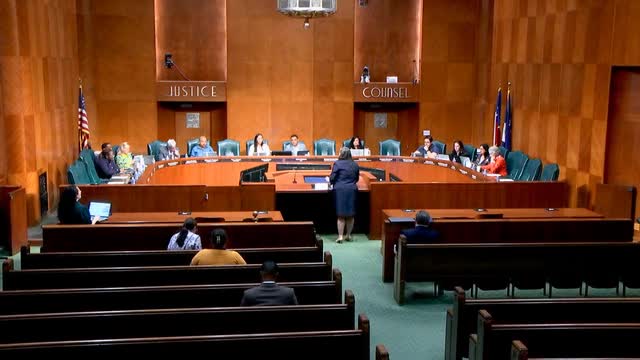
Senior assistant city attorney Danielle Folsom briefed the Ethics and Governance Committee on how the Texas Public Information Act (TPIA) defines public information, what exceptions apply, and practical steps council members and staff should take when handling potentially confidential records.
Danielle Folsom, a senior assistant city attorney, told the Ethics and Governance Committee of the Houston City Council that records related to city business are presumptively public under the Texas Public Information Act and that officials must follow an administrative process with the Texas Attorney General before withholding records.
Folsom said the act covers information “written, produced, collected, assembled, or maintained” in connection with city business, and that it can include materials held by third parties or communications on personal devices when the content relates to official business. She emphasized that the law is content-based, not device-based: “The good way of thinking about the act is it’s very content based, not device based.”
The presentation outlined the two broad categories of exceptions: mandatory exceptions that make information confidential by law (for example, medical or other statutorily protected records) and discretionary exceptions such as attorney–client memoranda, drafts of pending legislation, or material related to pending solicitations. Folsom described the city’s typical process for handling requests: public information officers in departments gather and redact records, the legal department reviews and, when needed, sends questions or disputes to the Texas Attorney General for a binding ruling.
Folsom reviewed criminal and local-code penalties for improper disclosure. She cited a state provision prohibiting distribution of information confidential under the TPIA (Government Code section 552.352 as described in the briefing) and noted that more serious criminal liability can apply when disclosure is done with intent to obtain a benefit or to harm or defraud (Penal Code section 39.06). At the local level, she cited City Code provisions that bar using confidential information to advance private interests and that allow discipline for other employees who disclose protected records.
Committee members asked practical questions about commonly encountered situations. Folsom advised officials to note disclaimers on materials they receive and, when in doubt, to consult the department custodian, the city public information officer (PIO), or the legal department. She explained the city’s case-management system for public-information requests (GovQA) and urged officials to forward any city-related text or messages on personal devices to their city email accounts when they want that content archived on city servers.
The presentation also covered third‑party proprietary claims in solicitations. Folsom said vendors may identify parts of proposals as proprietary, and that the city follows statutory notice and Attorney General procedures to determine whether particular material must be withheld. She warned that some information in awarded contracts still may be withheld if the Attorney General rules it proprietary.
Folsom encouraged committee members and staff to complete the Attorney General’s Public Information Act training and to contact the legal or PIO teams early when they receive a records request or are unsure about the status of material.
Committee chair and members thanked Folsom for the briefing and discussed scheduling TPIA training for council offices and PIOs.