Get Full Government Meeting Transcripts, Videos, & Alerts Forever!
Get email alerts on the Parks Governance topic
No spam. Unsubscribe anytime.
Council presses park board, staff on park operations, hot tax oversight and conflict‑of‑interest audit
Summary
Council discussed multiple park governance issues: whether the city should assume operation of revenue‑producing parks, returning short‑term‑rental and hotel occupancy tax (HOT) collection to the city, an internal audit finding of employee conflicts at the park board, and steps to improve HOT audit and collections.
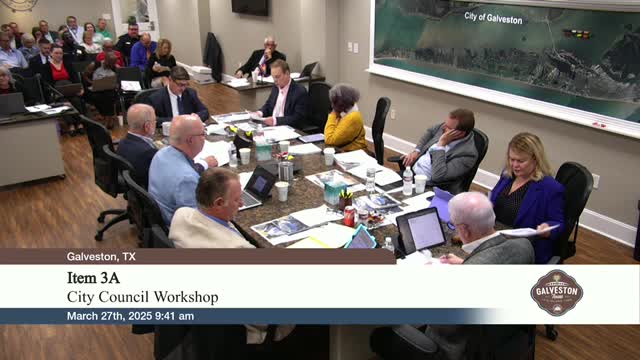
The Galveston City Council spent a large portion of its March 27 workshop on park governance, park board oversight and the administration of hotel occupancy tax (HOT) and concession permits.
City staff presented legal and policy analysis after council asked whether delegating park management to the Galveston Park Board could allow the city to circumvent charter procurement rules. Assistant city attorneys told council that delegation is permitted, but they recommended any future interlocal agreement require the board to follow city procurement standards when the council wants those standards enforced.
A central policy question raised by council was whether the city should reclaim operation of city parks that generate revenue. Council members debated whether Seawolf Park and Delanera Park should move from park‑board management back to direct city operation. Staff said transfers would require a transition period and noted the parks' operating models differ. Mayor Brown asked staff to prepare a business‑case comparison of the current park‑board model versus city operation; several council members asked that the park board present its own operations and proposed remedies at a joint meeting. Council instructed staff to schedule a joint meeting with the park board (tentatively April 16) and to prepare comparative financial information.
Glenn, the city auditor, presented a focused audit of park‑board conflict‑of‑interest policies. He reported two discoveries of policy breaches: (1) a director who engaged a business owned by a spouse to provide services to events that the director's department booked; and (2) a director who operated a personal business on park‑board controlled premises while supervising the department involved. The audit found the park board's policy language was clear but not always followed; the auditor recommended that any employee business that engages in transactions with the park board or operates on park‑board premises must be approved by the board and publicly disclosed on the board's website. The park board has accepted the recommendations and told the auditor it will adopt new procedures.
City and park‑board officials also briefed council on HOT and short‑term rental (STR) audits. Staff reported an audit backlog led to a statutory deadline lapse on several older STR/HOT cases; staff estimated a potential revenue loss of roughly $21,600 for tax periods that could not be prosecuted because of that lapse. Staff said they have since billed for many of the missing audits and will pursue the remainder; council asked for a clearer timeline for completing outstanding audits and for staff to return with a plan for transferring STR and HOT registration and collection back to city administration on a calendar‑year schedule (staff noted October 1 or year‑end timing would be operationally practical).
Council also discussed beach vendor permits, where private property claims and park‑board concessions overlap. Council asked staff to bring the matter to a joint session with the park board so the two entities can explain recorded ownership, the board's permitting practices and any available surveys or state leases covering publicly owned shoreline.