Get Full Government Meeting Transcripts, Videos, & Alerts Forever!
Get email alerts on the Candidate Disclosure topic
No spam. Unsubscribe anytime.
Committee hears bill to narrow candidate D-1 disclosure, set ownership thresholds
Summary
Sen. Greg Hertz told the House State Administration Committee that Senate Bill 492 would change what candidates must list on the D‑1 disclosure form, including raising threshold levels for business and property interests and excluding mutual funds; a COPP compliance supervisor answered questions and the hearing was closed without a vote.
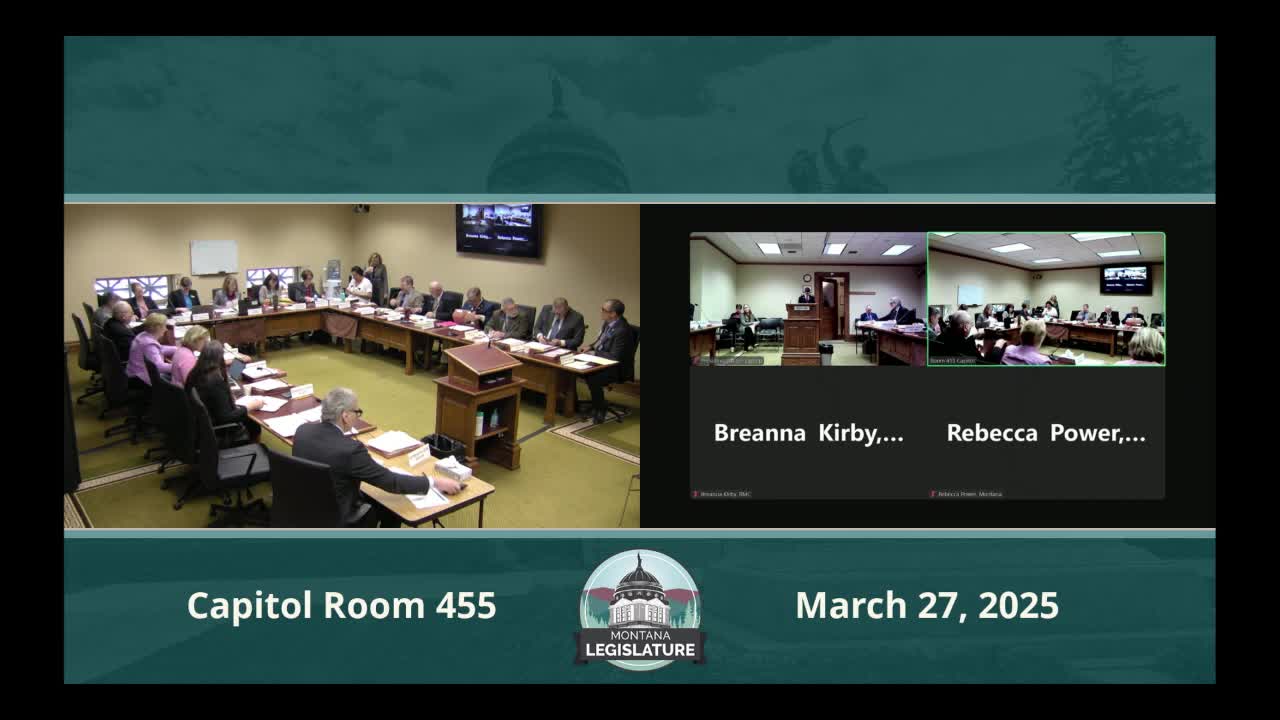
At a House State Administration committee meeting, Senator Greg Hertz, sponsor of Senate Bill 492, opened discussion on proposed changes to the D‑1 candidate disclosure form used when candidates file with the Secretary of State.
Hertz said the bill keeps the D‑1 filing requirement but would narrow what candidates must list. "Each business, firm, corporation, partnership, or other business or professional entity or trust in which the individual or candidate holds more than a 10% interest" would be disclosed, Hertz said, and mutual funds would not be required to be reported. He also said the bill would require reporting of publicly traded holdings only above a 1% ownership threshold and that real property other than a personal residence would be reported only when the filer holds more than a 10% interest.
The change, Hertz said, is intended to reduce burdensome reporting and to focus the D‑1 on conflicts of interest the public would find material. "Mutual funds are constantly changing," he said, and candidates have little control over fund composition, so the bill would exempt mutual funds from detailed reporting.
Kim Trujillo, compliance specialist supervisor for the Commissioner of Political Practices (COPP), appeared as an informational witness and answered committee questions about how property descriptions are currently handled and what "general description" of real property means in practice. Trujillo said general descriptions typically identify property by lot number or general vicinity rather than a full street address, and the COPP would ask for more specification if an entry were too vague.
Committee members asked procedural and drafting questions about filing windows and the interaction with Secretary of State filing rules; Hertz said he had proposed a change to the filing deadline language during drafting and noted he had an amendment. No formal action or vote on SB 492 occurred; the chair closed the hearing on the bill.
The hearing brought into focus three principal policy changes in the bill: a 10% ownership reporting threshold for business and property interests, a 1% threshold for reporting direct holdings in publicly traded companies, and an explicit exemption for mutual funds. Supporters framed the changes as reducing unnecessary reporting; COPP staff described how they would interpret general property descriptions during compliance checks. The committee did not take further action at that time and closed the hearing.
Committee staff did not provide a bill vote during the hearing; members indicated they will consider amendments and carriage in subsequent steps.