Get Full Government Meeting Transcripts, Videos, & Alerts Forever!
Get email alerts on the Criminal Law And Technology topic
No spam. Unsubscribe anytime.
Bill to criminalize disclosure of nonconsensual explicit AI‑generated media draws sparse fiscal data
Summary
Senate Bill 413 would make disclosure of certain nonconsensual explicit AI‑generated images and video a criminal offense. Sponsor and agency witnesses testified; fiscal impacts are uncertain and agencies said they lack historical data for prosecutions.
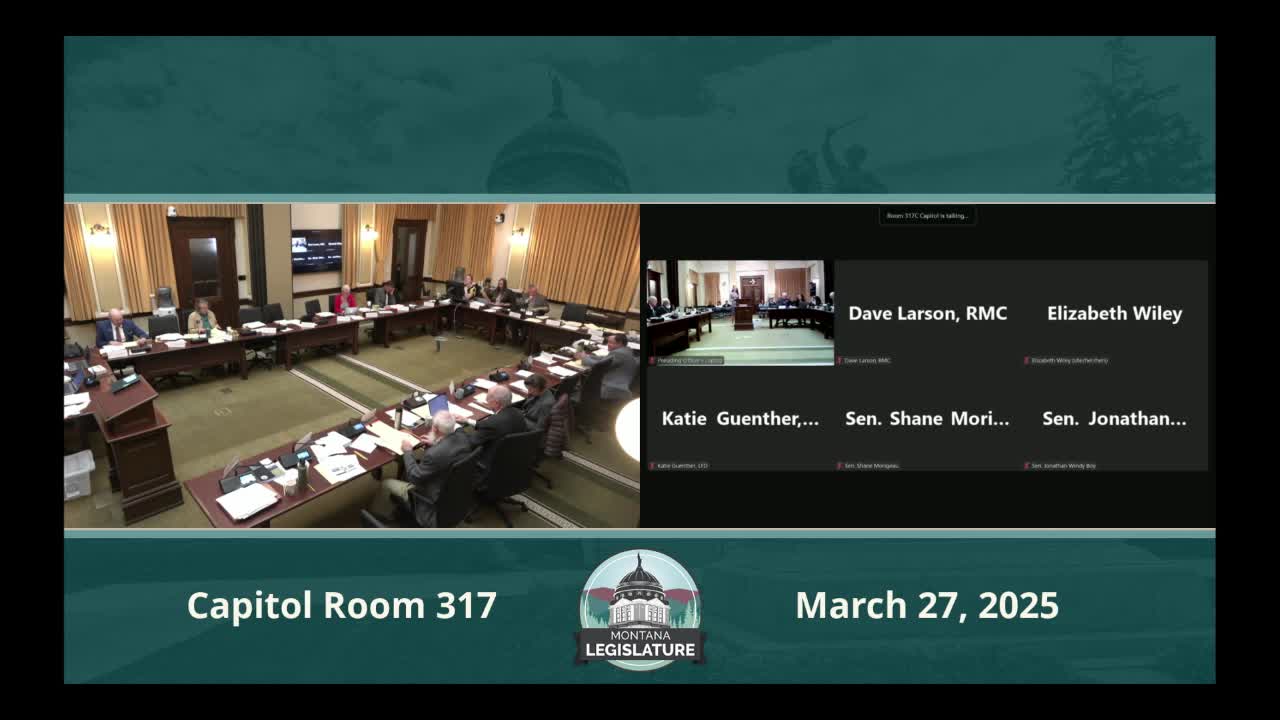
Senate Bill 413, sponsored by Sen. Laura Smith, would create an offense for the disclosure of certain explicit, nonconsensual AI‑generated images and video, the sponsor told the Senate Finance and Claims Committee at a committee hearing.
Sen. Laura Smith said the measure is narrowly tailored to criminalize nonconsensual explicit AI content, citing concerns about so‑called "deep fakes" that can place a person—s likeness onto explicit imagery without consent. She said the bill was developed with input from county attorneys and adapted from model language discussed by the National Conference of State Legislatures.
Agency witnesses described fiscal uncertainty. Beth Thompson, budget supervisor with the Department of Justice, and Natalie Smith, chief financial officer for the Department of Corrections, appeared for informational purposes. Cohen Mercer, central services division administrator with the Office of Public Defender (OPD), appeared online and said OPD has no historical caseload data for this new offense. Mercer provided an estimated incremental cost of roughly $1,000 per misdemeanor case and about $5,000 per felony case for OPD if assigned, but he said the office could not responsibly forecast total caseloads because the offense is new and not yet charged in Montana.
Committee members pressed agencies for data and said the lack of historical charging patterns complicates fiscal note estimates. Sen. Mike Pope asked whether the committee should expect OPD to provide updated cost information if the bill passes and cases start to appear; Mercer said OPD would track new caseloads and report to its interim budget committee but declined to produce speculative statewide estimates.
No committee vote occurred at the hearing. The sponsor said the legislation addresses a rising problem nationwide and that county attorneys had helped shape the bill—s penalties and scope.
Ending note: Because the crime is newly defined, state defense and corrections officials told the committee fiscal impacts are uncertain; the Office of Public Defender pledged to track and report realized costs if the bill becomes law.