Get Full Government Meeting Transcripts, Videos, & Alerts Forever!
Get email alerts on the Tobacco Prevention topic
No spam. Unsubscribe anytime.
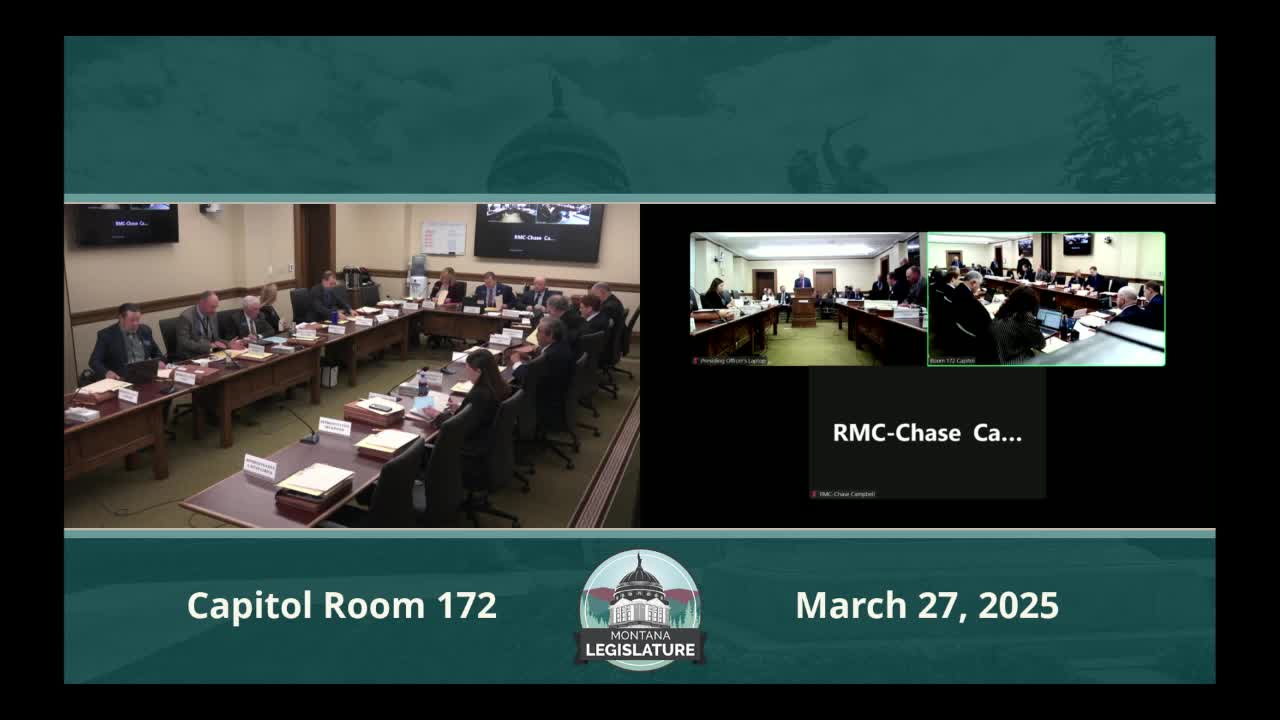
House panel advances bill to eliminate Montana Tobacco Prevention Advisory Board
Summary
Senator Greg Hertz told the House Business and Labor Committee that Senate Bill 495 is a department-requested “clean up” bill to eliminate Montana’s Tobacco Prevention Advisory Board, a body he and health officials said has not met in more than five years and whose functions are now performed by the Montana Tobacco Use Prevention Program.
Senator Greg Hertz, sponsor of Senate Bill 495, told the House Business and Labor Committee the bill is a “clean up” measure requested by the Department of Public Health and Human Services (DPHHS) to eliminate the statutory Tobacco Prevention Advisory Board established after the 2002 Tobacco Master Settlement Agreement.
The DPHHS representative, Mr. Gerard, said the department now follows Centers for Disease Control guidance through a centralized Montana Tobacco Use Prevention Program and that oversight is maintained through interagency and stakeholder structures. “This bill supports the governor’s initiative to increase efficiency by eliminating red tape including unnecessary or redundant boards and advisory committees,” Gerard said.
Nicole Aune, section supervisor for the Montana Tobacco Use Prevention Program, told the committee the tobacco prevention fund receives about $18,000,000 and that roughly $2,000,000 is distributed to local health departments via contracts to administer local tobacco prevention programs. Aune also said "32% of the master settlement agreement is dedicated to the tobacco prevention in the state," and that the formal advisory board "has not met in person as a board in more than 5 years." She said stakeholders remain engaged through the Alliance for Healthy Montana and the state Tobacco Interagency Committee.
Representative Gist asked about any budgetary savings from eliminating the board; Gerard replied the board has effectively not met and operates at no direct ongoing cost, so removing the statutory board “doesn't weaken our tobacco prevention programs” but removes an “underutilized formality.” Committee members asked how stakeholders would raise issues without a board; Gerard and Aune described existing informal and electronic engagement and continued stakeholder contact with MTUP.
After questions and closing remarks by Hertz, the committee later took executive action and moved SB 495 out of committee to the full House.
Why it matters: The change would remove a statutory advisory body created at the time of the national tobacco settlement and rely on existing program structures and interagency review to shape tobacco-prevention spending and priorities, while leaving funding sources and program activities intact.
What the bill does not do: Testimony indicated the bill does not change how prevention funds are spent, does not reduce the MTUP’s work or community contracts, and does not eliminate stakeholder input; it removes the named advisory board from statute.
Next steps: The committee voted to move the bill to the House floor for consideration; Representative Sprunger agreed to serve as the House carrier when the bill reaches the floor.