Get Full Government Meeting Transcripts, Videos, & Alerts Forever!
Get email alerts on the Community Conversations topic
No spam. Unsubscribe anytime.
Students tell Eagan council they want belonging, accessibility and affordable housing
Summary
Eagan High School and 2 Rivers High School students who attended a February 'World Café' community conversation described themes of belonging, infrastructure accessibility, equity and a desire for more affordable housing and representation in leadership.
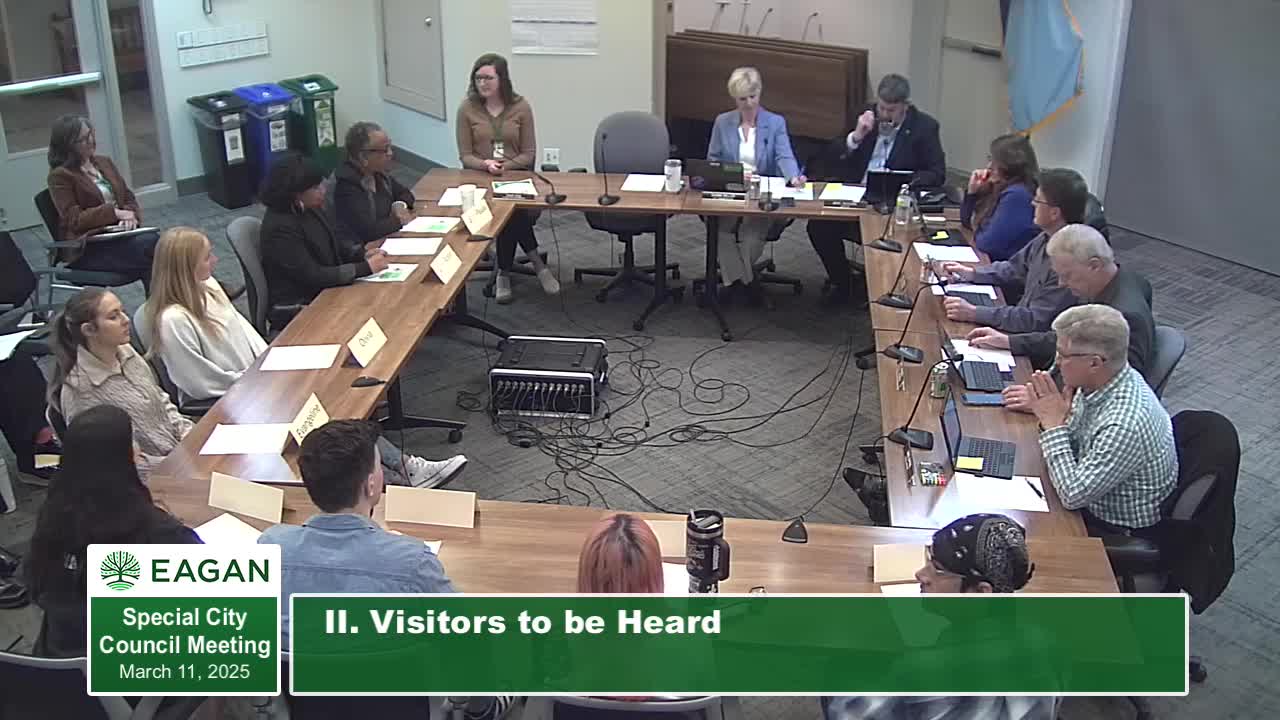
A group of students who participated in a February community conversation told the Eagan City Council on March 11 that feeling seen and included was central to making Eagan "an inclusive community where everyone thrives."
Sarah Eilig, a city staff member who organized the community conversations, said the sessions are intended to gather community input on inclusion and equity. City-contracted facilitators from the Finding Human Institute led a "World Café" session on Feb. 19 at Blackhawk Middle School that brought students from the three school districts that serve Eagan.
Students emphasized four themes: community and belonging; infrastructure and accessibility; equity and inclusion; and safety, well-being and collective action. Evangeline Fuentes, a junior at 2 Rivers High School who works at the Eagan Community Center, said the smaller group created a space to have "very important" conversations and to connect across schools. "Although we don't live in Eagan," Fuentes said, "we serve Eagan and we love Eagan."
Osvaldo (last name not specified), who identified himself as an Eagan High School student, described feeling "culture shocked" on arriving in Eagan but said finding a local Latino community made him feel safer: "Now, four years later, seeing how much of a ... safe haven Eagan has become for Latino people migrating here from other different countries. It feels really nice to see people who look like me." Students urged the city to sustain opportunities for direct feedback and to expand affordable housing and varied housing types (townhomes, duplexes) to retain young people and increase diversity.
Council members thanked the students and said the session underscored that removing passive barriers (for example, lack of affordable housing) requires active policy work. Sarah Eilig and city staff invited attendees and residents to host smaller "mini conversations" and to register for a spring summit on April 3, a larger public event planned to synthesize community input.
City staff said the student session was the first of a series of community conversations and asked the students to remain involved as the city synthesizes input into next steps for the equity/inclusion initiative.