Get Full Government Meeting Transcripts, Videos, & Alerts Forever!
Get email alerts on the Bmv And Motor Vehicle Policy topic
No spam. Unsubscribe anytime.
BMV agency bill advances after committee adopts advertising ban for illegal substances and adds towing complaint process
Summary
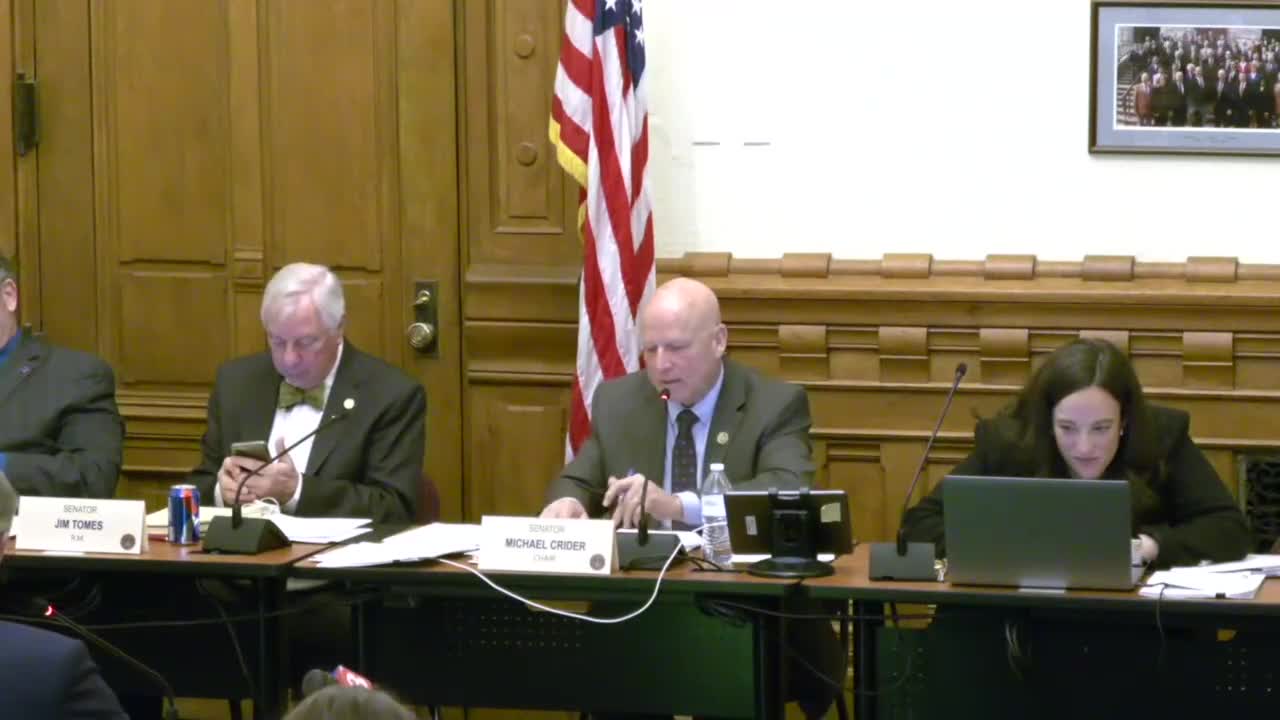
House Bill 1390, the BMV agency bill, was returned to appropriations by the Senate Homeland Security and Transportation Committee after members adopted multiple amendments that span vehicle licensing, insurance verification, advertising and a new towing complaint process for disputed nonconsensual tows.
House Bill 1390, the BMV agency bill, was returned to appropriations by the Senate Homeland Security and Transportation Committee after members adopted multiple amendments that span vehicle licensing, insurance verification standards, advertising and a new towing complaint process for disputed nonconsensual tows. The committee vote to recommit passed 6-1.
Representative Pressell, presenting the bill in the Senate committee, described several technical and policy amendments. Among them were changes clarifying that out-of-state commercial drivers with a valid CDL in good standing who move to Indiana would not be required to retake a written skills test; final language also addressed the specifications for BMV insurance‑verification systems and retained an expiration‑sticker requirement while removing a proposal to eliminate registration stickers. The committee adopted several BMV-related amendments by consent.
A contested amendment added language that would prohibit advertising in Indiana for a product that is an illegal controlled substance under state law; the sponsor said the provision targets commercial advertising for marijuana sold in neighboring states and that courts (the sponsor cited a November 2024 Fifth Circuit decision referenced in testimony) have allowed state-level restrictions on advertising tied to federally illegal transactions. Outdoor advertising representatives and advertising‑industry witnesses testified they opposed a media‑specific ban and urged alternatives such as adding disclaimers or applying restrictions uniformly across media; several advertisers called for more study and warned of First Amendment risks.
The committee also considered and ultimately included an amendment establishing a towing complaint mechanism aimed at disputed nonconsensual tows — typically accident-related impounds — after extensive testimony from trucking companies, carriers and insurance representatives who described high tow invoices and cargo or equipment held in impound while disputes were resolved. The towing language creates a complaint/mediation process to review large commercial tows, requires enhanced invoice detail, and includes a process allowing a party to post 70% of a disputed invoice while bonding the remaining 30% pending an expedited review; supporters said the mechanism is intended to speed recovery of equipment and freight while providing a forum for fact‑sensitive review of alleged predatory charges.
Towing industry groups testified against aspects of the proposal, saying the bill could tie up working capital for towers (the testimony noted tow operators typically run on thin margins and that impound practices vary) and warning the process could create unintended delays in clearing accident scenes. The committee discussed options such as licensing the towing industry and reviewing local rotation/contract practices with law‑enforcement agencies. The chair and sponsors said they expect to continue stakeholder work in appropriations.
Testimony on the towing language included carriers and logistics firms who presented detailed invoices they called excessive and pointed to studies alleging Indiana shows a high ratio of disputed or predatory bills compared with national samples. Insurance and trucking associations supported the complaint process as a consumer‑protection measure; towing representatives recommended a more deliberate study or a different board structure used in other states. Committee members repeatedly emphasized the desire to protect both consumers and public‑safety responses to roadside incidents.
The committee approved recommitting HB1390 to appropriations as amended; final fiscal and legal details will be worked out there. Several amendments were adopted by consent (CDL reciprocity clarification, insurance‑verification standard language, retention of registration stickers, and skills‑test pricing provisions) and the advertising and towing provisions were added after extended discussion and testimony.