Get Full Government Meeting Transcripts, Videos, & Alerts Forever!
Get email alerts on the Election Security topic
No spam. Unsubscribe anytime.
Panel OKs bill barring foreign nationals from funding ballot questions, closes legal gap
Summary
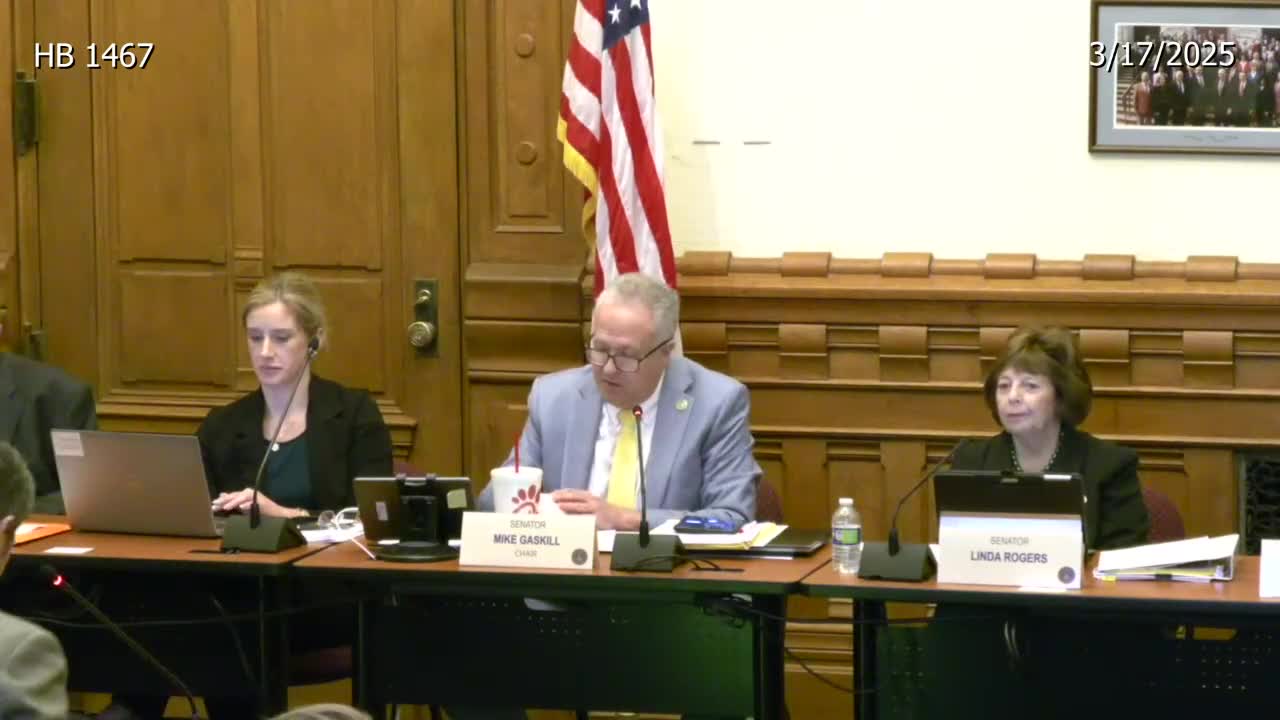
The Senate Elections Committee unanimously approved House Bill 14-67 on March 17, 2025. The bill would prohibit foreign nationals from making contributions in connection with public questions and requires treasurers and filers to affirm contributions do not come from barred foreign sources.
House Bill 14-67, which would prohibit foreign nationals from making contributions in connection with public questions, was approved unanimously by the Senate Elections Committee on March 17, 2025. The committee recorded an 8-0 vote in favor and sent the bill to the full Senate.
Representative Wescow, sponsor of the bill, said federal law bars foreign nationals from contributing to political campaigns but that "under federal law, public questions do not actually qualify as a campaign," creating a gap. "This legislation would add that prohibition to Indiana's law," he said, describing the bill as a measure to "close the loophole" that allows foreign funds to reach ballot-question activity via intermediaries such as nonprofits.
The bill would require a political action committee or an individual making an independent contribution in support of or opposition to a public question to certify that the contributor is not a foreign national and that the contributor or the committee has not received in the aggregate more than $50,000 a year from a foreign national (as defined in the bill) via nonprofit intermediaries. Representative Wescow said the language is intended to prevent layering of foreign funds through multiple nonprofit entities into ballot campaigns.
Witnesses supporting the bill included Keegan Prentice of the Secretary of State's office and Valerie Verreja, testifying for the Republican co-director of the Indiana Election Division on his behalf; both said the bill fills a gap and would increase public confidence in elections. Verreja also noted the bill helps clarify the law regarding independent expenditures and could reduce legal uncertainty after prior litigation in the mid-1990s and 2000s about corporate contributions and independent-spending limits.
Laura Curran, Indiana state director with Heritage Action for America, urged passage and cited national reporting about foreign funding of ballot measures. Curran referenced reporting by Americans for Public Trust about a Swiss billionaire's contributions to a national fund (the witness cited at least $243 million to a fund that has supported ballot measures across states) as an example of the kind of foreign influence the bill seeks to block.
Committee discussion included questions about enforcement and verification. Senator Ford asked who would trace layered contributions; witnesses said enforcement and complaints would be handled through the existing campaign-finance enforcement authorities—the Indiana Election Commission and county election boards—while the bill places an affirmative duty on treasurers to obtain an affirmation from contributors. Representatives noted that treasurers routinely ask for contributor information (for example occupation and address) without documentary verification and that an affirmation is consistent with current administrative practice; if a contributor lies, the enforcement remedy would rest with campaign finance authorities.
Action: the committee voted 8-0 to advance House Bill 14-67 to the full Senate. The committee roll call recorded a unanimous vote in favor.
Next steps: the bill proceeds to the Senate floor for further consideration; witnesses and members signaled support for the policy to align state law with federal prohibitions on foreign intervention in elections and to add a statute-level prohibition covering public questions.