Get Full Government Meeting Transcripts, Videos, & Alerts Forever!
Get email alerts on the Referendums topic
No spam. Unsubscribe anytime.
Senate panel sends referendum-timing bill to tax committee after debate over school budgets
Summary
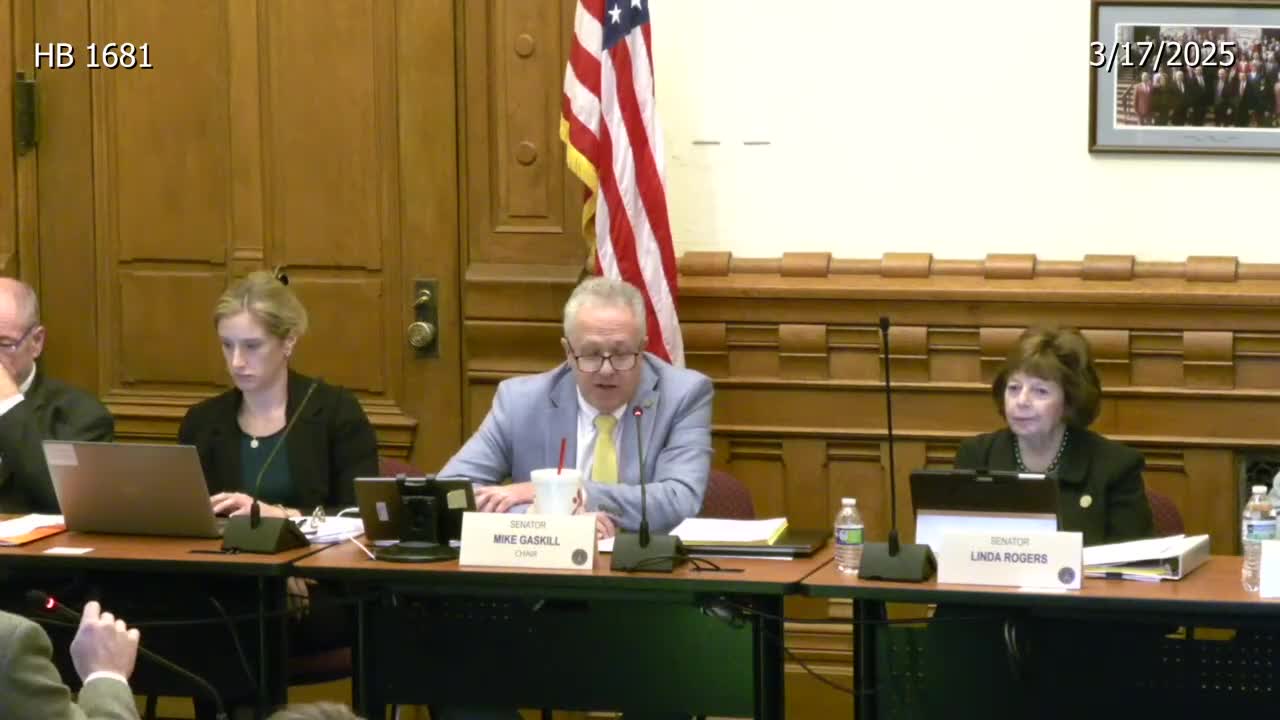
On March 17, 2025, the Senate Elections Committee voted 6-2 to recommit House Bill 16-81, which would require local public questions and state referendums to appear only on general-election ballots; proponents said it would increase turnout, opponents said it would impair school budgeting and local control.
House Bill 16-81, which would require local public questions and state referendums to be placed on the ballot only at November general elections, was advanced out of the Senate Elections Committee on March 17, 2025, by a 6-2 vote and recommitted to the Senate Tax and Fiscal Policy Committee for further work.
Representative Wescow, the bill's author, said the measure aims to ensure "the highest voter turnout" for measures of "significant consequence" by holding referendums in general elections. "The convenience trade off is worthwhile for the additional input from the public," Wescow said, noting that general elections typically produce the largest voter turnout compared with primaries or special elections.
Opponents — including school boards, district officials and parent groups — said the change could disrupt school budgeting and reduce local control. Todd Singer, vice president of the Oriole Advocates from Avon, described his district's experience: Avon voters rejected a referendum in 2011 and approved one in May 2018, after which the district reduced class sizes, increased teacher pay and hired staff. Singer said Avon "currently employs 142 teachers who are paid out of referendum funds as well as 31 support staff" and that renewals timed for May allow districts to make staffing decisions over the summer. He warned that if a renewal is moved to November and fails, "they have no ability to reduce teaching positions in November under current Indiana law," leaving districts to operate with a potential $6 million to $7 million shortfall through the remainder of the school year.
Madison West, representing the Coalition of Growing and Suburban Schools, and Terry Spradlin of the Indiana School Boards Association both opposed the measure. Spradlin said referenda are "the only alternative revenue sources for school corporations" in many communities and that restricting timing would hinder local budgeting: "November only referenda allow no accommodation in the budget development cycle and it kicks the can down the road," he said. Spradlin provided historical statistics, saying "51% of school corporations have never proposed a local public question" and that, overall since 2008, referenda have passed at a rate of 64% and failed 36%; he said capital referenda have passed at a lower rate (54% to 46%).
Proponents and some election administrators said consolidating referendums into general elections would reduce the burden of running additional special or municipal elections. Keegan Prentice, representing the Secretary of State's office, told the committee that clerks and local election administrators have increasing workloads tied to long early-voting periods and that moving referendums to November would give counties a reprieve in certain off-year cycles.
Committee discussion touched on a possible compromise. Some members signaled willingness to preserve May primaries in general-election years (allowing votes in May of general-election years) while removing special elections and municipal-election placements; Terry Spradlin said that approach could be acceptable. Representative Wescow said he was open to cooling-off or transition language similar to provisions considered in other bills, including Senate Bill 1.
Action: the committee voted to recommit the bill to the Tax and Fiscal Policy Committee for more work and fiscal review; the recorded committee tally was 6 in favor and 2 opposed. The transcript records Senator Spencer voting "nay" on the roll call and Senator Ford recorded as voting no during the roll call; several other senators voted yes. Committee leadership noted the bill would need a recommitment to address overlapping legislative proposals and fiscal implications.
Next steps: the bill is now on the Tax and Fiscal Policy Committee's docket for additional markup, including consideration of any cooling-off or transition language for operating referenda, fiscal impacts and the interplay with other legislation affecting school budgets.