Get Full Government Meeting Transcripts, Videos, & Alerts Forever!
Get email alerts on the Civil Legal Aid Funding topic
No spam. Unsubscribe anytime.
Committee advances bill to shift civil legal aid fund from formula to grant-making model
Summary
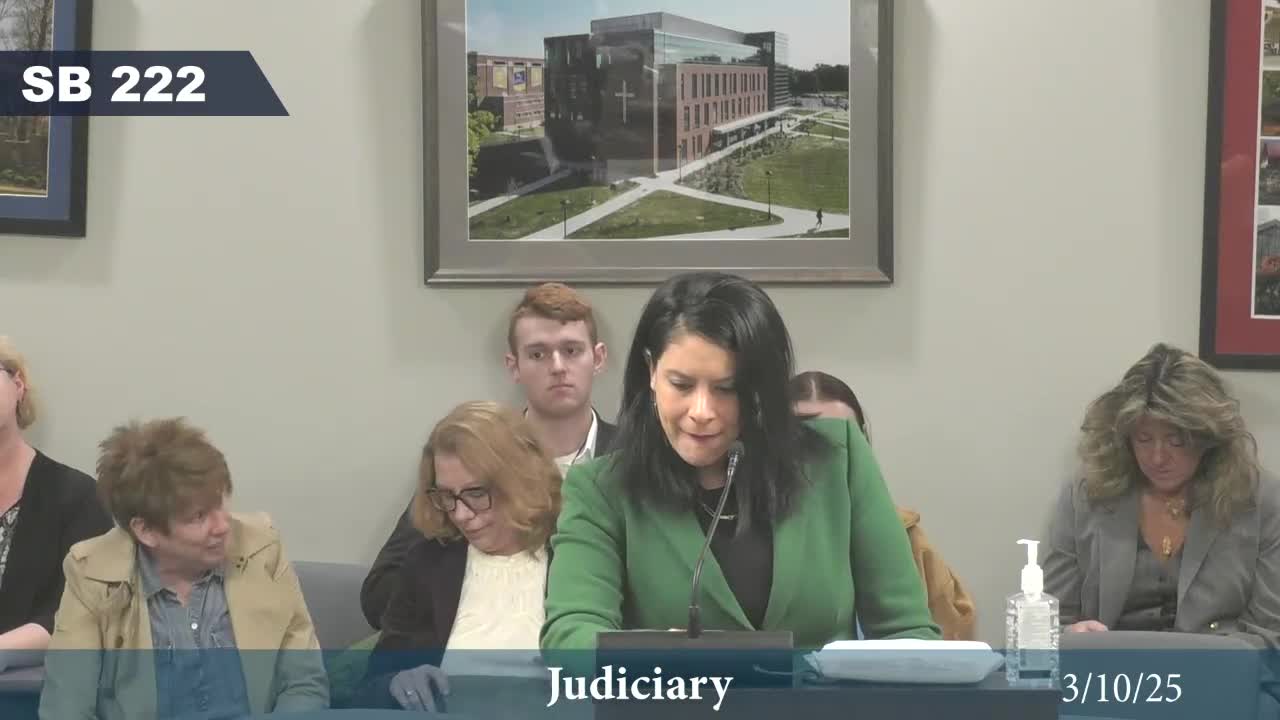
Sen. Carrasco presented Senate Bill 222 to replace the civil legal aid fund's county-formula with a grants-based distribution intended to improve accountability and statewide coordination.
Sen. Carrasco presented Senate Bill 222, describing it as a change to the civil legal aid fund created in 1997 that supports 12 legal aid entities across Indiana. She told the committee the bill "removes [the] grant based approach to ensure that these dollars are being used to their maximum potential," explaining the proposal would replace the existing statutory distribution formula with a grants process intended to improve accountability, outcomes and statewide coordination.
Chuck Dunlap of the Indiana Bar Foundation testified in support, describing the foundation's existing grants process and its coordination with the Indiana Supreme Court. "We strongly support this bill," he said, adding the current formula is a "very, blunt instrument" that limits flexibility and disincentivizes collaboration and innovation, especially where technology now allows providers to serve beyond strict county lines.
Sen. Carrasco and witnesses described practical changes the bill would make: moving to a competitive or outcome-focused grants process, establishing reporting requirements to the budget committee, and permitting the foundation and court to prioritize resources where needs and impacts are greatest. Committee members noted one provision restricting organizations that receive state dollars from initiating civil lawsuits against the state; Representative Zimmerman said he appreciated that language.
On a motion to pass, the committee approved SB 222. The roll call produced a tally of 12-0 in favor. Supporters argued the change would improve service delivery to low-income Hoosiers by prioritizing outcomes and encouraging collaboration among providers; supporters also said the grants approach would allow the state to measure impact and ensure funds reach critical needs such as domestic violence, elder law, veterans' benefits and housing stability.
Why it matters: The civil legal aid fund helps pay for legal services for low-income residents in areas such as family law, eviction defense and benefits claims. Changing the statutory distribution to a grants model would centralize decision-making about allocations and add reporting and outcome measures. Opponents were not recorded in committee testimony for this bill; the committee-approved change will proceed through legislative steps for further consideration.