Get Full Government Meeting Transcripts, Videos, & Alerts Forever!
Get email alerts on the Residential Tif topic
No spam. Unsubscribe anytime.
Committee debates residential TIF changes; sponsor would require 5% pass‑through for public safety and automatic sunset when bond obligations end
Summary
Senate Bill 104 would compel jurisdictions to set aside at least 5% of residential TIF annual increment for public safety and would sunset a TIF once bond obligations are retired, sponsor said.
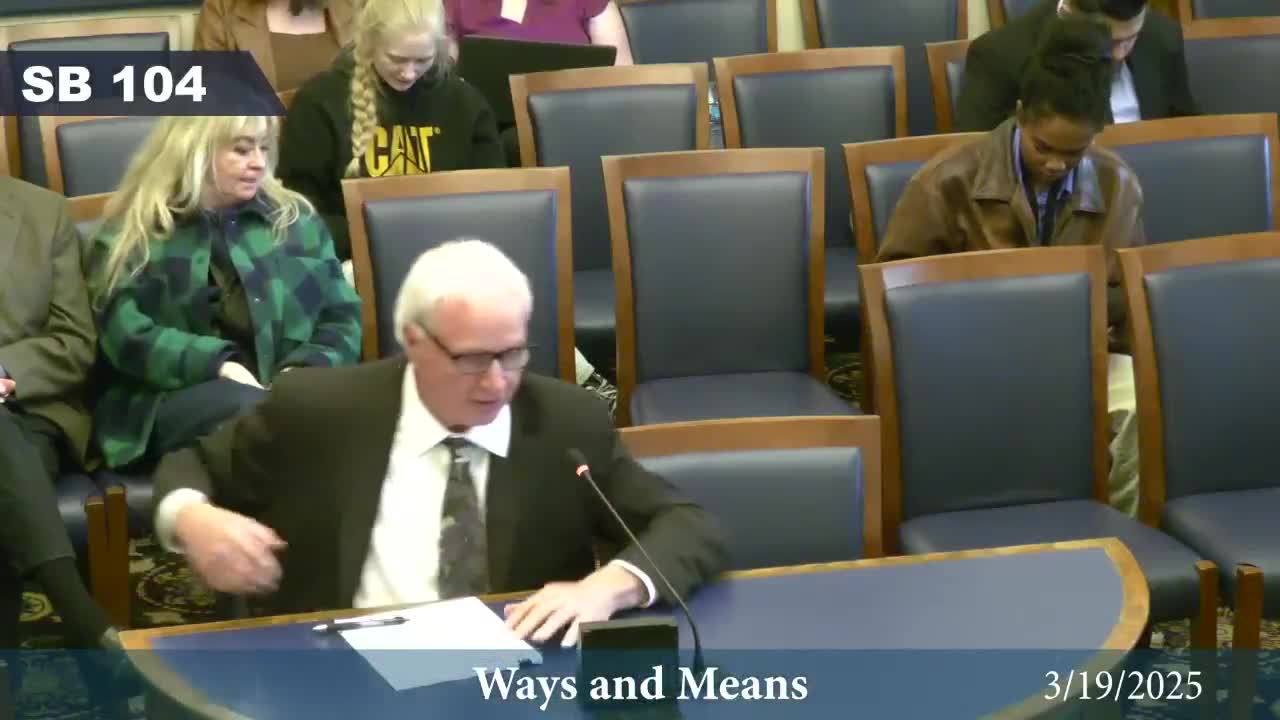
Senator Niemeyer presented Senate Bill 104 to the House Ways and Means Committee, seeking to require that 5% of annual increment from residential tax-increment financing (residential TIF) be set aside for public safety (to be split among fire, EMS and law enforcement). The bill would also change a TIF’s termination mechanics so that, the sponsor said, when bond obligations are paid off the TIF would also end and return increment to the tax rolls sooner than under some current practices.
“Whatever is created off the base of that TIF on a yearly basis, 5% would go to public safety in that jurisdiction,” Senator Niemeyer said, describing the provision as a “shall” requirement that jurisdictions must follow. The sponsor said the proposal is aimed at ensuring that new development funded by residential TIFs contributes to added police and fire needs created by population growth.
Committee members and witnesses raised multiple concerns about the bill’s structure and likely effects. Opponents and cautious witnesses said residential TIF is intended primarily to cover infrastructure (roads, sewer, water) and argued that earmarking increment for operations could weaken the tool that makes marginal housing projects financially viable. Mark Schublak of the Economic Development Association and Campbell Ricci of the Association of Indiana Mayors (AIM) urged limiting any pass‑through or adding guardrails targeted to distressed or high‑cost development areas rather than a blanket 5% floor. Schublak cited research showing housing shortfalls and urged guardrails that target distressed census tracts. AIM’s Ricci said a 5% mandatory pass‑through will make financing harder because residential TIF projects typically generate smaller increments than commercial projects.
Supporters included representatives of public safety organizations. Steve Arusa said the Indiana Fire Chiefs Association and allied associations backed the proposal and called the allocation “valuable” because increased population raises demand on police, fire and EMS. Senator Niemeyer and other members said they expect local governments to continue phasing projects and that language could be refined to avoid unintentionally sunsetting TIFs during multi‑phase bond financings.
Several legislators asked about the “but‑for” test — whether development would have happened without the TIF. Representative Claire and others warned residential TIFs are increasingly used in places where development would have occurred anyway, and that the tool has drifted from its original intent of targeting marginal areas. Members discussed options including restoring eligibility limits, targeting distressed tracts, or otherwise refining the bill to avoid diverting funds from infrastructure or schools. Testimony from multiple local officials and industry witnesses noted examples of residential developments in smaller communities that proponents say needed the tool to proceed.
Senator Niemeyer said he is open to working on the bill’s language to address phasing and other guardrails. The committee heard several local government and industry witnesses and took no final action, holding the bill for further consideration.