Get Full Government Meeting Transcripts, Videos, & Alerts Forever!
Get email alerts on the Transit topic
No spam. Unsubscribe anytime.
Residents urge city to keep ‘Freebee’ trolley and expand routes; commissioners request analysis and CRA funding options
Summary
Multiple public commenters and commissioners defended the Freebee trolley and warned of transit gaps if the city reduces service. Commissioners asked staff for ridership data, potential CRA support for local routes, and a vendor study next month.
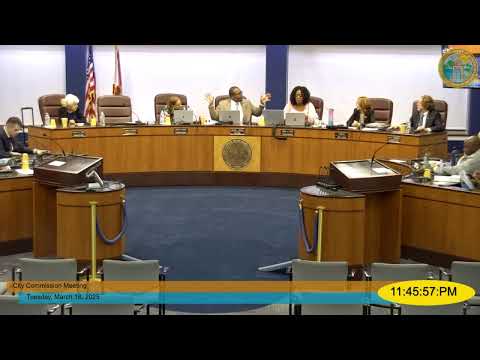
Public comments at the March 18 meeting repeatedly urged the commission not to eliminate the city’s Freebee trolley service and highlighted transit access gaps for seniors, students and residents of Washington Park.
Ejonis Mokwemier, a community liaison at C.G. Beto High School, said students rely on the trolley to reach school, and that some families cannot afford other transit options. Gary Nelson, a Washington Park resident, related individual hardships, including residents with mobility limitations who use the Freebee to reach medical appointments and food distribution.
Speakers called for improved schedules and routing. Levins Jean and others asked that the trolley stop times and route endpoints be reassessed—Jean said the trolley does not serve certain stretches near Jackson North hospital and raised safety concerns about walking distances.
On the dais, commissioners emphasized the service’s social value while asking staff to refine cost and performance data. Vice Mayor Lynn Hsu and other commissioners suggested three options staff should analyze: (1) a focused CRA‑funded route that operates mainly inside the city limits, (2) resident discounts or annual permit programs to protect low‑income riders, and (3) a vendor‑led ridership and route study. City staff said the current vendor will return next month with proposed route adjustments and a ridership review; the manager and vendor also said the vendor can provide mileage tracking and other data to separate CRA area service from county/shared routes.
No policy change was adopted. Commissioners and staff agreed to return with a data‑driven proposal on ridership, cost, resident discounts and options to recover costs (advertising, CRA support, parking/transportation grants) before considering contract changes or service reductions.