Get Full Government Meeting Transcripts, Videos, & Alerts Forever!
Get email alerts on the Education Budget topic
No spam. Unsubscribe anytime.
Manassas Park school board adopts $64.9 million FY26 superintendent’s budget
Summary
The Manassas Park City School Board approved the superintendent’s proposed fiscal year 2026 budget totaling $64,874,855 after a presentation and Q&A covering English learners, federal funding risks, substitutes, attendance staff and bus camera replacements.
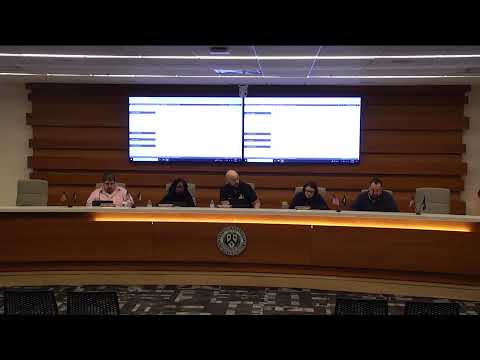
The Manassas Park City School Board voted 5-0 to approve the superintendent’s proposed fiscal year 2026 budget, totaling $64,874,855.
Board members heard a presentation and a question-and-answer review of the proposed budget before the roll-call vote. The presentation summarized updates to student support services, capital projects timing, federal funding exposure and operating-line increases tied to benefit changes.
The superintendent (name not specified in the transcript) told the board the presentation now reflects July through February data for the district’s 24/7 mental-health care coordination service and that cases have risen to 91 from roughly the low 40s reported earlier. The superintendent also walked through written questions submitted by board members and staff responses that were shared publicly.
Board discussion emphasized high concentrations of students needing additional supports. Chairman Paul Alexander thanked finance staff and said the board has held information sessions with the governing body and planned to show what items did not make the budget. Ellen Slobodnick, a board member, flagged student demographics, saying the district is at 55% economically disadvantaged compared with a state average of about 42% and that English learners make up about 45% of the student body compared with a 12% state average.
Staff responses included details about pre-K funding (kept at current levels and noted as separately funded from K–12), math supports and plans to report on English learner outcomes to the academic committee. The presentation clarified that backup generators are intended only to provide temporary power for critical infrastructure. The district said new buses include cameras compatible with the current monitoring system; two buses must be replaced because their existing video systems are outdated, and activity buses use an older, different camera system that will also need replacement.
On funding sources, staff said roughly 6.5% of the district’s revenue comes from federal funds across multiple programs including Title I, II, III, IV and Perkins; special-education funding tied to IDEA was also noted as largely federal. The superintendent said there were no official notices of federal reductions at the time of the presentation, but that any future cuts would require a budget amendment and likely moving some federally funded positions into the operating fund if necessary.
The FY26 proposed operating budget includes a $200,000 increase in the substitutes line item to cover added benefit costs such as paid family leave and changes to paid-time-off rules. Attendance resources from FY25 — including the attendance software and three attendance staff positions — were carried forward into the FY26 budget; staff reported midyear data showing a reduction in the chronically absent percentage compared with the same point last year, though final percentages will be available at year end.
A motion to approve the superintendent’s proposed FY26 budget was made and seconded, and a roll-call vote was taken. Voting yes were Chairman Paul Alexander; Dr. Shante Jones; Ellen Slobodnick; Michael Cummings; and Zach Graham. The board announced the vote tally as 5–0 in favor. The board also announced a regular meeting for March 17 and a presentation of the FY26 budget to the governing body the following day.
Notes: The presentation referenced VDOE fall membership data collection for statewide comparison figures. Several staff members (identified in the presentation responses as Mr. Lyon and Ms. Kelso) supplied the data and explanatory notes included in the Q&A materials shared with the board.