Get Full Government Meeting Transcripts, Videos, & Alerts Forever!
Get email alerts on the Shelter Denials topic
No spam. Unsubscribe anytime.
Most shelter denials cited violence or threats; commissioners press for alternate placements and DPH role
Summary
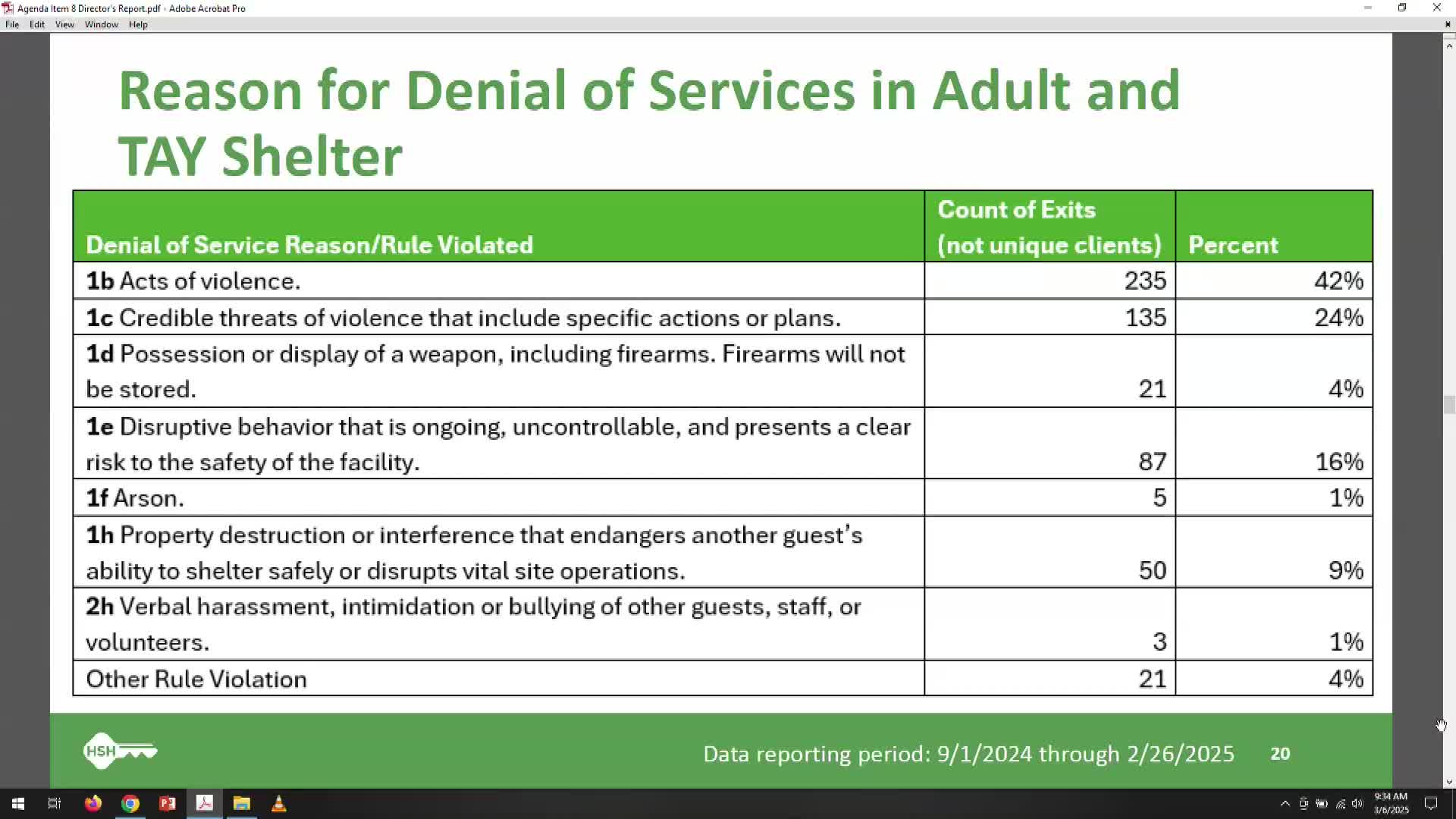
HSH told the commission that the most common reasons providers deny shelter entry are acts of violence, threats or disruptive behavior; commissioners urged planning for alternative placements and closer collaboration with DPH for high-acuity clients.
HSH reported to the Homelessness Oversight Commission that shelter denials at adult and transitional-age youth shelters are most often associated with acts of violence, threats of violence and other disruptive behavior that threaten site safety.
"This data is for the 24 adult, or transitional age youth shelters. As you can see here, the most common reason a shelter denial of service is due to acts of violence," Executive Director Shereen McSpadden said during the March 6 meeting. HSH staff told commissioners that acts of violence accounted for just under half of denials, with threats and disruptive conduct among other leading reasons.
Commissioners pressed HSH on the fate of people denied service. Several commissioners and public speakers described instances where people removed from shelters or denied entry returned to street locations, raising both safety and public-health concerns. Commissioner Joaquin Guerrero and others asked whether the city should create a staffed "receiver" or stabilization facility to accept people who cannot remain in shelter because of behavior or safety issues rather than exiting them to the street.
HSH said the department is actively discussing these issues with the Department of Public Health. "We're talking about what does that staffing level look like, who's responsible," McSpadden said. Commissioners requested a joint HSH-DPH briefing at a future meeting to describe options for a transfer or stabilization approach and to clarify how repeated denials (including repeat individuals) are counted and tracked.
Provenance: HSH presented denial-of-service reasons during the director—s report and commissioners debated receiver-facility options in follow-up questions.