Get Full Government Meeting Transcripts, Videos, & Alerts Forever!
Get email alerts on the Window Replacement Code Change topic
No spam. Unsubscribe anytime.
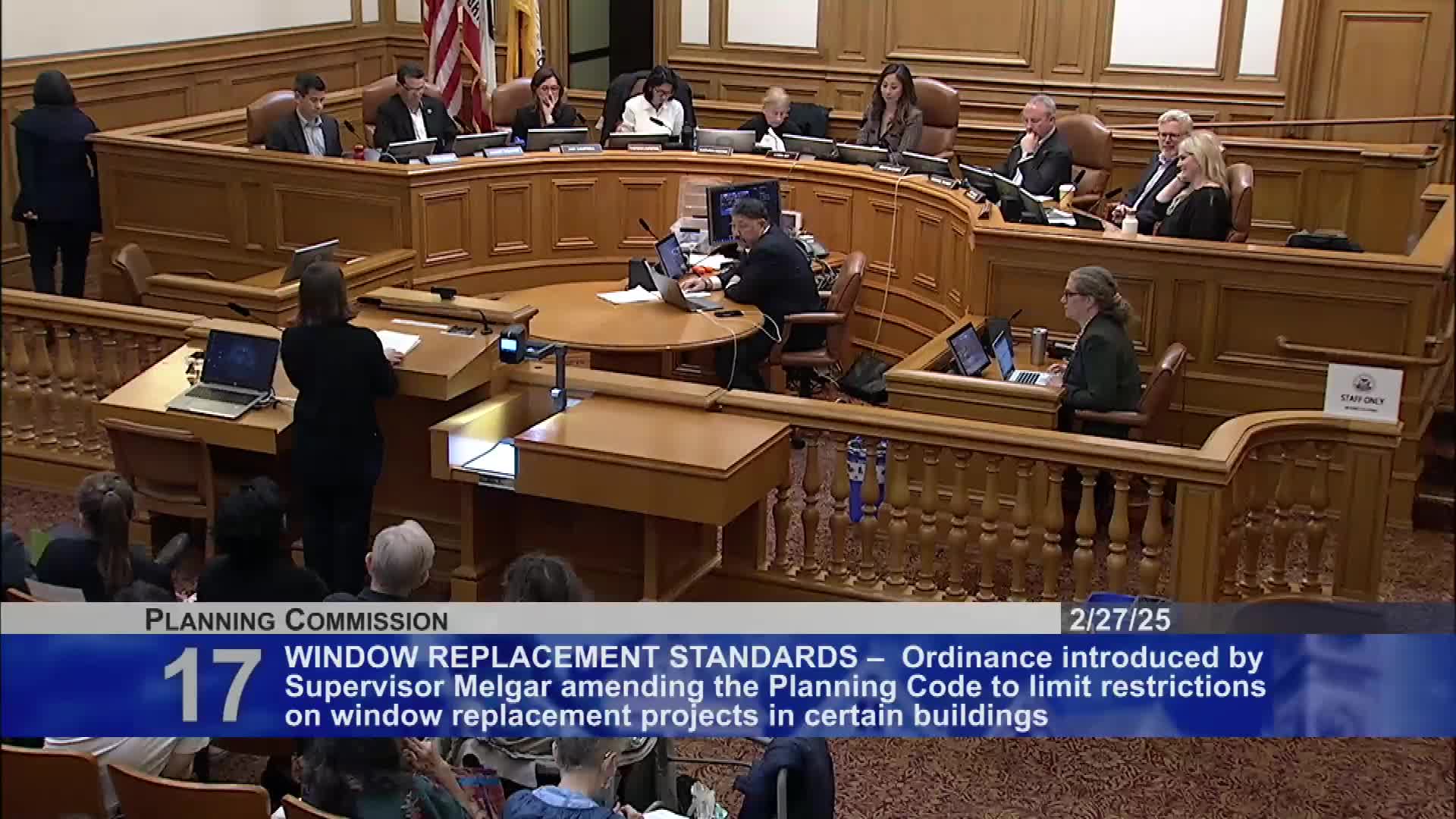
Planning Commission backs Melgar window‑replacement code change with modifications after heated debate over vinyl frames
Summary
The commission voted 6–1 to recommend approval with staff modifications of an ordinance that would relax planning code restrictions on replacement window materials and designs for nonhistoric buildings, prompting debate from preservationists, local craftsmen and tenant and climate advocates.
The San Francisco Planning Commission on Feb. 27 voted 6–1 to recommend approval with modifications of a planning‑code amendment that would streamline reviews and expand allowable framing materials for replacement windows on nonhistoric buildings. The proposal, sponsored by Supervisor Yarona Melgar, drew sustained public comment and an extended commission deliberation about vinyl frames, historic preservation and housing‑and‑energy affordability.
Supervisor Melgar told the commission that many property owners and tenants face high costs and long delays when replacing windows, and that the ordinance would allow owners of nonhistoric buildings more flexibility to install energy‑efficient windows — including frames other than custom wood — without a discretionary planning review. Planning Department staff, represented by Michelle Taylor, supported approval with modifications designed to avoid unintended conflicts with other planning code sections. Staff proposed limiting the code change to replacement windows (frames within existing openings), preserving review for identified historic buildings under the planning code’s historic‑resource definition and adding targeted exceptions to avoid conflicts with storefront transparency, residential exposure and bird‑safety requirements.
Public commenters split. Local window‑makers and preservation advocates said allowing vinyl and similarly mass‑produced materials on street‑facing elevations would harm the city’s architectural character, hurt small manufacturers and could shorten product lifespans. Michael Keane, vice president of Foxtail Hill Windows and Doors, warned that removing standards would advantage large manufacturers and undermine local crafts. Former Historic Preservation Commission member Courtney Damkroger and several preservation groups asked the Planning Commission to send the ordinance to the Historic Preservation Commission for review and to align changes with citywide objective design standards now under development.
Supporters, including tenant‑advocacy and environmental groups, argued the changes would make energy upgrades more affordable, reduce PG&E bills and help meet climate goals. The Planning Department reported it had received 26 public responses, including a joint letter signed by five community organizations and more than 30 individuals supporting the proposal; no letters explicitly opposing the ordinance were reported, though multiple public commenters urged additional protections for historic resources.
Commission deliberations ranged from defenses of traditional wood craftsmanship to careful support for the staff’s recommended modifications. Commissioner Moore said he favored a deeper technical review of installation practices and material performance and urged minimum performance standards such as double‑glazing; Commissioner Braun supported the staff changes but urged clarity about area‑plan guidance and cultural‑district standards; Commissioner Imperial emphasized outreach and the need to consider objective design standards and cultural districts.
Vote and outcome: The commission adopted a recommendation for approval with staff modifications by roll call, 6–1, with Commissioner Moore voting against.
Why it matters: The amendment would loosen local controls on replacement‑window design and materials for nonhistoric buildings, potentially lowering costs and accelerating energy upgrades citywide while sparking debate about preservation, visual quality and local small businesses that produce traditional windows. The staff modification narrows the ordinance to replacement within existing openings and clarifies which buildings remain subject to historic‑resource review.
Next steps: The Planning Commission forwarded its recommendation to the Board of Supervisors. Planning staff and the commission indicated they will coordinate with the Historic Preservation Commission and with community stakeholders as objective design standards and cultural‑district design rules are finalized.