Get Full Government Meeting Transcripts, Videos, & Alerts Forever!
Get email alerts on the Problem Solving Funds topic
No spam. Unsubscribe anytime.
Restructured problem-solving funds cut some youth and family services, HSH and providers say
Summary
HSH told the commission that spending changes and reprioritization reduced problem-solving resolutions in recent months; commissioners and providers urged restoring access for transitional age youth and tracking outcomes for households turned away.
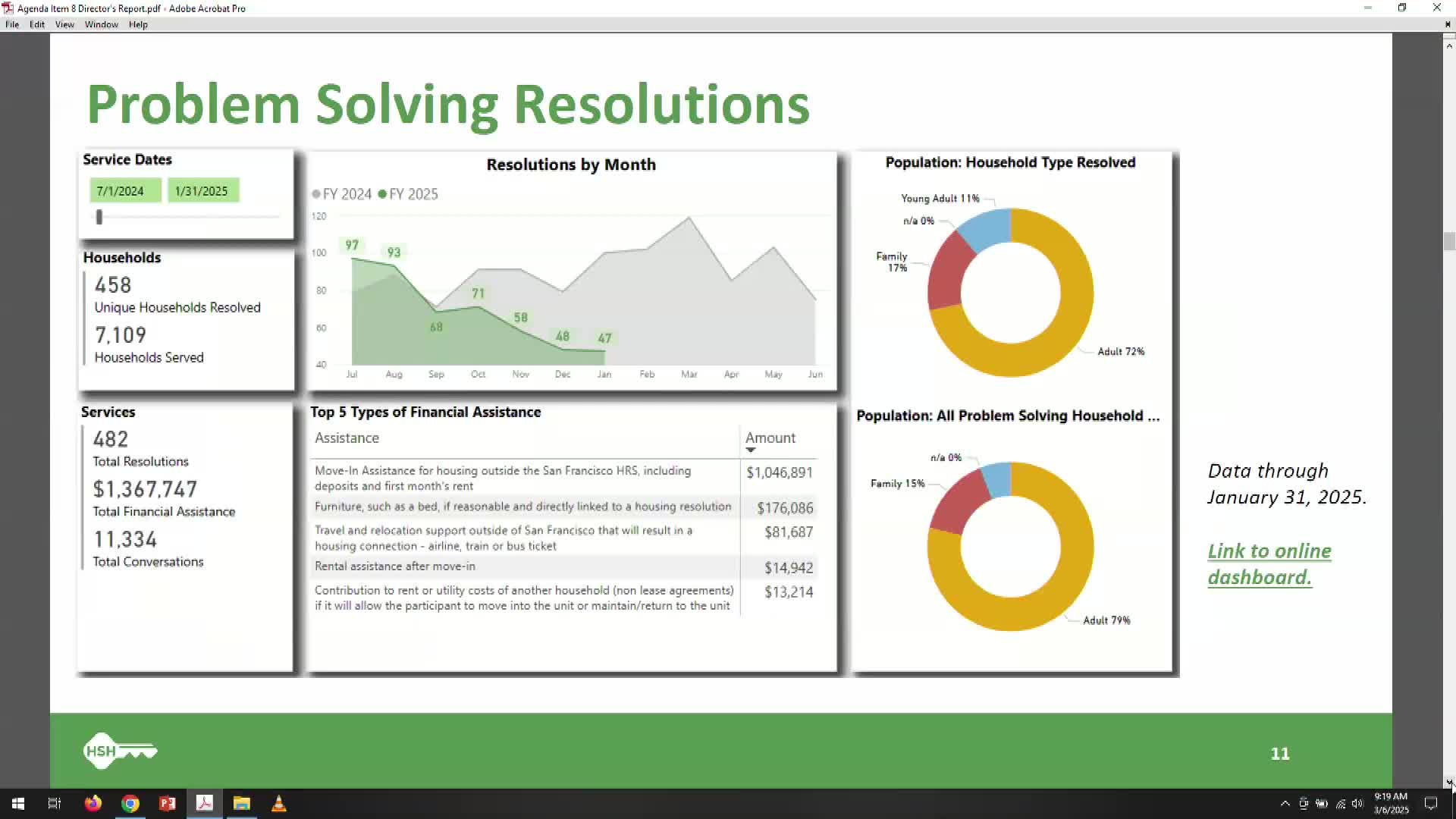
San Francisco—s Department of Homelessness and Supportive Housing (HSH) told the Homelessness Oversight Commission that a restructuring of problem-solving financial assistance and a prior overspend by providers caused a sharp decline in some problem-solving resolutions, particularly for transitional-age youth (TAY).
Deputy Director Marian Sanders said the program was restructured after providers were on track to exhaust annual budgets late in 2024. "In November 2024, problem solving providers experienced significant budget challenges because they overspent their resources earlier in the year," Sanders said. The department said it reprioritized funds to focus on travel, relocation and move-in assistance and limited some adult and family uses to ensure funds lasted the fiscal year.
Impact on youth and families: HSH said the change led to a notable drop in problem-solving resolutions for TAY and some families. Marnie Regan of Larkin Street Youth Services told the commission that when eligibility restrictions were tightened in November, "resolutions among TAY dropped 82%" and cited examples in which small sums for move-in, groceries or transportation helped keep youth stably housed.
Commissioners and providers urged two remedies: (1) reopen eligibility where possible for TAY and (2) better track outcomes for households that would have received services but could not because of funding or regulatory limits. HSH said it has identified additional budget for TAY-specific uses and will meet with providers next week to discuss thresholds and process changes. The department also said it is coordinating with philanthropic partners; commissioners asked HSH to invite funders such as Tipping Point to brief the commission on pilot funding and how private dollars may supplement problem solving.
What HSH reported about outcomes: The department provided figures showing that in the last six months its problem-solving efforts resolved homelessness for 458 unique households with about $1.4 million in assistance; HSH also said earlier prevention assistance showed promising recidivism outcomes (12% returned to the homelessness response system within 24 months in one cohort).
Provenance: HSH problem-solving budget and TAY impacts were discussed during the director—s report and commissioner Q&A.