Get Full Government Meeting Transcripts, Videos, & Alerts Forever!
Get email alerts on the Interim Housing topic
No spam. Unsubscribe anytime.
HSH outlines plan to add 1,500 interim housing beds as shelter wait lists rise
Summary
San Francisco—s Department of Homelessness and Supportive Housing told the Homelessness Oversight Commission it is pursuing a mayor-led plan to add 1,500 interim housing beds, while reporting higher shelter wait lists, high occupancy rates and ongoing efforts on Sixth Street.
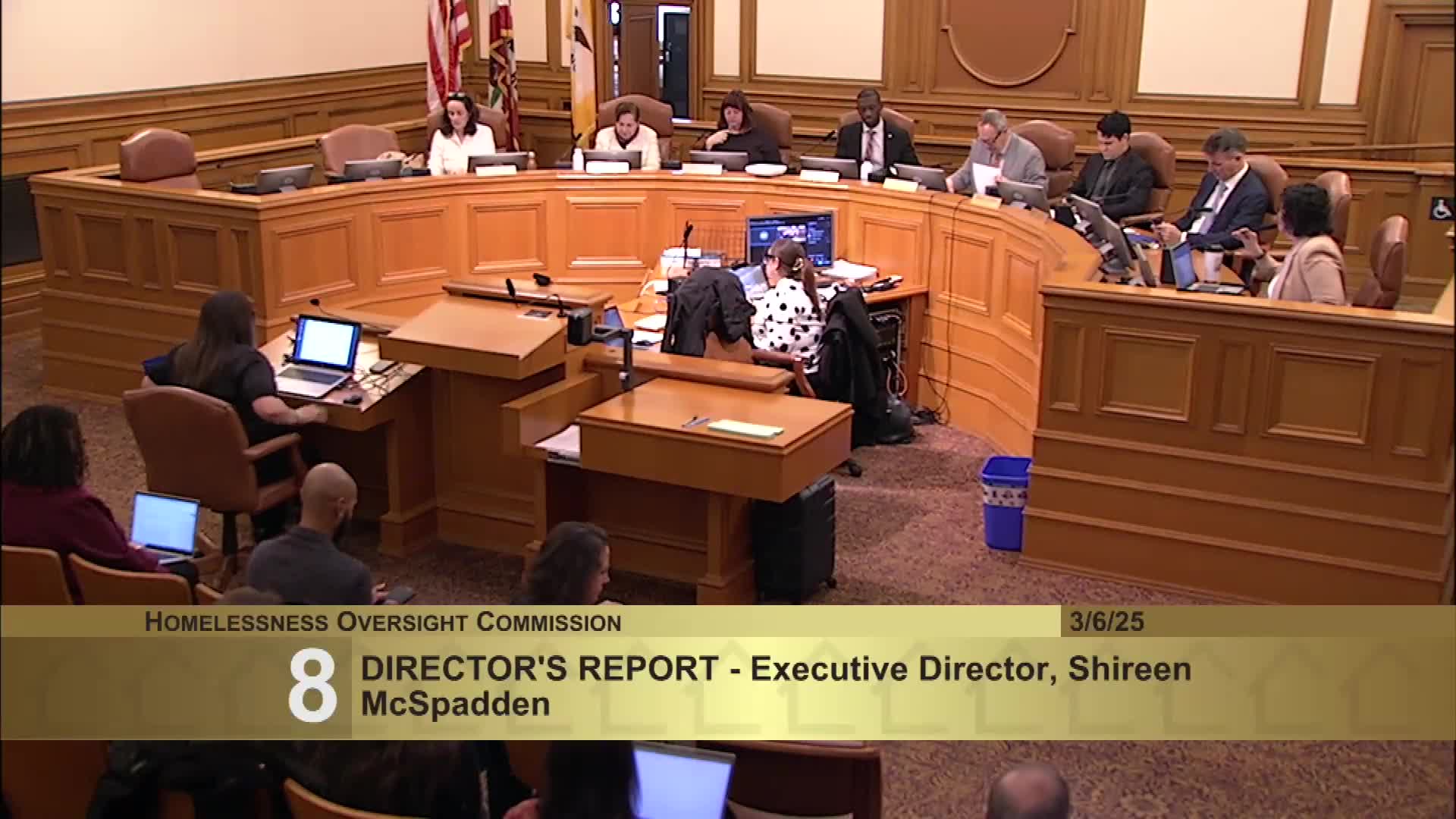
San Francisco—s Department of Homelessness and Supportive Housing (HSH) told the Homelessness Oversight Commission on March 6 that the mayor—s office is leading an effort to create 1,500 interim housing beds to move people off the streets and improve flow through the shelter system.
Executive Director Shereen McSpadden said the work is being done in coordination with the Department of Public Health (DPH) and other city agencies and that site selection, program type and geographic distribution are under active review. "The vision for this effort is to improve the short term homelessness response system by adding 1,500 interim housing beds to provide immediate support for the unhoused community and to improve the city's ability to move people off the streets into a safe location and ultimately on a path to secure housing," McSpadden told commissioners.
Why it matters: HSH reported increases in shelter wait lists and near-capacity shelter use, a combination that department leaders said increases the urgency of adding interim housing and improving case management and service alignment.
HSH gave the commission systemwide figures: 3,641 shelter beds citywide with a 92% overall occupancy rate (adult shelters and Navigation Centers at roughly 96% occupancy). As of mid-February HSH said it had an 8.5% vacancy rate in site-based supportive housing, but only 0.8% of units were immediately available for referral. McSpadden described efforts to bring long-term offline units back online, including corrective-action letters and repair funds.
The commission heard that the adult shelter wait list rose to 535 in February 2025, up from 390 the prior month; the department attributed the changes to seasonal inflows and constrained shelter capacity. Family shelter wait lists rose as well: 318 families were on the family shelter wait list on Feb. 24.
Sixth Street operations: McSpadden said the city—s response to conditions on Sixth Street is a multi-department effort coordinated through the Drug Market Agency Coordination Center (DMACC). HSH—s outreach teams and partner providers are dedicating shelter beds and on-the-ground staff, co-locating Journey Home at the Sixth Street triage tent and making daily outreach and health connections. The commission was shown daily averages for the collaborative effort: about 432 outreach encounters, 9.5 shelter placements and 61 health connections per day in the target area.
Vehicle triage program closure: HSH reported it closed the vehicle triage center at Candlestick Point, which opened in January 2022 and served 132 households living in vehicles. When the program wound down this week, HSH said all but two guests left with a "clear plan and destination" and that remaining guests were offered housing, rental subsidies, alternative shelter or relocation assistance prior to closure. The department said it is rethinking approaches to vehicular homelessness and exploring models that go beyond safe parking alone.
Next steps and oversight: McSpadden said site selection and detailed action plans will be developed in the coming weeks, and that HSH and the mayor—s office are meeting weekly with DPH and policy staff to align services, siting and program design. Commissioners asked for further briefings and joint presentations with DPH to clarify how higher-needs clients will be served and how interim beds will avoid creating long-term warehousing of people in shelters.
Provenance: HSH director—s report beginning and interim-housing discussion.