Get Full Government Meeting Transcripts, Videos, & Alerts Forever!
Get email alerts on the Airport Infrastructure topic
No spam. Unsubscribe anytime.
Manassas council hears airport CIP update and AdPorts terminal plan; staff seeks three new airport positions
Summary
City staff and AdPorts updated the Manassas City Council on airport capital projects — including a new control tower, runway rehab, bridge analysis and a terminal expansion tied to planned commercial service — and discussed three proposed airport positions estimated at $360,000 annually.
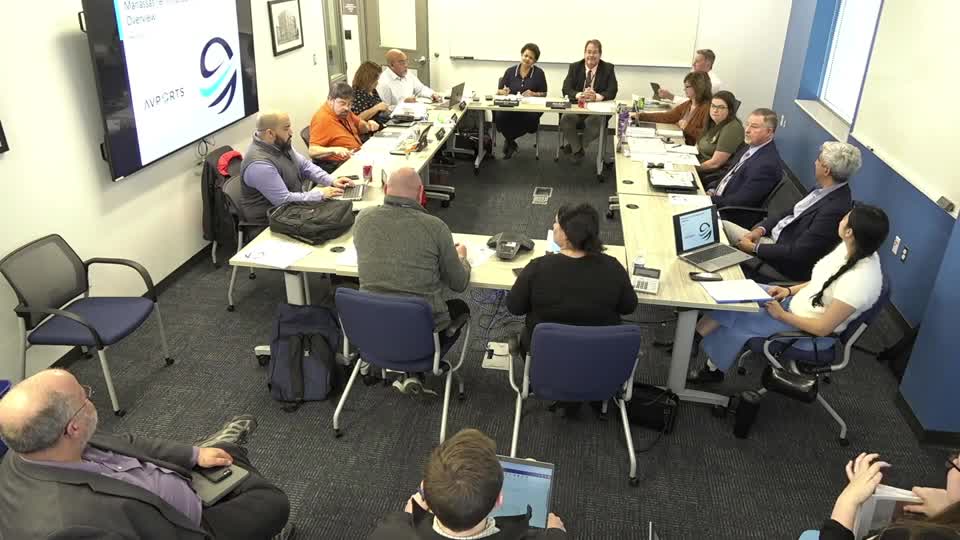
Manassas City Council on March 19 received a progress update on airport capital projects and a presentation from AdPorts on plans for a new terminal aimed at supporting commercial passenger service, and discussed hiring three airport staff needed for expanded operations.
City staff and AdPorts said design work is underway on a new air traffic control tower, a runway rehabilitation, a fuel‑farm upgrade, replacement or reinforcement of a runway/taxiway bridge, and utility work needed for a terminal expansion that AdPorts is developing. Pranav Trivedi, project executive for AdPorts, said the project team is aiming for construction-start milestones that would support commercial service in the first quarter of 2026 but that federal approvals remain a gating item.
The discussion matters because the projects affect airport safety, FAA funding eligibility and the timeline for introducing commercial airline service to Manassas, which will change airport staffing, operations and local infrastructure needs.
City staff outlined the major airport CIP items and current design status. Juan (airport staff) said the air traffic control tower is at roughly 15% design and should reach about 45–50% by June; if environmental review and FAA approvals proceed the project could start construction in 2026 and take about 18 months. On the runway rehabilitation, staff said preliminary design indicates a mill-and-fill solution that could reduce a previously estimated $20 million cost to roughly $15 million, but final cost will be determined by bidding.
On the runway/taxiway bridge, staff said a forensic analysis is underway and sensors will be placed on the structure to measure actual loads. "For example ... the bridge is rated at 115,000 pounds. If there's enough reserve and we can get up to 150,000, then that's a good thing," Juan said, adding the analysis will produce a PCN (pavement classification number) airlines will use to plan operations. Staff emphasized that replacement remains possible and the timing could be delayed several years if testing shows the structure can safely carry additional loads.
Pranav Trivedi described the terminal and parking layout AdPorts is proposing and said the project team submitted a large environmental assessment to the FAA on Nov. 19 and is awaiting regional comments. "We submitted that into FAA on November 19... They told us they will have comments back to us in no more than 30 days," Trivedi said. He added the team has not yet received FAA comments and lobbyists and the airport commission chairman are pursuing the regional office for the outstanding review.
Trivedi also said AdPorts has provided interim funding to keep the design and permitting process moving. "AdPort stepped in and paid about a $125,130,000 dollars to kinda keep the process moving," he told the council, using that figure to describe a company contribution intended to maintain schedule momentum while federal funding and approvals are pending.
Council members pressed staff on schedule risk, operational impacts and design character. Several council members asked that the terminal design reflect Manassas identity rather than appearing generic; council members and staff agreed to add city architectural-review input as the project proceeds. Staff said the next design milestone is 30% completion for the terminal and short-term parking, with 60% design expected by May.
Council and staff also discussed airport staffing tied to commercial service. City staff told council that Director Rivera requested three positions — two airport operations officers and one airport maintenance worker — but the city manager's recommended budget did not include them because the timing for when the airport will need the positions is uncertain. A staff representative told council the total annual cost requested for the three positions is $360,000 ("the amount is $360,000 for the 3 positions").
Council members and airport staff disagreed about timing: advocates said hiring should begin as early as possible because certification and training take months; others preferred delaying budgeted hire dates or including a shorter initial funding window until timelines are clearer. The council did not take a formal vote on the positions but indicated staff should return with refined timing and options; the city manager said the positions were omitted from the recommended budget pending an offset or clearer timeline.
Funding context: staff said FAA grants typically cover a large portion of eligible airfield projects and that state and local shares vary with FAA reauthorization. On one example staff described, FAA funding has ranged from 90% to 95% of eligible costs, with the state picking up a portion and the city expecting to cover a small local share if projects are approved for AIP or other FAA programs.
No formal council votes or ordinances were recorded during the airport presentation; staff and AdPorts said they will return to council as designs, FAA comments and schedules are finalized. Council members asked staff to return with updated cost estimates and with engagement with the city's Architectural Review Board to align terminal design with local character.
The presentation and council discussion also touched on maintenance facilities, fuel-farm containment repairs, snow‑removal storage needs and utility infrastructure needed for the terminal expansion; staff described those items as existing or new CIP projects that will be prioritized with FAA programming and state coordination.
Looking ahead, AdPorts and staff said the two critical gating items are (1) completion of the FAA regional environmental review and issuance of any FONSI or required supplemental work, and (2) the FAA's airport certification (Part 139) requirements and approvals. Until those items advance, construction start dates, precise costs and the timing for adding operations staff remain subject to change.
Council members and staff agreed to continue monthly updates as designs and federal reviews progress.