Get Full Government Meeting Transcripts, Videos, & Alerts Forever!
Get email alerts on the Utilities topic
No spam. Unsubscribe anytime.
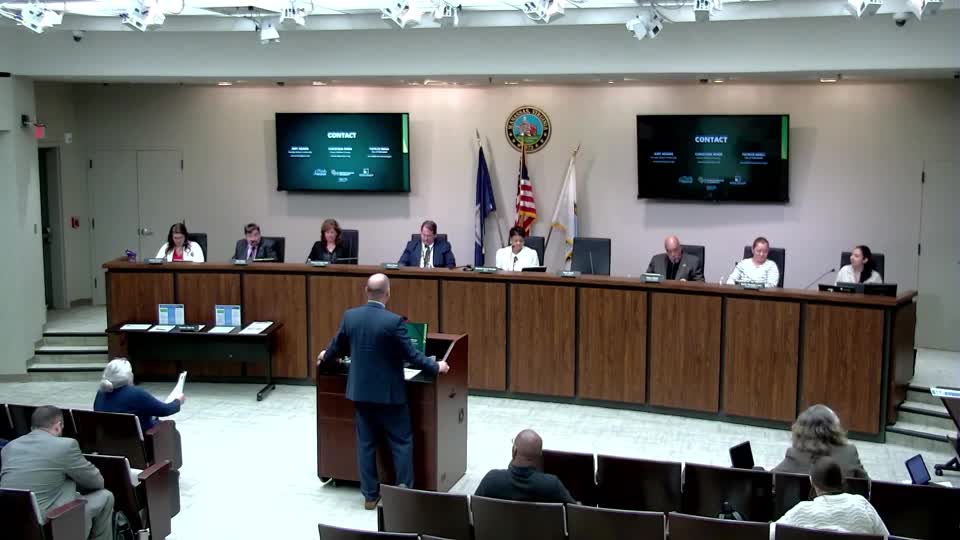
City hears utility rate study recommending multi-year increases, net‑metering change
Summary
Consultants presented a utility rate and cost-of-service study recommending an 8.5% annual electric and water rate increase for several years, smaller sewer rises, and phased changes to the city’s net‑metering credit. Officials asked follow-up questions about data‑center impacts, reserve targets and solar customers.
Consultants from NewGen Strategies and Solutions presented the city council with a multi-year utility rate and cost-of-service study outlining proposed increases to electric, water and sewer rates and a recommended reform to the net‑metering credit.
The study’s headline recommendation was an 8.5% annual increase to electric revenue for the next five years and an 8.5% annual increase for water for fiscal years 2026–2028 (then inflationary increases thereafter). The consultant proposed 3% annual increases for sewer. NewGen stressed the increases were intended to restore reserve targets, fund planned capital work and maintain service levels while keeping the utility self‑sufficient.
Why it matters: the study responds to rising operation and maintenance costs, planned capital investments that have been funded partly with cash reserves, and unstable wholesale power costs. Without the recommended revenue increases the consultants projected the utility would draw down reserves below policy levels.
Key details from the presentation - Electric: NewGen recommended a uniform 8.5% annual increase applied across customer classes and rate elements (monthly customer charge, energy charge, demand charge where applicable). The city’s primary power supplier (reported as VEMA in the presentation) has signaled higher wholesale costs and the consultant expects an increased power‑cost adjustment in FY26. NewGen modeled alternative scenarios that included large new data‑center loads; higher data‑center arrivals would reduce the required percentage increase slightly (to about 7–8% in some scenarios) but the firm warned against relying on speculative future loads to balance the budget. - Net metering: The consultants recommended changing the city’s net‑metering credit to an avoided‑cost based value (tied to VEMA/market costs) rather than full retail credit, and phasing the change in over five years (20% per year) for existing net‑metering customers; newly interconnecting systems would take the avoided‑cost credit immediately. - Typical bill example: Using a sample customer (1,000 kWh electric + 5,000 gallons water + 5,000 gallons sewer), NewGen projected a combined monthly bill increase from about $162 to about $174 (roughly $12 increase, excluding outside sewer treatment charges) under the FY26 increases. - Water and sewer: Water projections used an 8.5% increase for 2026–2028 and then smaller increases; sewer needed smaller, inflationary increases (the consultants recommended 3% annually). The presentation showed the city’s existing capital fund was being used to reduce rate impacts and that cash balances would decline before recovering if the recommended increases are implemented.
Questions from councilors Council members probed several specifics: the treatment of wholesale power cost variability, the number of rooftop solar customers (the consultants said the city has roughly 200 net‑metering systems), the age and resiliency of the customer base, and how reserve policy targets (60 days cash on hand, one year of debt service and 1% of net assets) affect rate sizing. Council members also asked for a margin breakdown by customer class (the consultant agreed to provide that detail in follow-up materials) and reiterated the need for a separate work session to review the study before action.
What the study did not do The presentation did not put any new rates into effect. The council did not vote on rate changes at this meeting; staff and consultants left the matter for further review and a dedicated work session. The recommendation also did not include changes to tax or other municipal revenue sources.
Ending: The consultants and staff said they will provide additional detail — including class margin analyses, a map of net‑metering customers, and follow-up materials — before council considers any formal rate ordinance. Council members requested a work session to discuss the study in depth and to give residents more time to review the proposals.