Get Full Government Meeting Transcripts, Videos, & Alerts Forever!
Get email alerts on the Election Administration topic
No spam. Unsubscribe anytime.
House adopts Election Day recognition as a commemorative holiday without mandating paid time off
Summary
The House passed fourth substitute HB 351 to designate Election Day as a state holiday of recognition while clarifying it does not require employers — including state employers — to provide paid time off; the measure passed 69–3 on Feb. 26, 2025.
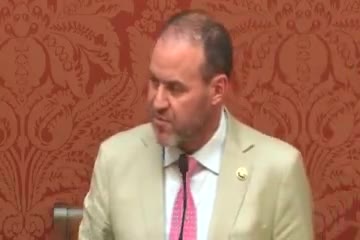
Representative Ryan Wilcox sponsored fourth substitute House Bill 351 on Feb. 26, 2025, seeking to elevate Election Day as a state‑recognized day. Wilcox told the House the substitute was intended to create recognition without a fiscal impact by avoiding a mandatory paid day off.
Why it matters: Sponsors said the measure is intended to “elevate Election Day” and encourage turnout without placing new payroll obligations on employers. Wilcox explained the substitute treats Election Day like other commemorative observances so there would be no fiscal note.
Floor questions and clarifications: Representative Cutler asked where the bill explicitly designates the day as commemorative rather than a paid legal holiday. Wilcox and staff pointed to language in the substitute indicating no employer obligation to give the day off and said the bill does not create a paid holiday for state employees. Wilcox also reminded members that state law already allows two hours off to vote if requested in advance; his closing remarks urged planning to accommodate voting hours.
Vote: The House opened and closed the vote on fourth substitute HB 351; the bill passed 69–3 and will be sent to the Senate for its consideration.
Ending: Backers said the change aims to underscore the civic importance of voting while avoiding a fiscal impact on employers.