Get Full Government Meeting Transcripts, Videos, & Alerts Forever!
Get email alerts on the Livestock And Animal Control topic
No spam. Unsubscribe anytime.
Committee approves treble‑damages measure for livestock killed by dogs after debate on venue and remedies
Summary
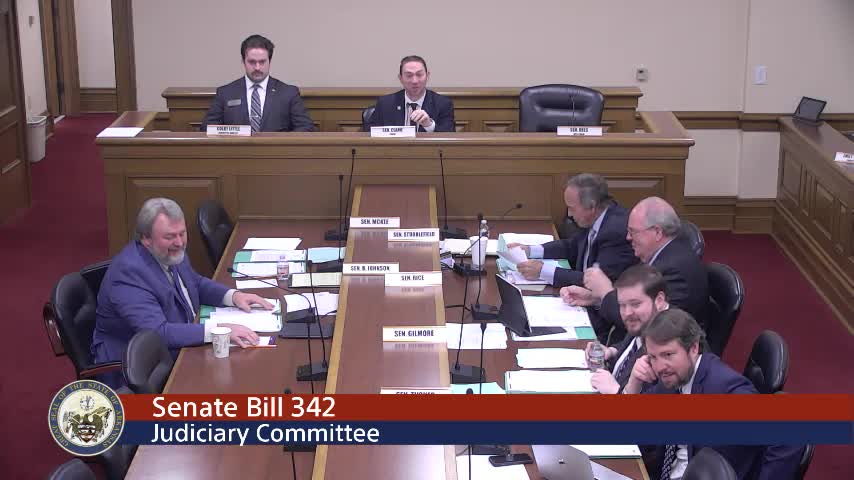
Senate Bill 342 would allow plaintiffs who prove a dog killed their livestock to recover treble damages; the Senate Judiciary Committee passed the bill as amended after discussion on venue language and the proper measure of damages.
The Senate Judiciary Committee on [date not specified] passed Senate Bill 342, a measure that would allow a livestock owner who proves a dog killed or injured their animals to recover treble (threefold) damages in civil court.
Senator Alan Clark, sponsor of the bill, told the committee the measure is intended to address repeated incidents in rural areas where dogs harass or kill livestock and local enforcement options are limited. “What this does... is for their trouble ... they can collect the price of the cow three times,” Clark said, adding the remedy is both punitive and compensatory for the time and effort required to pursue civil relief.
Committee members raised several substantive and drafting questions. Senator Tucker argued the draft uses the term “jurisdiction” where he believed the correct legal term is “venue” and suggested adding a statutory cite rather than a reference to the Arkansas Rules of Civil Procedure. “I really think we’re talking about venue, not jurisdiction,” Tucker said. Clark acknowledged the committee would address those technical drafting points before floor consideration.
Senator Gilmore, Senator Rice and farmer‑members on the panel emphasized the recurring nature of some dog attacks and the practical burden on livestock owners. Senator Stubblefield, speaking from farming experience, described repeated pack‑dog problems and said civil remedies often do not reflect the ongoing cost and disruption to farming operations.
Clark told the committee the bill was modeled on laws in other states and that treble damages are intended to reflect the time and trouble of pursuing claims after repeated incidents. He noted the bill would not change criminal law governing animal control but would provide a civil remedy when a plaintiff can identify the responsible animal or owner and prove liability.
The committee voted to pass the bill with the amendment offered during consideration. Senators debated the policy tradeoffs — including alternatives suggested by Senator Tucker such as authorizing recovery of attorney fees rather than trebled property value — but supporters said treble damages are appropriate where repeated and deliberate failures to control animals cause ongoing harm.
The bill carries implementation and evidentiary challenges acknowledged on the record: plaintiffs must still prove causation and ownership of the dog responsible for the attack; several members noted identifying ownership or linkage can be difficult where multiple dogs or absent owners are involved.
Why it matters: The measure changes civil remedies for livestock owners whose animals are killed or injured by dogs, potentially increasing the financial recovery available in civil court. Supporters framed the bill as a rural‑focused public‑policy response to recurring pack‑dog incidents and enforcement gaps.
Outcome: The committee passed the bill as amended and the sponsor said he would accept drafting fixes in subsequent stages to address concerns about venue language.