Get Full Government Meeting Transcripts, Videos, & Alerts Forever!
Get email alerts on the Extracurricular Participation And School Enrollment topic
No spam. Unsubscribe anytime.
Senate committee approves bill to let private and homeschool students participate in public extracurriculars
Summary
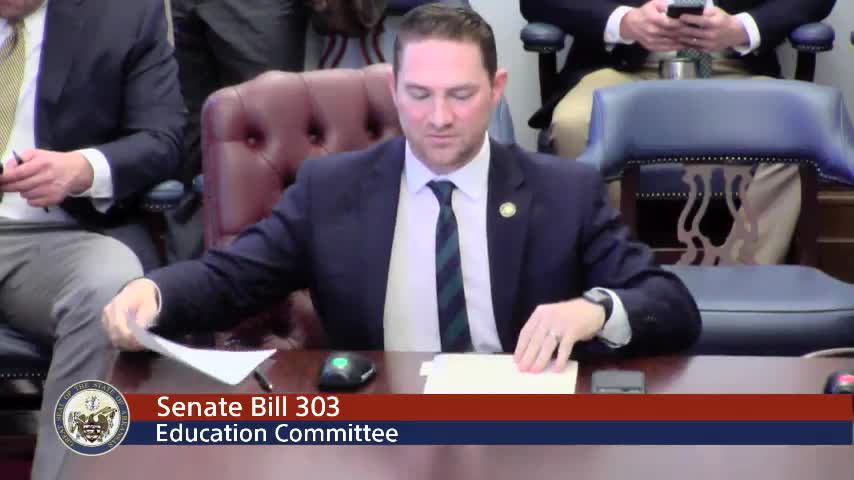
Senate Bill 303, amended to clarify that resident public and public charter schools may permit private and homeschool students to participate in extracurricular activities and that funding follows the student, passed the committee after sponsors provided participation data.
Senate Bill 303, which allows resident public schools — including public charter schools as clarified by amendment — to permit certain students enrolled in accredited private schools or homeschools to participate in public extracurricular activities, passed the Senate Education Committee after the sponsor provided data showing the policy would be small in scale.
Sponsor Sen. Tyler Deese, R., described the amendment and the bill as a measure to “give more opportunities to students across our state” while maintaining local control. The amendment added language making clear that resident public charter schools are to be treated the same as resident public schools for participation decisions.
Deese told the committee staff had analyzed participation history and found the program would affect relatively few students. “Only 96 school districts had any homeschool students participate in AAA activities,” Deese said, and “of those 96 ... only 14 had more than 10 students.” He said the bill is permissive — local schools “may permit” participation — and that funding for services would follow the participating student to the public school.
Committee members asked whether athletics tryout and eligibility rules would still apply; Deese said students would still be subject to local coaches’ selection and the usual athletic processes. He said the intent was not to shift large numbers of students into public teams but to provide a pathway for some students — for example students from small private or cooperative programs — to participate in band, choir or athletics in their resident districts.
The committee adopted two amendments (including one from an earlier meeting) and voted to pass the bill as amended by voice vote.
Deese said the bill draws on precedents in homeschooling participation laws and is intended to be narrowly applied. “It’s a very small scale,” he said, noting the permissive nature of the statute gives districts the final decision on capacity and eligibility.
The committee approved the bill by voice vote and it will proceed with the adopted amendments.