Get Full Government Meeting Transcripts, Videos, & Alerts Forever!
Get email alerts on the Public Health Policy topic
No spam. Unsubscribe anytime.
Board creates cannabis state legalization task force to plan for potential statewide change
Summary
Supervisors unanimously approved an ordinance establishing a 22-member Cannabis State Legalization Task Force to advise the mayor, board and city departments on the local impacts of potential state-level adult-use cannabis legalization.
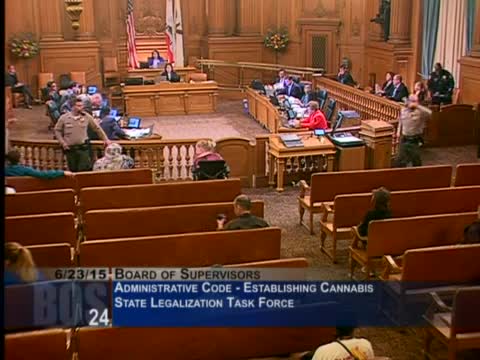
San Francisco — The Board of Supervisors unanimously passed a measure on first reading Tuesday to create a Cannabis State Legalization Task Force charged with assessing how state-level adult-use legalization could affect San Francisco and recommending administrative, land-use and enforcement responses.
Supervisor Scott Wiener, who authored the ordinance with Supervisors Jane Kim and John Marr as co-sponsors, said several statewide initiatives were under development and that the city needed a proactive policy approach rather than ad hoc responses after a state measure passed. The 22-member task force will include representatives from affected sectors — residents, business, advocates and government — and is tasked with delivering a report to the Board within one year covering land-use, regulatory, enforcement, social and equity impacts.
Wiener said the task force will not take an official position on legalization but will focus on policy and administrative solutions, and he proposed a minor amendment clarifying experience requirements for two seats reserved for cannabis consumers. The amendment was adopted without objection.
Why it matters: If voters in California approve adult-use cannabis at the state level, cities must quickly decide how to regulate retail, cultivation and related land-use issues. The task force is intended to identify likely impacts and help the city prepare regulations, equity programs and enforcement plans.
Next steps: The ordinance returns for a required second reading. The task force is slated to convene in the fall and report to the Board within one year.