Get Full Government Meeting Transcripts, Videos, & Alerts Forever!
Get email alerts on the Transportation topic
No spam. Unsubscribe anytime.
Supervisors back overhaul of city fleet management, telematics expansion and car-share pilot
Summary
The board approved a first-reading ordinance to transfer fleet policy to the City Administrator’s Office, expand telematics use, and launch a 65-vehicle pilot toward a 300-vehicle city car-share program intended to cut costs and emissions.
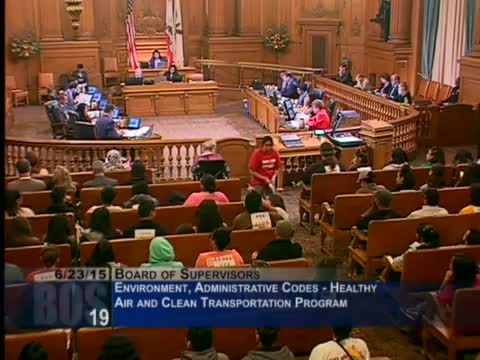
San Francisco — Supervisors gave unanimous first-reading approval Tuesday to an ordinance moving fleet management and vehicle-selection policy to the City Administrator’s Office, expanding telematics use across the municipal fleet and requiring a new vehicle-assignment and reservation program.
Supervisor Mark Farrell, the ordinance author, said the package consolidates policy, accelerates telematics installation and creates a city-run car-share that would begin with a 65-vehicle pilot and expand to a 300-vehicle pool if the trial succeeds. Farrell said telematics devices are already installed in about 2,700 city vehicles and equipment, and that data from those systems will allow officials to identify underutilized vehicles for reassignment or retirement.
"For the first time in our city's history, the city administrator will create and oversee a vehicle assignment system and reservation system for a 300-vehicle city car sharing fleet," Farrell said, noting the program would be implemented in two phases with a pilot this year and an expanded rollout in early 2016.
City estimates presented in the hearing said a 5 percent reduction in the light-duty, non-safety fleet could yield roughly $3 million in savings over several years, and a 10 percent reduction about $6 million, primarily through avoided acquisitions and reduced maintenance and fuel costs.
The ordinance requires annual greenhouse-gas reporting and alignment of reduction targets with federal guidance cited by the sponsor; it also moves healthy-air and clean-transportation duties to the City Administrator for centralized oversight.
Why it matters: The package aims to modernize use of fleet data to reduce costs, lower emissions and increase utilization of city vehicles. The car-share pilot would be among the largest municipally run fleets in the state if fully implemented.
Next steps: The ordinance passed unanimously on first reading and will return for a required second reading. Fleet Management will begin the pilot and provide reports on the trial and telematics performance.