Get Full Government Meeting Transcripts, Videos, & Alerts Forever!
Get email alerts on the Antisemitism And Campus Policies topic
No spam. Unsubscribe anytime.
Arkansas Senate Education Committee rejects bill aimed at addressing antisemitism on campuses
Summary
Senate Bill 352, which would have required schools to treat antisemitic harassment as discrimination and incorporated the IHRA definition, was debated but failed after committee members raised constitutional and parity concerns.
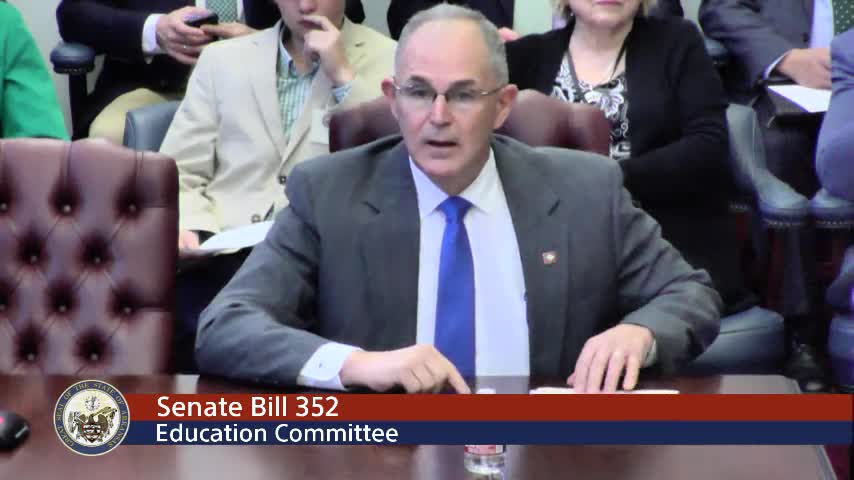
Senate Bill 352, a proposal to require Arkansas schools and higher-education institutions to treat antisemitic harassment and discrimination the same as other protected categories, failed to advance in the Senate Education Committee after debate about its language and constitutional risks.
Sponsor Sen. Matt Stone, R., introduced the measure to the committee and said it was intended to “foster an environment where Jewish students can come and get an education in Arkansas without being subjected to harassment.” He framed the bill around recent incidents and federal statistics: “This past Christmas Eve... protesters simply because they were Jewish people,” Stone said, and he cited a federal increase in investigations after October 7, 2023.
Committee members pressed for changes to the draft, and outside testimony raised legal and civil‑liberties concerns. Law professor Josh Silverstein testified in opposition, saying the bill’s incorporation of the International Holocaust Remembrance Alliance (IHRA) working definition of antisemitism risked sweeping in protected speech on college campuses. “The primary problem is the IHRA definition that is incorporated into the law,” Silverstein told the committee. He argued the IHRA text is “seriously overbroad, sweeping in speech that is clearly appropriate in an academic setting and protected by the First Amendment.” Silverstein cited specific IHRA clauses he said could chill academic debate about Israel.
Several senators who said they supported the goal of protecting Jewish students urged broader, parity‑focused language so schools would address antisemitic conduct in the same manner as other prohibited discrimination. Sen. Jim Dodson, R., said he supported the concept but had drafted suggested edits to make the statute track existing discrimination law and to incorporate antisemitism within general anti‑bias training rather than singling it out. “I support the concept, but at this moment in time, I can’t support the bill as drafted,” Dodson said.
Stone said he had reviewed the bill with the attorney general’s office and the Department of Education and said he believed the measure did not suppress free speech, adding a personal closing: “I’m somebody, and I’m sitting at the end of this table and I wanna do something.”
After discussion, the committee took a voice vote on the motion to advance the bill. The chair announced, “I’m afraid the noes have it,” and SB 352 did not pass out of committee.
The committee record shows debate focused on two lines of tension: lawmakers’ stated desire to address clear incidents of harassment and outside testimony that some draft language — specifically the IHRA wording incorporated by reference — could run afoul of First Amendment protections and existing discrimination law. Several senators asked the sponsor to consider revisions that would (1) make the bill’s protections explicit about conduct rather than viewpoint, (2) ensure parity with existing anti‑discrimination frameworks, and (3) broaden reporting and annual monitoring to cover all forms of prohibited discrimination.
The committee did not adopt amendments to resolve those concerns, and the bill failed to advance.