Get Full Government Meeting Transcripts, Videos, & Alerts Forever!
Get email alerts on the Immigration And Public Services topic
No spam. Unsubscribe anytime.
Hundreds of residents urge council to reject proposed anti-immigrant ordinances; council considers JSO fingerprinting funding
Summary
Hundreds of public commenters urged the Jacksonville City Council to reject two proposed ordinances that would restrict city services for immigrants and authorize local collaboration with immigration enforcement. Speakers also criticized a proposed $76,250 allocation for mobile fingerprint scanners tied to the measures.
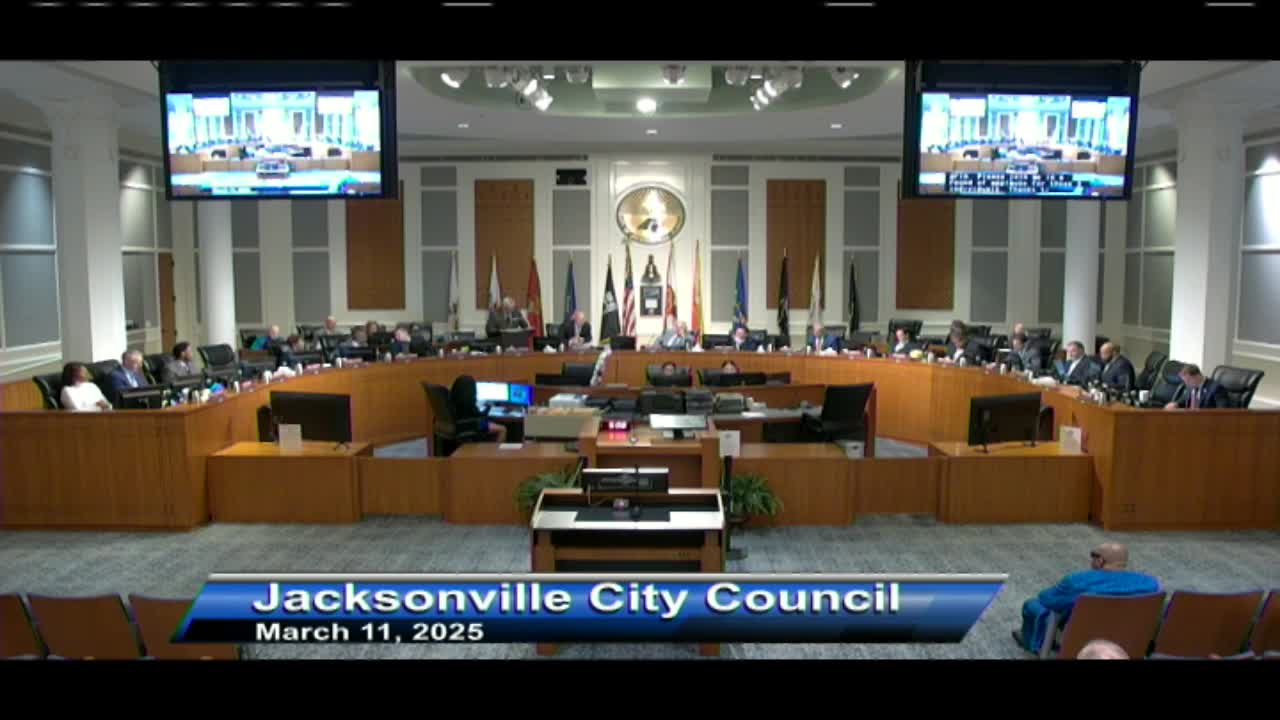
Dozens of Jacksonville residents and scores of community groups addressed the City Council during a long public-comment session on March 11 to oppose two proposed ordinances — listed in the meeting record as 20250138 and 20250147 — that supporters have framed as measures to ensure taxpayer-funded city services go to residents but critics say would scapegoat and criminalize immigrants.
Those who spoke against the ordinances included community organizers, faith leaders and veterans. Several speakers, including Maria Garcia and Vanessa Alvarez of the Jacksonville Immigrant Rights Alliance, said the bills would create an atmosphere of fear that would discourage immigrants from accessing basic services, reporting crimes, or sending children to school. “Denying city services to immigrants doesn’t just hurt them — it hurts the whole community,” Maria Garcia said during public comment.
Many speakers specifically objected to an element of the package that would fund mobile fingerprinting devices for the Jacksonville Sheriff’s Office (JSO). Witnesses and speakers gave the council a range of concerns about the proposed $76,250 expenditure: that it would be used for racial profiling, duplicate federal responsibilities, and divert funds from housing, education and health services. Community groups present at the meeting included the Jacksonville Immigrant Rights Alliance, Jacksonville Palestine Solidarity Network, Jacksonville Community Action Committee and other volunteer and advocacy organizations.
Speakers urged the council to direct resources toward homelessness services, infrastructure and schools rather than immigration enforcement. “This is an attack on our neighbors, not a solution to real problems like housing and education,” said Leah Grady representing Jacksonville Palestine Solidarity Network. Several speakers also raised high-profile recent federal actions as a cautionary example: one commenter cited the arrest of a permanent resident organizer and said this demonstrated the risk of local measures enabling deportations.
Some council members acknowledged the depth of public concern during the meeting and asked administrative staff for details about how any enforcement measure would work in practice. The record shows no final council vote on the two ordinances during the March 11 meeting; the measures were the subject of public hearings and further committee consideration.
Why it matters: The ordinances would reallocate local policies and money toward measures that tie municipal service access to immigration status and expand local enforcement cooperation with federal immigration authorities. City-level adoption could affect families’ access to child and youth services, public benefits and trust in public safety institutions.
What the ordinances say (as described at the meeting): The bills, as introduced, would (a) restrict some city-provided services where recipients are not authorized immigrants, and (b) authorize JSO collaboration with immigration enforcement and funding for mobile fingerprint readers to help identify individuals in the field. The meeting record lists the fingerprinting device line item at approximately $76,250.
Public reaction: The meeting drew repeated standing-room public comment against the ordinances. Speakers included organizers, faith leaders, veterans, and people who said they or their relatives were long-time Jacksonville residents. Many speakers framed opposition as a moral issue and as a practical concern about public health, education, and public safety.
Council next steps: No final action was recorded on either ordinance on March 11; both items were continued in the public record for further review and public hearing (per the council clerk’s entries). Council members and staff said they would continue committee-level review and asked the administration to clarify scope and enforcement mechanics for any proposed local immigration-related enforcement or data-sharing.
Documentation: Remarks and questions in this article are taken from the council meeting transcript and the roll-call record of the March 11 meeting.