Get Full Government Meeting Transcripts, Videos, & Alerts Forever!
Get email alerts on the Housing Development topic
No spam. Unsubscribe anytime.
Allegany County moves to finalize D.R. Horton neighborhood on former high school site; county to act as horizontal developer
Summary
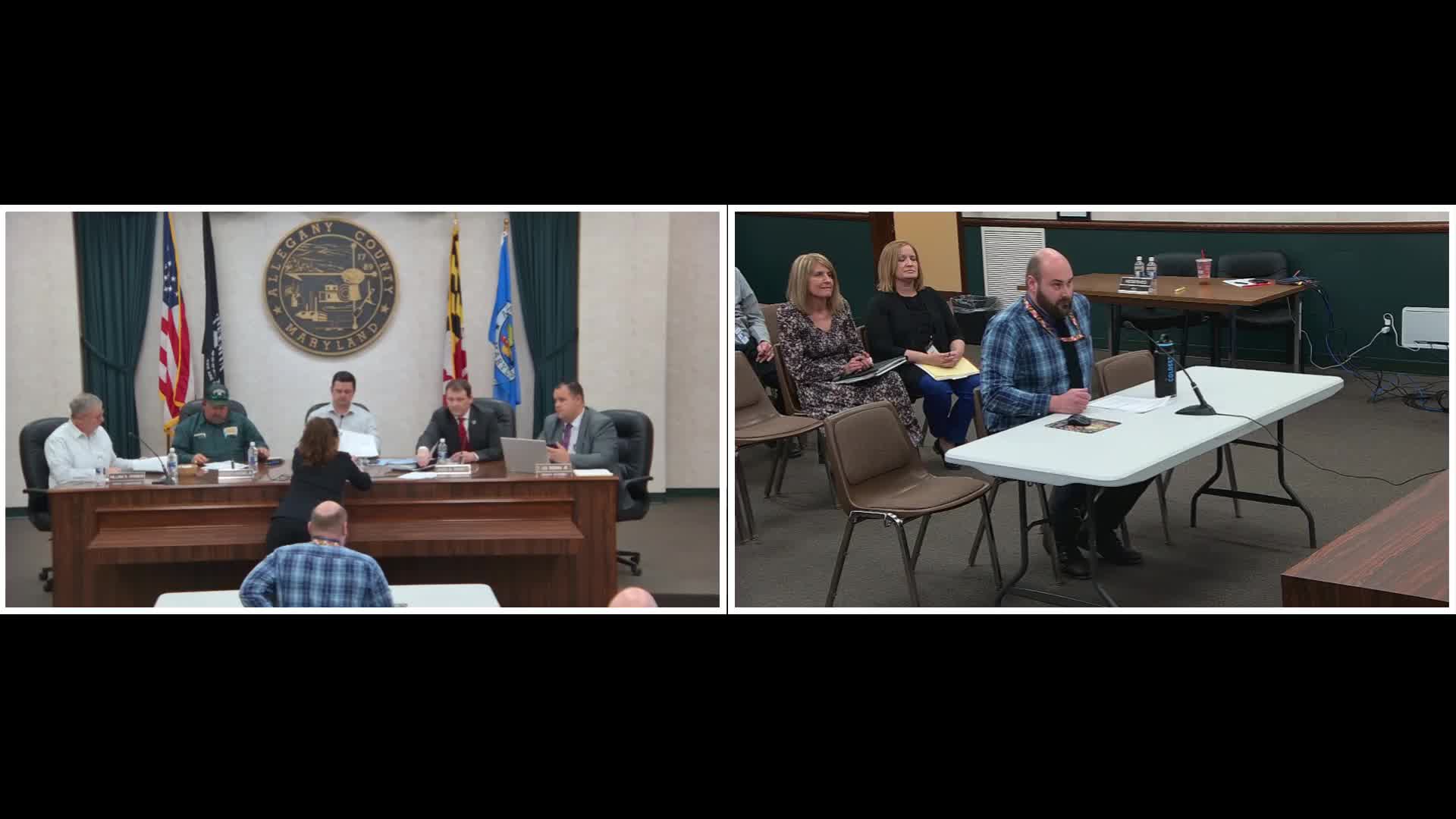
County staff told commissioners they completed public comment review and recommended moving the D.R. Horton development agreement and site plan to the April 3 meeting, with infrastructure funded from a mix of capital bonds, grants and other sources and lots transferred in tranches to the builder.
Allegany County staff reported that the D.R. Horton development agreement for the former Allegany High School site is ready for formal consideration and asked commissioners to place the development agreement and site plan on the April 3 agenda so bids for infrastructure work can proceed.
County staff described the county’s role as a horizontal developer: the county will build roads, utilities and other infrastructure to lower Horton’s costs and keep home prices affordable. “The county is going to fulfill that role as a traditional land developer because the county already has expertise in developing land,” Adam Patterson, county staff, said while explaining the financing and delivery model.
Key points from the staff briefing: - Tranche transfers: the county will convey small groups of lots (typically 7–10 at a time) to Horton with reversion clauses if Horton does not build within the agreed period (staff said one year for the tranche, with the developer typically able to build in 90 days). This mechanism is intended to protect the county if market or cost conditions change. - Funding: infrastructure is to be paid from a mix of remaining bond/capital funds from the Alleghany High School demolition project, an ARC grant application, George Edwards funds and other public sources; staff said the county retained contingency bond funds for this work. - Affordability and ownership: houses will be sold to individual owner-occupants rather than in lump sales to investors; Horton will aim to price units below typical regional new-construction levels. - Public amenities and site features: the plan includes a city parklet (land purchased with Project Open Space funds), stormwater retention ponds to meet state discharge rules, sidewalks, lighting, and a planned trail connection to the GAP Trail and nearby Rose Hill Cemetery.
Staff said they received about 35 substantive public comments during the 10-day comment period and provided written responses; the remaining concerns focused on design/aesthetics, traffic, stormwater and the loss of ball fields. Staff noted they are pursuing additional green-space and recreation funding and that some ball-field capacity may be added in later phases.
On construction oversight and local hiring, Horton told staff it aims to use local contractors where feasible; the builder will typically use approved framing crews that can erect a house quickly but said local tradespeople would be used for HVAC, plumbing and other trades when available. County and city building inspectors will perform standard inspections during construction.
Timing and next steps: staff asked commissioners to put the development agreement and site plan on the April 3 agenda for formal approval and associated bidding of infrastructure. If commissioners approve on April 3, staff said they intend to solicit bids and begin infrastructure construction thereafter.
The county emphasized that the agreement keeps the county in control of the infrastructure approvals and includes mechanisms to protect the county if Horton pauses or market conditions change. Commissioners asked staff to continue outreach on park design, trail connections and historical markers and to pursue identified grant sources for the park.
Quotations and attributions are drawn from the county staff presentation and public-comment responses presented at the work session.