Get Full Government Meeting Transcripts, Videos, & Alerts Forever!
Get email alerts on the Vaping Regulation topic
No spam. Unsubscribe anytime.
Senate committee hears hours of testimony and rejects bill to create Arkansas vapor-product registry
Summary
After hours of testimony from vape shop owners, retailers, public-health advocates and state tobacco-control officials, the Senate City, County & Local Affairs Committee voted to reject Senate Bill 252, which would have created a state registry for vapor products mirroring the federal FDA directory.
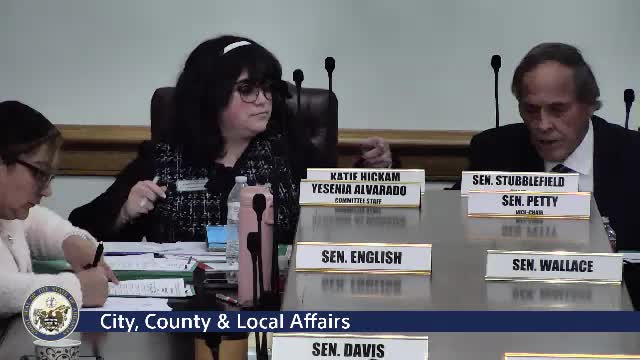
The Senate City, County & Local Affairs Committee rejected Senate Bill 252 on a roll-call vote after a lengthy hearing that included testimony from vape shop owners, retail chains, the Arkansas Tobacco Control Board and children’s-health advocates.
SB 252 would have required a state registry of vapor products that mirrors the federal Food and Drug Administration (FDA) directory and would also list products that have applied for federal review or are on appeal. Sponsor Sen. Jonathan Dismain said the registry is intended to "allow[] our tobacco control to have something to work against to enforce" and to give inspectors a way to know what products on store shelves have gone through federal review.
Supporters, including Steve Good, who identified himself as representing Arkansas retailers, said a registry would help enforcement by letting agents scan product UPCs to tell whether an item had applied for or received federal premarket review. Good said states with similar directories have not reported mass shop closures and that the measure would help keep unapproved or counterfeit items off shelves.
Opponents — largely independent vape-shop owners and representatives of chains — said a registry tied to the FDA premarket process would effectively remove most products from the market because few small manufacturers have secured FDA approvals. Scout Stubbs, who testified she and her husband own four Arkansas vape shops, said the FDA process has been "the single hardest thing I've ever had to do" and warned the bill "would devastate our industry, put hundreds of jobs at risk, and severely limit vaping statutes." Several retailers said the products causing the most concern are inexpensive single-use disposable vapes imported from China and that SB 252 did not specifically target those devices.
Public-health testimony was mixed. Camille Rishoo, health-policy director at Arkansas Advocates for Children and Families, said the group supports SB 252 because "children shouldn't be targeted by marketing for addictive and harmful products." Gary Proffitt, chair of the Arkansas Tobacco Control Board, said the board approves retail and wholesale permits and wants clearer information about product contents and federal determinations.
Retail witnesses gave specific concerns about the bill's structure and costs. Multiple testifiers said the draft bill imposes a $1,000 initial fee per brand family and a $500 annual fee, and that some versions of the bill authorize fines of about $1,000 per SKU for selling items not on the registry. Several said those fees and penalties would disproportionately burden small, independent shops. Witnesses who run multi-location businesses said Chinese disposable devices currently account for a significant share of sales in some stores; one owner estimated disposables represented about 30% of nicotine revenue in his stores.
Committee members questioned witnesses about enforcement, the scope of federal premarket review, and whether registries simply create a system that can be gamed. David Potter, acting enforcement director for state tobacco control, testified the agency lacks a state laboratory to test suspect products and that the agency conducts compliance checks (about 4,000 in the most recent fiscal year) with a roughly 6.5% violation rate on sales-to-minor checks.
After discussion the committee adopted a technical amendment offered by the sponsor and then voted on the bill as amended. The roll call recorded multiple ayes and noes; the chair announced "Bill fails." (Transcript roll-call entries include recorded votes: Sen. Davis — Aye; Sen. Wallace — Aye; Sen. Hester — Aye; Sen. English — Aye; Sen. Rice — No; Sen. Patty — No; Sen. Petty — No; Sen. Bryant — No.)
The hearing demonstrated a split between public-health advocates seeking stronger restrictions on marketing and product access to protect youth and retailers arguing a registry tied to the FDA premarket process would eliminate most non–big-tobacco products from the Arkansas market and harm small businesses. The sponsor, Sen. Dismain, said the registry was aimed at giving tobacco-control agents a practical enforcement tool, not an industry-wide ban.
With the bill defeated in committee, proponents may revise the approach — multiple witnesses urged more-targeted measures aimed specifically at single-use disposable devices imported without oversight — while opponents said enforcement of existing laws and focused actions against illicit imports would be a better path forward.
Votes at a glance
- SB 252 — Create vapor product registry (as amended): Failed (roll call recorded in committee).