Get Full Government Meeting Transcripts, Videos, & Alerts Forever!
Get email alerts on the Open Meetings topic
No spam. Unsubscribe anytime.
Senate passes bill to define public meetings, polling and remote participation under FOIA
Summary
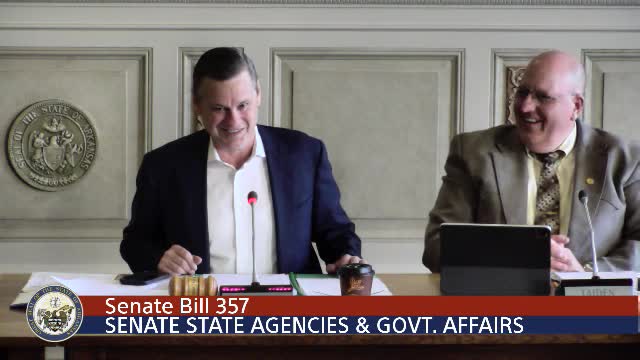
Senate Bill 227, a bipartisan effort to clarify the law on public meetings and informal communications by governing bodies, passed committee after two years of stakeholder work and amendments addressing remote participation, notice and permitted executive-session topics.
A Senate committee advanced Senate Bill 227, a comprehensive rewrite of portions of Arkansas— Freedom of Information Act law intended to define "public meeting," set rules for remote attendance and recordings, and clarify what kinds of communications among governing-body members are permitted outside of public meetings.
Sponsor Senator Jim Tucker said the measure resulted from two years of work with a FOIA working group convened by the attorney general—s office and included representatives of the press, municipal and county associations, school boards and other stakeholders. The bill adds definitions (including background/non-decisional information, "deliberation," "informal meeting" and "polling"), sets notice rules for agenda posting and encourages posting notices on websites and social media where maintained, and preserves current executive-session rules while adding authorization for executive sessions to discuss responses to cybersecurity attacks.
On remote participation, the bill requires that remote attendees be identified, their votes and remarks be made clear, and that governing bodies give members of the public reasonable access to attend by the same technological means the governing body uses. The bill draws a line around deliberation: members may have background or non-decisional conversations outside public meetings, but deliberations about a matter members will vote on must occur in a public meeting so the public can witness the decision-making.
Senator Tucker described a lengthy negotiation process with the Association of Counties, the Municipal League, the Arkansas Press Association and others; he said the final amendment made the bill more transparent and preserved training and clarity for local elected officials. Supporters including transparency advocates and municipal representatives spoke in favor; no substantive opposition appeared on the committee record. The committee adopted an amendment and advanced the bill by voice vote (mover: Senator Dodson; seconder: Senator Sullivan).