Get Full Government Meeting Transcripts, Videos, & Alerts Forever!
Get email alerts on the Eminent Domain topic
No spam. Unsubscribe anytime.
Court of Appeals hears challenge over developers use of eminent domain to install water and sewer easements
Summary
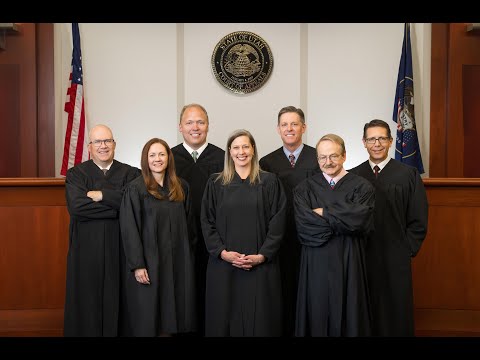
The Utah Court of Appeals on Oct. 27 heard arguments in Wild Country Holdings v. We5 over whether a private developer may use eminent domain to acquire utility easements for water and sewer lines that would be conveyed to municipal or district providers.
The Utah Court of Appeals on Oct. 27 heard arguments in Wild Country Holdings v. We5 over whether a private developer may use eminent domain to acquire utility easements for water and sewer lines that would be conveyed to municipal or district providers.
Wild Country Holdingscounsel said the Utah eminent domain statute is organized around "uses" rather than actors and allows private parties to condemn for public infrastructure, subject to statutory safeguards. Responding counsel countered the court should construe eminent domain powers narrowly and insisted the condemnor must be the entity that will provide the public service.
The case arises from a landlocked parcel on a mountain above Sandy City. Wild Country sought easements to install roughly 15 feet of underground pipe — a work the developer says will cost "several hundred thousand dollars" because of the terrain — and asked the trial court for immediate occupancy to allow installation. The trial court denied immediate occupancy; both sides then pursued interlocutory appeals that the appellate court consolidated.
"May it please the court, this is a case about the extent of eminent domain power in the state of Utah and what purposes it can be used for," said Craig Smith, attorney for Wild Country Holdings during oral argument. Smith argued the statute (Title 78B, Chapter 6, Part 5 of the Utah Code) lists public uses for which eminent domain may be exercised and does not limit the remedy to specific named public actors. He urged the court to treat the statutory provisions as enabling private participation in extending infrastructure while relying on built-in safeguards such as necessity, routing compatible with "the greatest public good and least private injury," a requirement that construction commence within a reasonable time, and the availability of just compensation and post-taking remedies.
Responding for the landowners, Ben Welsh of counsel urged a narrower reading. Welsh pointed to Utah precedent, including Salt Lake City v. Evans, and argued the protections in the scheme assume the condemnor will be the public-service provider. He warned that allowing private developers to condemn and then convey easements to third-party utilities or districts would undermine the statutory procedural safeguards that attach when a public entity itself seeks a taking.
The two sides also disputed what the record presents and the appellate posture. Counsel for Wild Country told the court the trial courts denial of immediate occupancy effectively resolved the eminent domain claim against the developer; opposing counsel said the record lacks an express order granting or denying a motion to dismiss and that the easement-by-necessity claim remains live for the trial court.
At argument, counsel for the developer emphasized precedent and policy from the U.S. Supreme Court (Berman v. Parker; Hawaii Housing Authority v. Midkiff; Kelo v. City of New London) to show that public uses sometimes coincide with private benefits and that statutes may allow private parties to participate in public-purpose projects. Welsh and other respondents urged strict, narrow construction of state eminent domain law and pointed to local precedents that require the condemnor to be the party that will own and operate the public use.
Both sides agreed that other statutory safeguards would constrain any condemnor: a public-use finding, necessity, least-private-injury routing, reasonable commencement, and compensation. Counsel for Wild Country argued permitting private parties to condemn prevents overburdening municipal budgets for expensive, hard-to-access infrastructure; counsel for the respondents countered that public entities have procedural checks (public hearings, supermajority votes in some situations) that private actors lack.
The appellate panel took the matter under advisement and said it would issue an opinion in due course. The easement-by-necessity claim remains pending in the trial court.
Votes at a glance: None. This hearing was oral argument; the Court took the matter under advisement and will issue a written opinion.
Context and next steps: The case tests how Utahs eminent domain statute allocates authority among public entities and private developers when the anticipated use of the condemned easement is to serve public water or sewer systems (record references name Sandy City and Jordan Basin Water Improvement District). The trial courts rulings on immediate occupancy and the motion-to-dismiss procedural posture are central to the appeal; the Court of Appealswritten opinion will clarify whether private parties may exercise eminent domain in the circumstances before the court.