Get Full Government Meeting Transcripts, Videos, & Alerts Forever!
Get email alerts on the State Employment Leave topic
No spam. Unsubscribe anytime.
Senate committee debates bill to apply military service credit to state annual leave accrual; committee fails to record required yeas
Summary
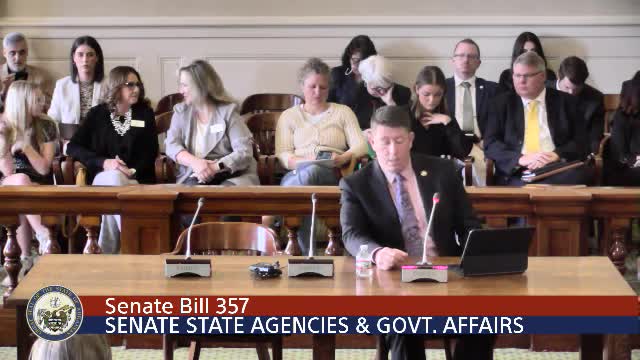
Senate Bill 357, to allow prior military service to be counted toward state annual-leave accrual, generated extended committee discussion about recruitment, fiscal impact and double-dipping. The committee ultimately did not record the required five recorded yeas during the voice vote and did not advance the measure.
Senate Bill 357, a proposal to credit prior military service toward a state employee—s annual leave accrual, drew extended debate in committee but failed to secure the required recorded affirmative votes during a voice vote.
Sponsor Senator Joshua Bryant described the bill as a recruitment and retention tool that would apply prior active-duty, reserve or National Guard service toward the state leave-accrual schedule, letting veterans accrue annual leave at a faster rate when they join state employment. Bryant and witnesses described federal examples where prior military years may be used by employers to determine leave accruals; the bill uses existing personnel forms and a points-to-days conversion (dividing reserve points by 365) to translate reserve and Guard duty into equivalent leave credit.
Senators questioned fiscal impacts and fairness. Committee members asked how much annual leave state employees receive at baseline (several answers from human resources and the Department of Military staff said new state employees accrue 8 hours per month, or roughly 12 days annually, with increases after year three); witnesses said the bureau could not determine a statewide revenue impact because eligibility depends on individual service records. Senator Clark and others raised concerns about taxpayer costs, the potential for parity with other public-service occupations, and at which point additional recruitment incentives become fiscally unsustainable. Supporters argued the measure would help retain talent and is a relatively modest benefit compared with salary increases.
After debate, the committee attempted a voice vote but did not record the statutory threshold (a chair comment indicated they "didn't hear five yeas"), and the measure was not advanced from the committee on that day.