Get Full Government Meeting Transcripts, Videos, & Alerts Forever!
Get email alerts on the Indian Child Welfare Act Mt topic
No spam. Unsubscribe anytime.
Montana hearing draws broad tribal, legal and health support to remove sunset on state Indian Child Welfare law
Summary
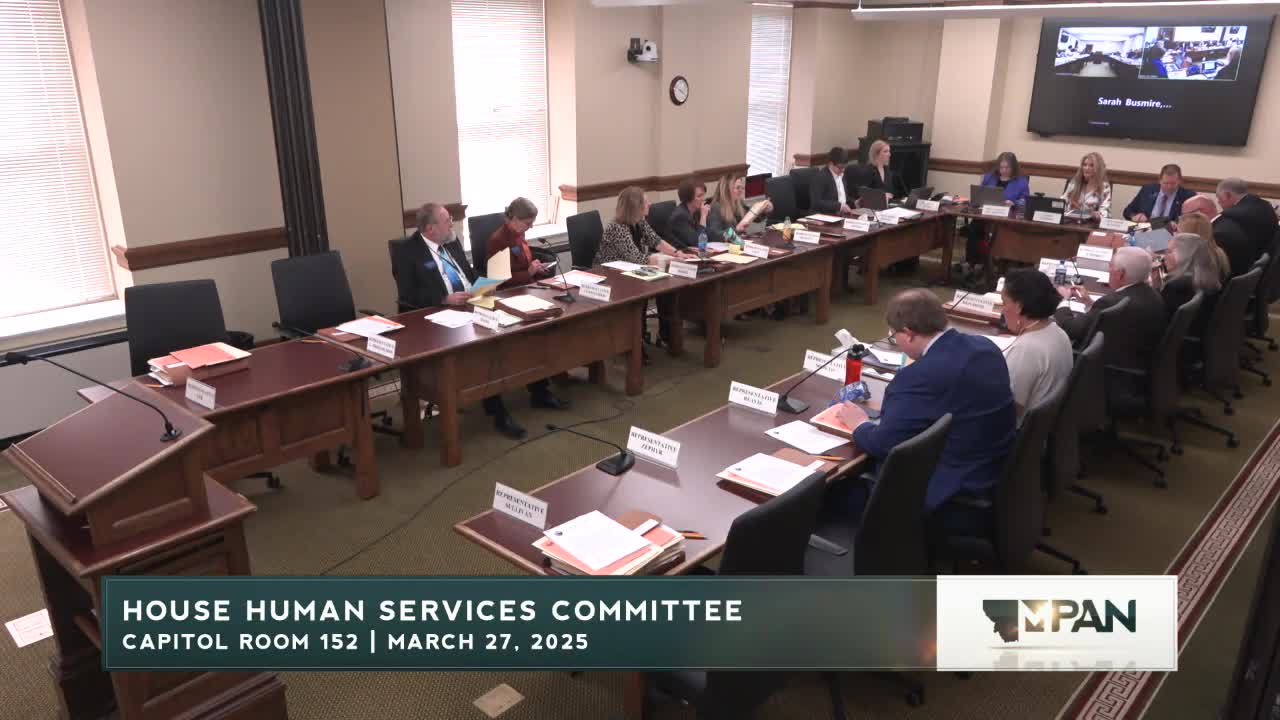
Sen. Jonathan Windiboy, sponsor and a member of the Senate from District 16, opened a hearing in the House Committee on Human Services on Senate Bill 147 seeking to remove the 2025 sunset from the Montana Indian Child Welfare Act and to make related statutory refinements.
Sen. Jonathan Windiboy, sponsor and a member of the Senate from District 16, opened a hearing in the House Committee on Human Services on Senate Bill 147 seeking to remove the 2025 sunset from the Montana Indian Child Welfare Act and to make related statutory refinements.
Proponents representing multiple tribal governments, legal organizations and health providers urged the committee to give SB 147 a due pass. Alissa Snow, representing the Blackfeet Tribe, Fort Belknap Indian Community and Chippewa Cree Tribe of Rocky Boy, told the committee the tribes ‘‘stand here today in strong support of Senate Bill 147’’ and said the law requires state child and family services to consult with tribal nations on placement of Indigenous children. Marci McLean of the ACLU of Montana summarized state data in the hearing record, saying that ‘‘Indian children represent 12% of the population but constitute over 30% of the children in foster care’’ and are removed ‘‘3.2 times higher than non-native children.’’
Why the bill matters: supporters said Montana-specific statutory language is needed in addition to the federal Indian Child Welfare Act (ICWA) to provide detailed guidance for social workers, assure tribal consultation and preserve children—s cultural identity. Several witnesses described ‘‘heritage guidance plans’’ and annual guardianship reports as mechanisms to keep Indian children connected to tribal culture, elders, language and ceremonies even when they live off-reservation.
Legal and practice changes discussed: attorneys and court practitioners detailed provisions they said are central to the bill. Kelly Driscoll, bureau chief for OPD—s Family Defense Bureau and a drafter of the legislation, highlighted the bill—s active-efforts section, which she said ‘‘gives specific guidance to the department—s social workers on the steps that they need to take to help a family’’ to prevent separation and to support reunification. Brooke Barker Taylor, an assistant attorney general who has worked in ICWA courts, described proposed guardianship-report language as a tool for tribes and guardians to maintain communication and monitor a child—s ongoing access to cultural resources.
Unique or new provisions: witnesses emphasized aspects of the Montana law that go beyond federal ICWA, including (as described in testimony) tribe-invited designation of qualified expert witnesses (QEW) to advise courts on tribe-specific child-rearing practices, and heritage guidance plans that are intended to be nonbinding but durable mechanisms to preserve tribal ties. Skeeter He Does It, described in the record as a designated QEW for the Crow Tribe, asked the committee to consider a narrow amendment allowing prosecutors to provide an offer of proof of QEW testimony when parties stipulate, to limit hearing time when witnesses are scarce.
Agency concerns and suggested fixes: Nikki Grossberg, Division Administrator for Child and Family Services at the Department of Public Health and Human Services, said she supports removing the sunset but asked for two technical changes in the amendment packet the department provided. She requested (1) clarifying statutory alignment with existing law on conditional relinquishments and adoption/visitation provisions (to avoid unintended conflicts with Title 40 provisions governing consents and conditional relinquishments) and (2) that language in section 4 regarding courts— authority to require guardianship reports be discretionary ("may" rather than "shall") and include a process for a guardian or prospective guardian to be heard before the court makes a compliance determination.
Drafting errors and procedural clarifications: those who helped draft SB 147 acknowledged one drafting mistake: an unintended deletion of the transfer-of-jurisdiction language. Brooke Barker Taylor said a scrivener—s error removed language about vacating transfer orders and that the committee should restore the earlier text so that when a tribe declines jurisdiction the state court retains the case rather than vacating the prior order.
Fiscal and implementation notes: Senator Windiboy noted a fiscal note referenced in testimony and comments, quoting an approximate figure of $210,000 being discussed in internal materials. Witnesses repeatedly framed SB 147 as state legislation that complements federal ICWA and provides clear, Montana-specific direction for social workers, courts and tribes.
Hearing outcome and next steps: the committee heard more than two dozen proponents in person and online and one department representative who offered technical edits. No committee vote or final action was recorded in the hearing transcript. The bill remains before the House Committee on Human Services pending amendments and future committee action.