Get Full Government Meeting Transcripts, Videos, & Alerts Forever!
Get email alerts on the Infrastructure Utility Relocations topic
No spam. Unsubscribe anytime.
Committee hears 'Smooth Move' bill to speed utility relocations on Montana highway projects
Summary
House Bill 672 would create a rulemaking process, notice requirements and phased reimbursement adjustments to reduce delays when utilities must relocate facilities for Montana Department of Transportation projects. Sponsors and a wide set of utilities, contractors and local providers supported the collaborative bill.
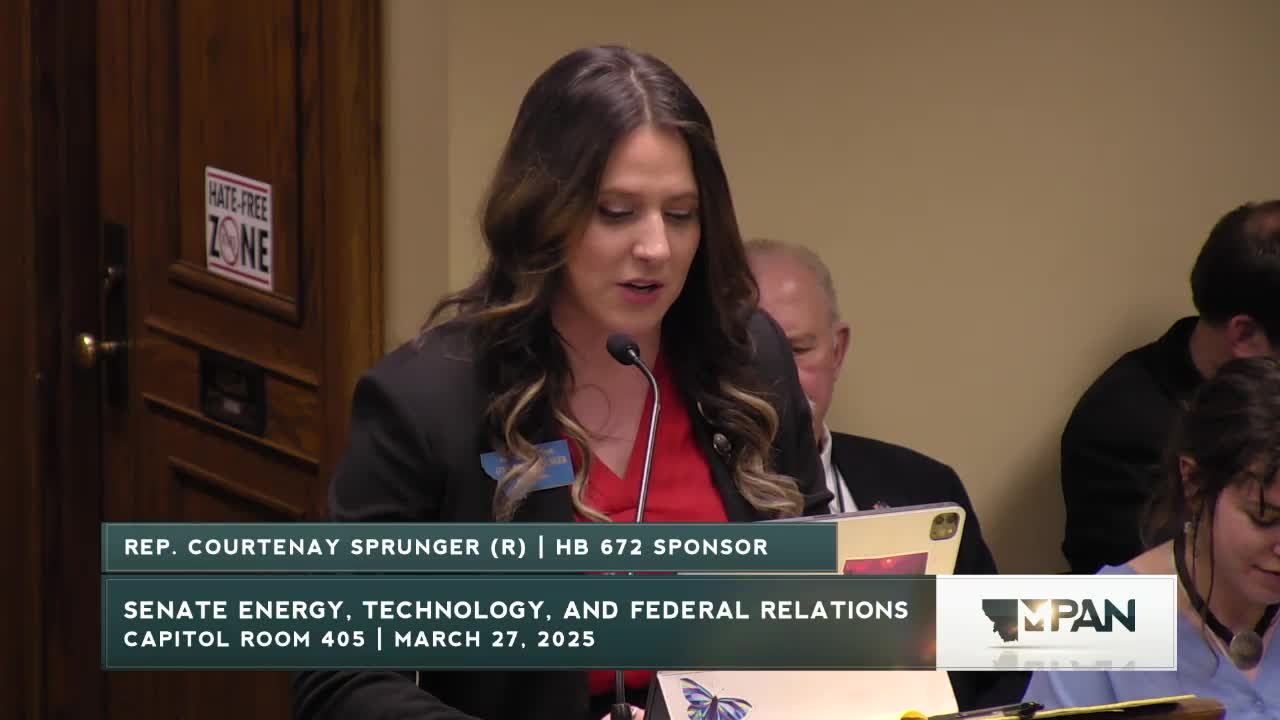
Representative Courtney Sprunger introduced House Bill 672, the "Smooth Move" program, to the Senate Energy Committee as a collaborative, stakeholder‑driven effort to reduce delays caused by late utility relocations during road construction. "This bill does three things," Sprunger told the committee: require preliminary notice to utilities, allow the Department of Transportation to adopt rules that clarify timelines and expectations, and permit MDT to reduce reimbursement gradually if relocations are not completed in a reasonable timeframe.
Chris Dorrington, Director of the Montana Department of Transportation, and representatives from utilities and contractors described months of stakeholder meetings that led to the draft. Dorrington said the current process lacks clarity and sometimes resembles "a Ponzi scheme" in finding who is responsible for what; HB 672, he said, sets a consistent statewide process. Alan Olson of Northwestern Energy, Bridger Mahlum of Broadband Montana and other utility and cooperative witnesses expressed support and committed to participating in rulemaking.
Contractors urged the committee to move quickly. Knife River and private contractors described persistent coordination problems and welcomed the collaborative rulemaking the bill proposes. CenturyLink / Lumen and Montana electric cooperatives likewise told the panel that improved communication, consistent notice and a structured rule process should reduce costly delays.
Sponsor Sprunger emphasized the bill does not put all details into statute but instead empowers a working group and rulemaking so stakeholders can define notice periods, timelines and exceptions. The sponsor and MDOT representatives said the bill aims to protect taxpayer dollars by allowing the department to move forward when utility delays become excessive while providing fairness to utilities that act in good faith.
Committee members posed no substantive questions during testimony; after hearings concluded, the committee voted to report concurrence on HB 672 to the next stage, recording a unanimous voice vote later in the meeting.