Get Full Government Meeting Transcripts, Videos, & Alerts Forever!
Get email alerts on the Rock Creek Hatchery topic
No spam. Unsubscribe anytime.
Senate committee advances $1.4 million study to evaluate Rock Creek hatchery releases amid predation, temperature concerns
Summary
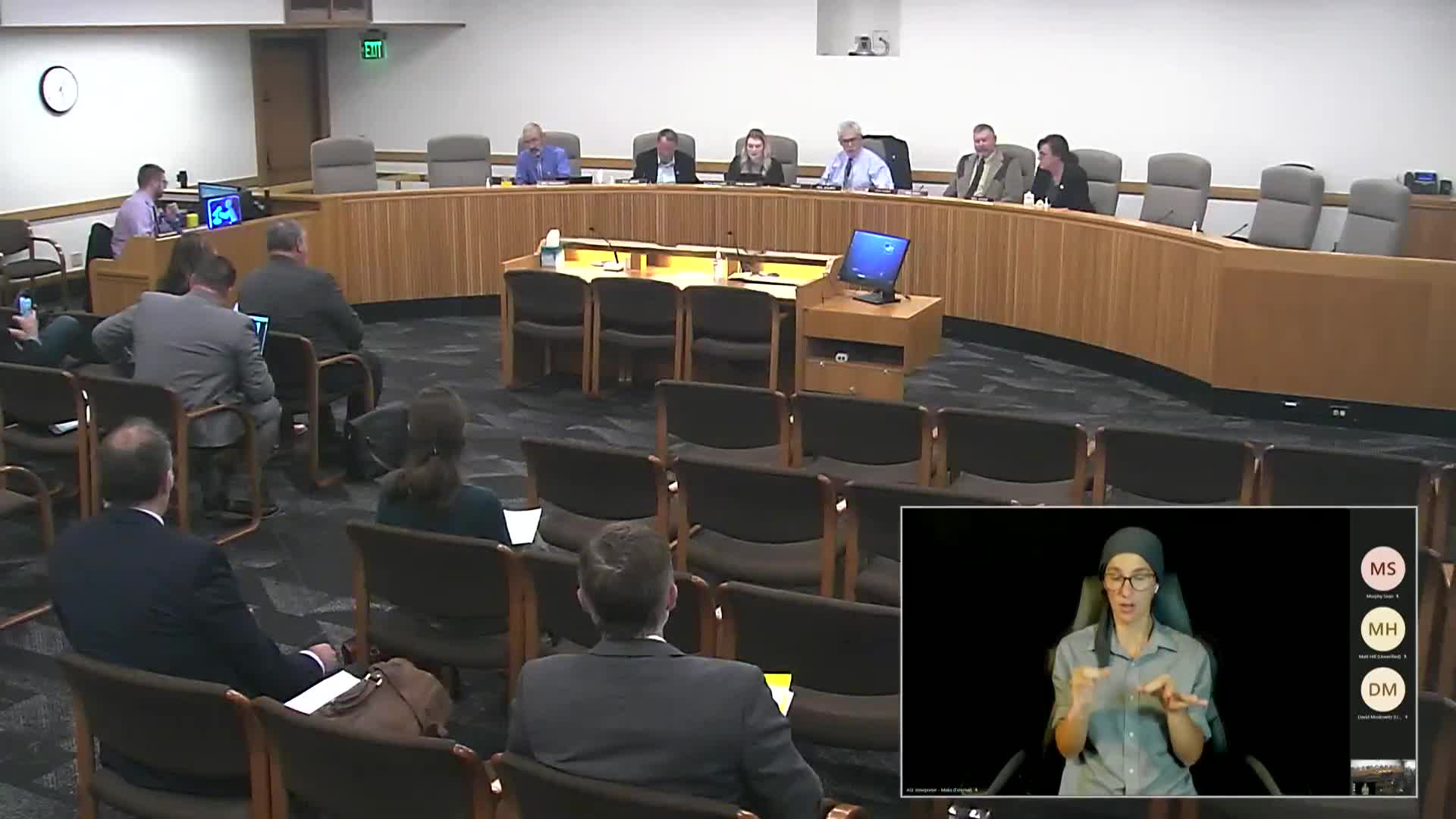
Senate Committee on Natural Resources and Wildfire Chair Senator Golden on Thursday moved Senate Bill 512 as amended out of committee after the panel adopted a dash-2 amendment that reduced an appropriation and directed a study of hatchery release practices at the Rock Creek Hatchery.
Senate Committee on Natural Resources and Wildfire Chair Senator Golden on Thursday moved Senate Bill 512 as amended out of committee after the panel adopted a dash-2 amendment that reduced an appropriation and directed a study of hatchery release practices at the Rock Creek Hatchery.
The bill as amended appropriates $1,400,000 from the General Fund to the Oregon Department of Fish and Wildlife (ODFW) and directs ODFW to study the effects of water temperature and predation by nonnative fish on hatchery releases of coho, winter steelhead and Chinook salmon from the Rock Creek Hatchery; identify alternative release strategies to reduce predation; and assess how rearing practices affect the ability of spring Chinook salmon to return to Rock Creek. ODFW must submit a report to the interim committees of the Legislative Assembly related to wildlife no later than Sept. 15, 2026. The bill sunsets June 30, 2027.
Why it matters: Rock Creek Hatchery, east of Roseburg, was heavily damaged in the 2020 Archie Creek Fire and has been a focal point in debate over the balance between hatchery production and wild fish conservation in the Umpqua Basin. Proponents say targeted operations and study work can inform long-term, locally tailored solutions; opponents say rebuilding and reinvesting at Rock Creek may be a poor use of limited funds given facility resilience concerns identified in a recent statewide hatchery review.
Supporters and local officials described the bill as a targeted, operational investment rather than a capital rebuild. State Senator David Brock Smith said the hatchery is “critically important” to Southwest Oregon’s economy and culture and noted the community and tribal partnerships around the facility. State Representative Virgil Osborne described on-the-ground damage from the 2020 fire and urged the committee to support restoring fish production for anglers and tribes.
Michael Rondo, CEO of the Cow Creek Band of Umpqua Tribe of Indians, urged cooperation between the tribe and the state, saying the hatchery supports tribal cultural practices and that the tribe seeks a comanagement role. “Fish give their lives so we can survive, and we must do our part to care for them and their habitat,” Rondo said.
ODFW Deputy Director Sean Clements described the bill as part of a larger effort to stabilize hatchery infrastructure and program performance in the Southwest hatchery network. Clements said the department received roughly $17 million in insurance settlement funds after the Archie Creek Fire and has proposed concepts for rebuilding infrastructure that could include multiple facilities and a tribal-operated South Umpqua facility. He said the $1.4 million in the bill would fund operational study work — tagging, release-strategy trials and predation assessments — rather than capital construction.
Opponents and some conservation groups urged caution. David Moskowitz, a Portland-based wild fish advocate, called Rock Creek the least climate-resilient hatchery in a recent statewide assessment and argued the basin’s wild fish runs are strong; he urged the legislature to await the department’s resilience review before allocating funds. Jennifer Fairbrother, legislative and policy director at the Native Fish Society, said the department’s facilities assessment ranked Rock Creek lowest among Oregon hatcheries for climate resilience and urged the legislature to pause rebuild plans and complete complementary program analyses before committing funds.
Local nonprofit voices and hatchery partners urged passage. Matt Hill, a board member of the Umpqua Fishery Enhancement Derby, said much infrastructure at Rock Creek remains functional and that community support and past investments — including the Rock Ed building cited by witnesses — argue for continuing local hatchery operations and study work.
Committee action: The committee first voted to adopt the dash-2 amendment. Vice Chair Nash moved adoption; staff called the roll and senators present voted in favor (roll call: Senator Grotte — yes; Senator Bazalff — aye; Senator Taylor — aye; Vice Chair Nash — aye; Chair Golden — aye). The motion to adopt the amendment passed. The committee then voted to refer SB 512 as amended to the Joint Committee on Ways and Means with a “do pass” recommendation; staff roll call again recorded the measure as passing and moving to the Ways and Means committee.
Implementation details and open questions: Deputy Director Clements outlined study approaches that the amendment would enable, including stomach-content analysis of predatory fish (for example, smallmouth bass), telemetry or tagging studies of juvenile outmigration to estimate predation losses, and trials of altered release timing or locations to improve homing and survival. Clements said the insurance settlement funds are not restricted by insurers but state law (an ORS governing state use of insurance settlement funds) requires legislative approval to spend insurance proceeds for purposes other than reconstruction at the original site if amounts exceed the statutory threshold.
Next steps: With the committee’s referral, SB 512 will be considered by the Joint Committee on Ways and Means. The bill’s dash-2 amendment requires ODFW to report back by Sept. 15, 2026, and the program direction in the amendment sunsets June 30, 2027.
Votes at a glance: The committee adopted the dash-2 amendment and voted to send SB 512 as amended to the Joint Committee on Ways and Means with a “do pass” recommendation; recorded roll-call votes on both motions were unanimous among the senators present.