Get Full Government Meeting Transcripts, Videos, & Alerts Forever!
Get email alerts on the Technology Policy topic
No spam. Unsubscribe anytime.
Committee hears two bills to restrict minors’ social media access; ACLU raises privacy and First Amendment concerns
Summary
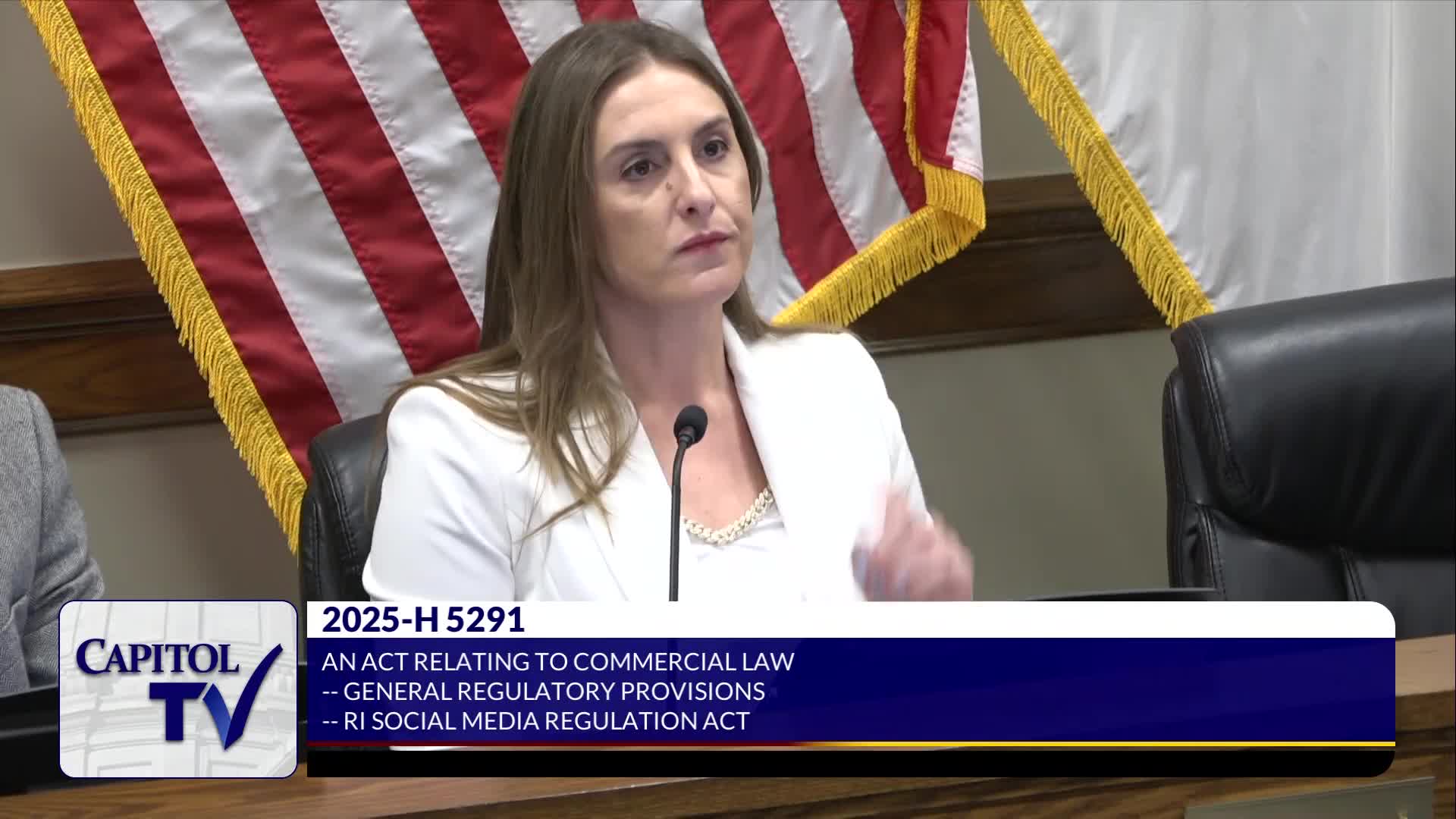
The House Committee on Innovation and Technology heard related bills seeking to restrict minors’ access to social media and voted to hold the measures for further study after testimony that included both supporting and opposing views.
The House Committee on Innovation and Technology heard two bills aimed at limiting minors’ access to social media and submitted them to further study.
Representative Spears introduced House Bill 5291, saying the measure “prohibits the use of social media platforms, until age 18,” while allowing parental consent to override the age floor and assigning oversight to the Department of Business Regulation. Spears told the committee that the substanive goals include removing direct messaging for minors, preventing broad public sharing of typical social media material by minors, and creating consumer protections tied to platform design and criminal activity prevention.
Spears cited public‑health and safety concerns in explaining the bill. “The surgeon general states, we cannot conclude that social media is sufficiently safe for children and adolescents,” she said in the hearing record, and she pointed to risks the bill aims to address, including human trafficking, drug‑related activity using social platforms, and rising incidents of sextortion and related youth suicides.
Madeline McGonigal, testifying on behalf of the ACLU of Rhode Island, opposed HB5291. She told the committee the ACLU is worried about privacy and First Amendment issues created by mandatory age verification and parental‑consent regimes. “We are apprehensive about age verification as well as requiring parental consent to join these social media platforms,” McGonigal said, noting that requiring proof of parenthood or guardianship could be burdensome and could cut off young people from social support networks available online.
A second bill on the agenda, introduced by another representative, was described by its presenter as similar to HB5291 and modeled in part on other states’ efforts, including California’s age‑appropriate design code. The presenter described the measure as aiming to reduce minors’ exposure to harmful content and addictive design practices and said the bill’s goal was to add guardrails akin to vehicle child‑safety measures applied to online platforms for youth.
Committee members asked questions about age verification, the balance between safety and free expression, and whether platforms could be relied on to implement safer defaults. The ACLU witness said the organization would provide additional information on criminal use of platforms if the committee sought it.
Before testimony began the committee moved to hold the bills (HB5291 and the related bill, HB5830) for further study to allow testimony and additional work. The motion to hold the remaining bills on the committee agenda was approved by roll call.