Get Full Government Meeting Transcripts, Videos, & Alerts Forever!
Get email alerts on the Automated Speed Enforcement topic
No spam. Unsubscribe anytime.
Woonsocket mayor, municipal leaders back bill to expand automated speed enforcement outside school zones
Summary
A bill to let municipalities use automated speed enforcement in designated safety zones beyond school zones drew support from Woonsocket Mayor and the League of Cities and Towns, with lawmakers and other witnesses asking for uniformity on fines, vendor contracts and public reporting.
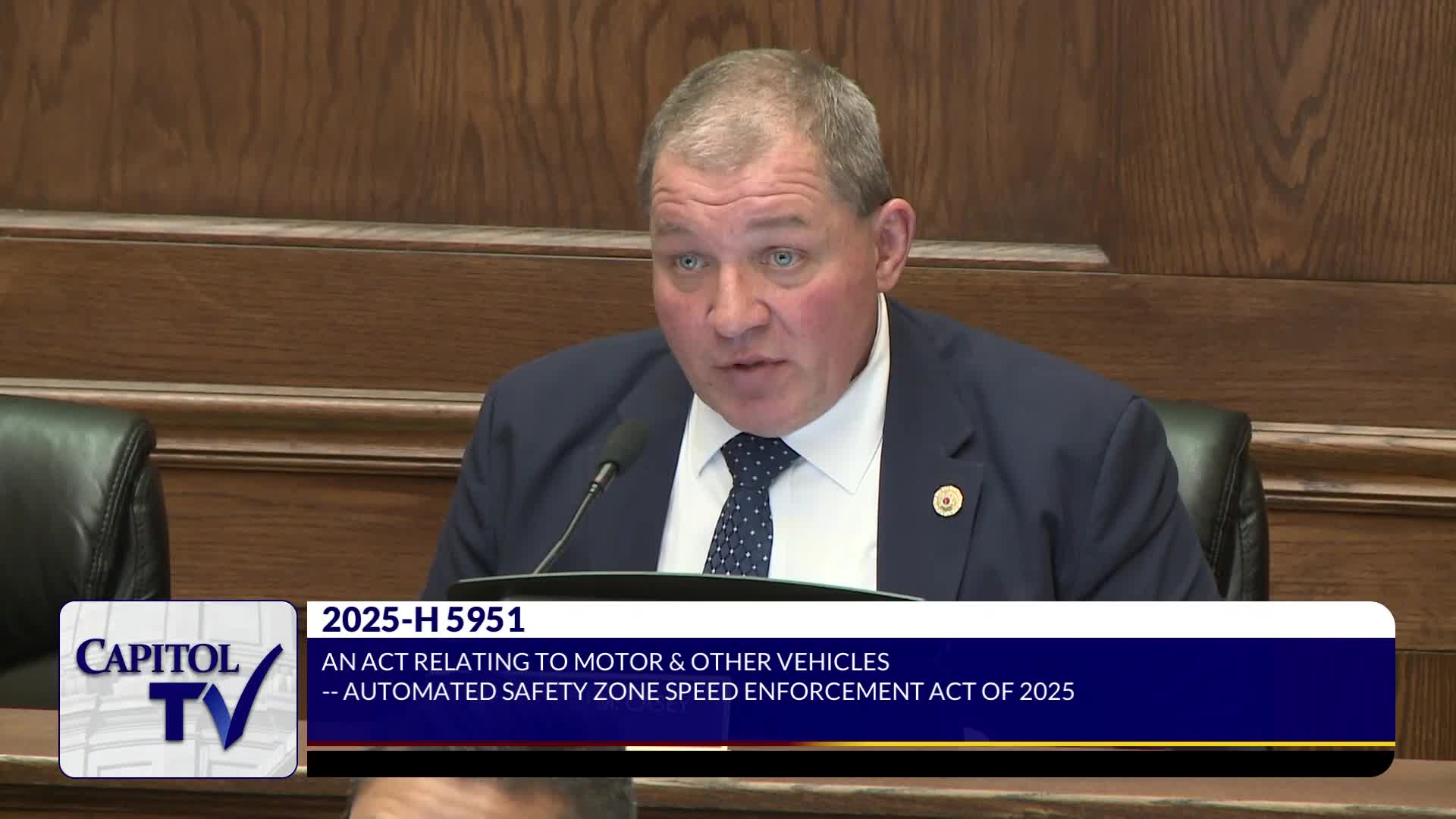
The committee on March 27 took testimony on House Bill 5951, a proposal to permit municipalities to deploy automated speed enforcement systems in designated safety zones beyond existing school-zone authority.
Why it matters: Municipal leaders and police urged the measure as a tool to address persistent speeding in areas near parks, libraries and senior centers where staffing for manual enforcement is limited. Critics raised questions about vendor contracts, revenue distribution, privacy and traffic diversion to adjacent neighborhood streets.
What the bill would do: The draft statute establishes a process for local traffic studies and chief-of-police certification to create safety zones eligible for automated enforcement, and authorizes municipal ordinances to implement systems. The draft also includes provisions aimed at improving enforcement collection and reporting.
Key testimony - Mayor Lisa Beauchamp (Woonsocket): Testified in favor, saying enforcement tools are needed to slow drivers and that the city is not pursuing enforcement as a revenue source.
- Randy Rossi (Rhode Island League of Cities and Towns): Supported the bill as a League priority, said manpower shortages limit manual enforcement in many communities and that the bill requires a public hearing and local ordinance for implementation.
Concerns and committee questions - Representatives sought clarity on how ticket revenue would be distributed between municipalities and vendors. Witnesses said amounts vary by contract; Representative Morales and others asked for uniform reporting and a public portal for transparency.
- Representative Cruz cited Pawtucket's experience with cameras and said a large share of revenue there went to vendors; members discussed diversion effects where drivers avoid arterial roads with cameras and speed on side streets.
- Committee members asked for details on timeline to payment and consequences such as license suspension; witnesses recommended drafting uniform terms and public-reporting requirements.
Next steps: Sponsors and municipal representatives said they would provide more detail on contract uniformity, revenue splits and public reporting mechanics for the committee to consider.