Get Full Government Meeting Transcripts, Videos, & Alerts Forever!
Get email alerts on the Qualified Abandonment Trails topic
No spam. Unsubscribe anytime.
Bill would let municipalities convert low-use roads to recreational trails with limited liability
Summary
A bill heard March 27 would give municipalities a third option between maintaining a road to vehicular standards or abandoning it: a "qualified abandonment" that retains access but reclassifies maintenance to recreational standards and seeks to limit municipal liability.
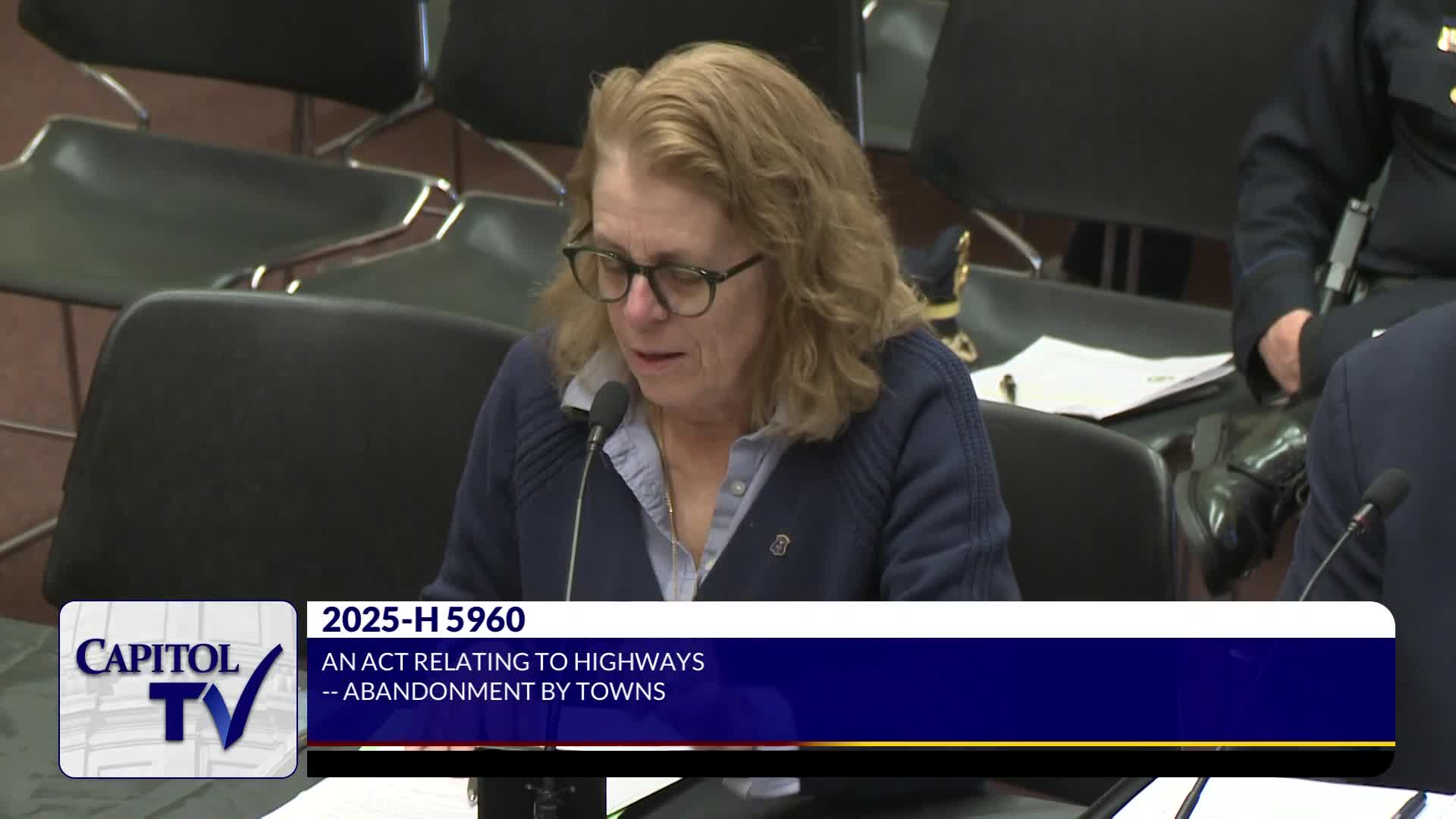
The House Committee on Municipal Government and Housing heard testimony on March 27 on House Bill 5960, which would create a "qualified abandonment" option allowing municipalities to retain an interest in low-use roads but convert them for pedestrian, bicycle and recreational access with a different maintenance standard.
Why it matters: Rising costs to maintain shoreline and erosion-prone roads, and pressures from sea-level rise and storm damage, have left some municipalities choosing between costly maintenance and full abandonment. Supporters said a third option would preserve public access while reducing maintenance burdens and limiting municipal liability when appropriate.
What the bill would do: The measure would allow a municipality, after a hearing process, to change the maintenance standard for a road from full vehicular-passable public road to a reduced standard (for example, footpath, parking area, or recreational access). Supporters said the bill is enabling rather than mandatory and could be used near eroding shorelines or inland where historic roads are no longer needed for vehicles.
Key testimony - Michael Woods (Backcountry Hunters and Anglers, New England chapter): Supported the bill as a tool to protect access, especially to shoreline areas prone to erosion, without forcing full municipal abandonment.
- Randy Rossi (Rhode Island League of Cities and Towns): Supported insertion of the recreational statute language so that converted paths would fall under recreational liability protection rather than road liability; the Interlocal Trust advised that this approach better aligns risk and insurance coverage.
Questions and clarifications: Committee members asked about the precise legal mechanics of "qualified abandonment," whether the term is a statutory term of art, and how liability would transfer. Witnesses said they would work on drafting clean statutory language and recommended aligning the change with the state's recreational liability statute.
Next steps: Sponsors and municipal counsel indicated they would refine bill text to clarify liability, the role of public hearings, and how the conversion would be recorded in municipal land records. The committee closed the hearing on HB5960.