Get Full Government Meeting Transcripts, Videos, & Alerts Forever!
Get email alerts on the Election Officials Safety topic
No spam. Unsubscribe anytime.
Bill to criminalize threats to election officials draws support and ACLU concern; S729 held
Summary
Senate Bill 729 would add election officials and poll workers to the list of public officials protected from threats and harassment. Secretary of State representatives supported the measure; the ACLU expressed concern about elevating the offense to a felony. The committee held the bill for further study.
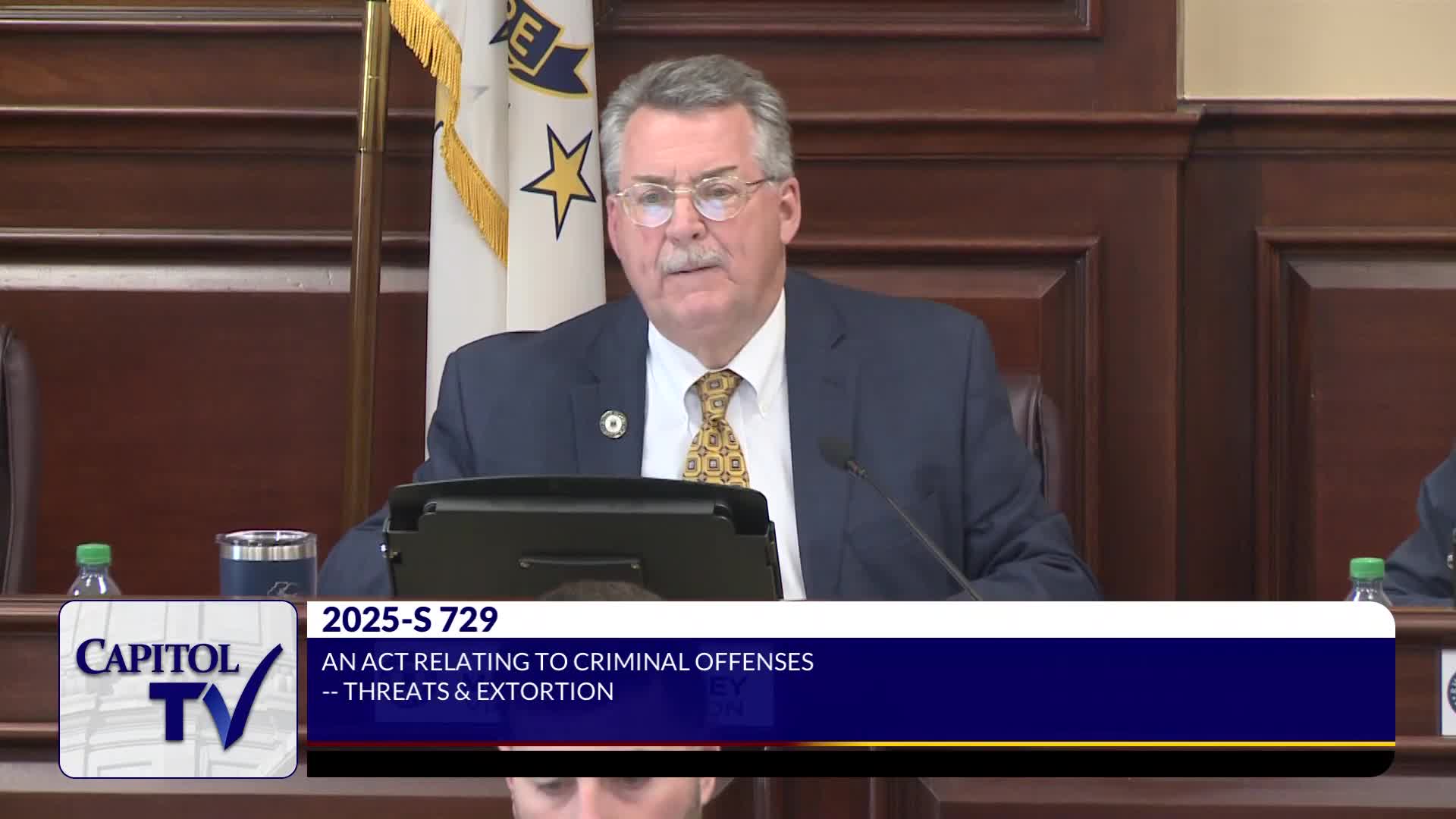
Senate Bill 729, a measure to add election officials and poll workers to Rhode Island's protected-class statute for harassment and threats, was presented to the Senate Judiciary Committee on March 27. Supporters said the measure is needed to protect election workers from escalating threats; civil-liberties advocates said they support criminalizing threats but questioned elevating the offense to a felony and urged caution about expanding felony penalties.
Senator DeCoyan introduced the bill on behalf of the Secretary of State's office, saying the measure would treat "election officials and poll workers as public officials for the purposes of the prohibition of making threats." He framed the bill as necessary to encourage civic participation and protect those who staff elections.
Rob Rock, a representative of the Secretary of State's office, told the committee the measure responds to documented threats and harassment aimed at election officials nationwide. "We just want to be able to guarantee that all of the folks who help run the elections in Rhode Island are protected from the consequences of mis- and disinformation that has led to senseless acts of violence across the country," Rock said, adding that other jurisdictions have criminalized similar conduct.
Stephen Brown of the ACLU of Rhode Island said the organization does not oppose criminalizing threats but opposed making the offense a felony. "We agree that these crimes ought to be punished, but we oppose turning it into a felony," Brown said, citing concerns about the broader trend of increasing sentences and the potential contribution to mass incarceration.
Committee members heard that other states — including Connecticut, Vermont, Maine and New Hampshire — had recently enacted similar protections and that local clerks' and towns' organizations supported the bill. Committee discussion touched on scope, penalties and how the state should balance protections for election workers with criminal-justice policy considerations.
After testimony, Senator Burke moved to hold S729 for further study; the motion was seconded and carried by voice vote. The bill was recorded as held for further study.
No amendments were adopted during the hearing; committee staff may seek additional information on penalty levels and comparable statutes before scheduling a further hearing.