Get Full Government Meeting Transcripts, Videos, & Alerts Forever!
Get email alerts on the Opeb Municipal Finance topic
No spam. Unsubscribe anytime.
Auditor General, lawmakers press municipalities on unfunded retiree health liabilities
Summary
The Auditor General and lawmakers urged action on municipal OPEB liabilities during committee hearings on bills that would require monitoring and corrective action for retiree healthcare funding.
The House Committee on Municipal Government and Housing on March 27 heard testimony from Auditor General David Bergantino and municipal officials about bills intended to increase oversight and corrective action for municipal retiree-health (OPEB) liabilities.
Why it matters: Many Rhode Island municipalities carry large, unfunded retiree-health liabilities. Witnesses said failure to address funding could leave future local governments and taxpayers to consider deep benefit cuts or emergency interventions.
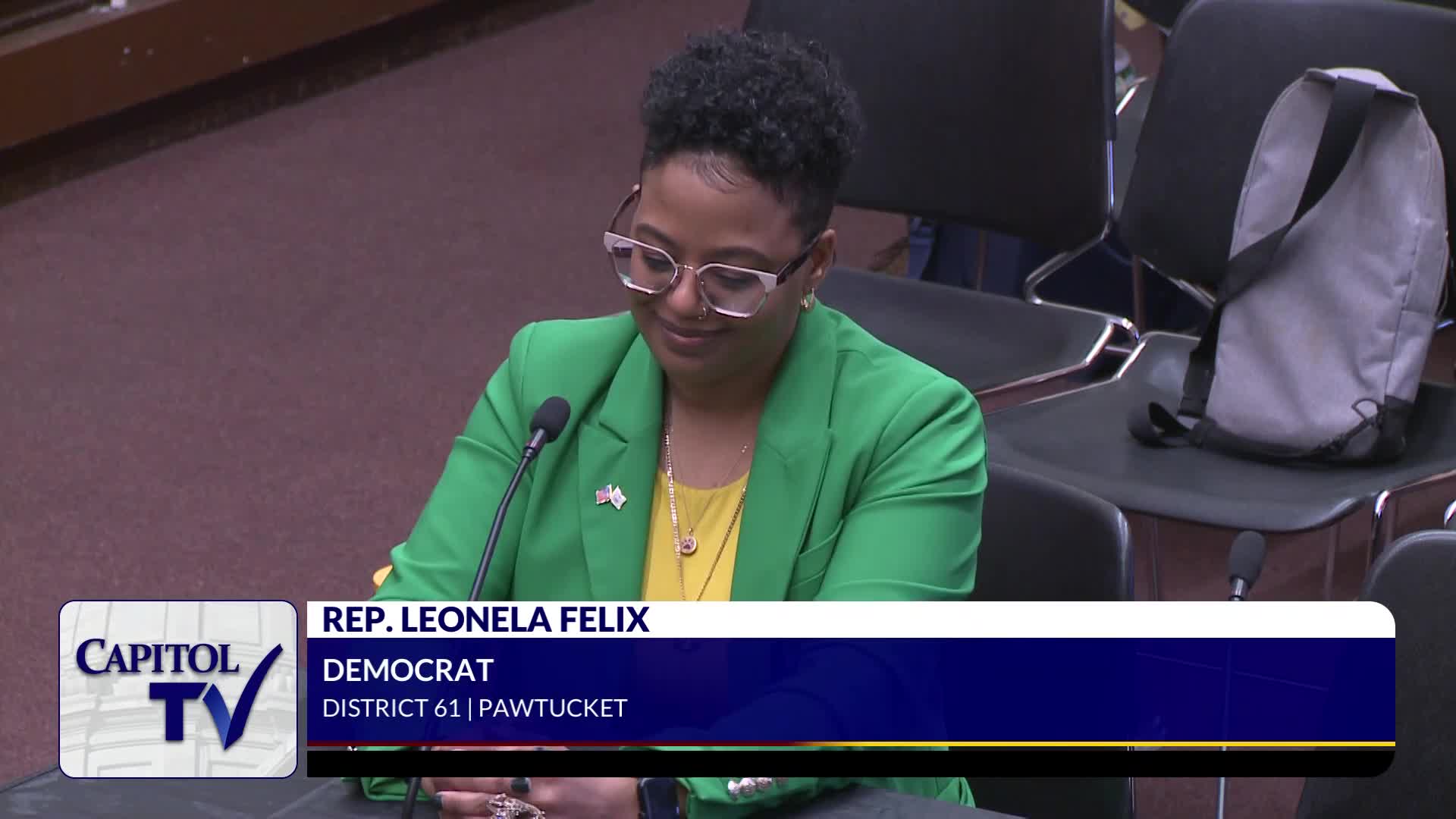
What lawmakers considered - House Bill 5947 (Representative Felix): Compliance requirements for municipal contributions to retiree-health trusts; the Auditor General described it as a light-handed statutory authority to require corrective action plans when municipalities fail to make actuarially determined contributions (ADC).
- House Bill 5962 (Representative Santucci): A similar framework that would create a questionnaire/decision tree requiring municipalities and quasi-agencies to disclose liabilities, trusts, funding levels and actuarial studies; noncompliant entities could be referred for oversight and corrective action.
Key testimony - David Bergantino, Auditor General: Presented a five-year municipal trend report and said OPEB funding lags pensions; he estimated about 13 municipalities were contributing only on a pay-as-you-go basis and advocated for statutory authority to require corrective action plans. He said his office's approach would be tailored to each municipality and that a formal penalty is not in the current drafts because many communities lack capacity to immediately meet full ADCs.
- Representative Santucci (sponsor of HB5962): Described a decision-tree approach and emphasized municipal variation; cited examples such as Smithfield (roughly $70 million liability, 15% funded) and larger unfunded totals for other municipalities and quasi-public agencies.
Fiscal and implementation points - Witnesses said a single penalty provision is impractical because some municipalities currently lack budget capacity to meet full ADCs; corrective action would be collaborative and time-phased.
- Legislators asked for clarity on definitions ("materially less than 100%"), timelines for corrective plans, and what enforcement or public reporting would look like. Bergantino said the trigger to begin corrective action would be failure to make the ADC and that the remedial steps would be designed to fit each municipality.
Next steps: Committee closed hearings on the bills and signaled continued work with the Auditor General and municipal leaders to refine triggers, reporting and implementation mechanisms.