Get Full Government Meeting Transcripts, Videos, & Alerts Forever!
Get email alerts on the Nonprofit Transparency topic
No spam. Unsubscribe anytime.
Senate committee hears concerns from nonprofits about proposed transparency rules for legislative grants; S579 held
Summary
Senate Bill 579, which would require nonprofits receiving legislative grants to disclose executive compensation and funding sources, drew opposition from multiple nonprofit witnesses who said the measure would be burdensome and might worsen staffing problems.
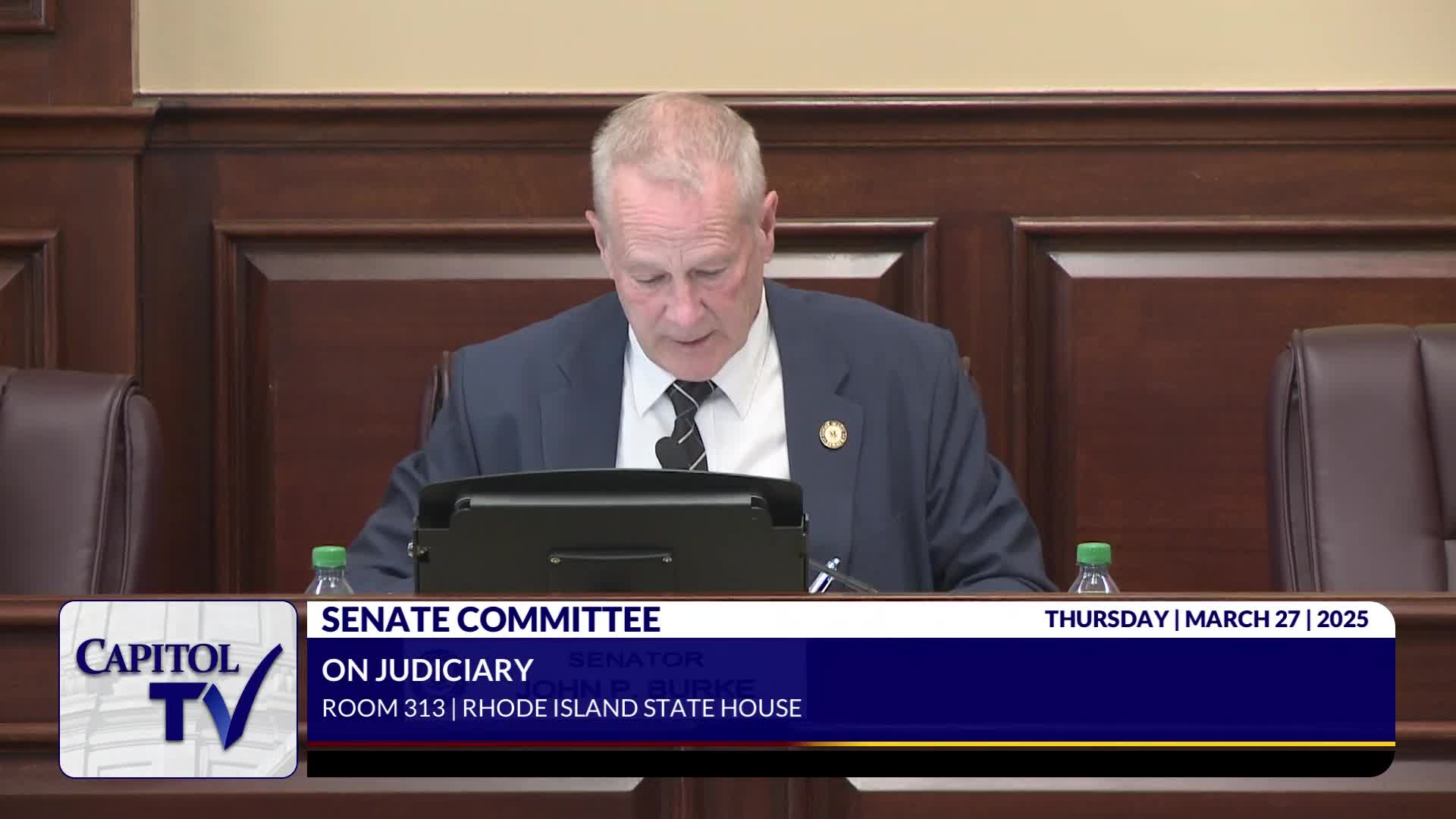
Senate Bill 579, which would add transparency requirements for nonprofits seeking state grants, was the subject of a committee hearing March 27 in the Rhode Island Senate Judiciary Committee. Supporters said the measure would increase accountability for taxpayer-funded grants; multiple nonprofit witnesses warned the bill, as written, would impose burdens on small organizations and raise privacy concerns for staff.
Senator Burke explained the bill on the committee floor, saying it "introduces new transparency requirements for nonprofits that seek state funding" and would "mandate detailed financial disclosures about executive compensation and funding sources as a condition for receiving grants from the general assembly."
Stephen Brown of the ACLU of Rhode Island testified in opposition. "This would impose an enormous burden on lots of nonprofit organizations, particularly small nonprofits," Brown said, arguing the bill could require disclosure of the salaries of many employees and that the legislative process for allocating grants is where accountability concerns lie, not the grantees. He noted existing federal disclosure rules under IRS Form 990 typically require public disclosure of only the highest-paid employees and that the bill's scope would go beyond that.
Nancy Wolinski, director of the Alliance for Nonprofit Impact at United Way of Rhode Island, also opposed the bill. She said the nonprofit sector faces substantial recruitment and retention challenges because sector salaries are low and that the state should address reimbursement and funding rates that affect service delivery. "We have an enormous impact of low salaries, impacting the ability to staff important services across the state," Wolinski told the committee, calling for attention to Medicaid reimbursement and other funding policies.
The record included written-only opposition from several groups and witnesses. No proponents offered live testimony at the hearing.
After questions from committee members about existing federal disclosures and the nature of the burden, Senator Burke moved to hold S579 for further study; the motion was seconded by Senator Oyer and carried by voice vote. The bill was recorded as held for further study, and committee members noted staff might provide additional information about compliance burdens, overlaps with current IRS reporting and alternatives to the proposed disclosures.
The committee did not adopt amendments during the hearing. Witnesses supplied written materials, including a 2024 nonprofit survey cited by Wolinski documenting hiring challenges and long vacancies in the sector.