Get Full Government Meeting Transcripts, Videos, & Alerts Forever!
Get email alerts on the Regional Fair Housing Plan topic
No spam. Unsubscribe anytime.
Regional fair‑housing plan proposes seven goals to expand affordable choice; Bowie to review before HUD submission
Summary
Hilary Chapman, housing program manager at the Metropolitan Washington Council of Governments (MWCOG), told City of Bowie officials and attendees that a multi‑jurisdictional draft regional Analysis of Impediments to Fair Housing Choice lays out seven data‑driven goals local governments will implement to address segregation and barriers to opportunity.
Hilary Chapman, housing program manager at the Metropolitan Washington Council of Governments (MWCOG), told City of Bowie officials and attendees that a multi‑jurisdictional draft regional Analysis of Impediments to Fair housing Choice lays out seven data‑driven goals local governments will implement to address segregation and barriers to opportunity.
The plan — compiled by a regional team with Lawyers' Committee for Civil Rights Under Law as lead consultant, Urban Institute on data, and Ochoa Urban Collaborative on community engagement, with technical assistance from HUD's Fair Housing and Equal Opportunity office and Enterprise Community Partners — reflects more than 2,800 survey responses and will move through local approval processes before the regional submission to HUD. "We're hoping to wrap up the review process and submit to HUD early this fall," Chapman said during the City's Fair Housing Symposium.
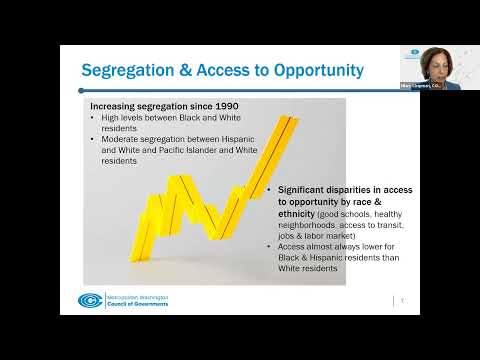
MWCOG staff said the plan responds to findings that segregation in the region has increased overall since 1990 and that disparities in access to schools, jobs and low‑poverty neighborhoods correlate with race and ethnicity. The public‑engagement results cited by presenters showed that 13% of survey respondents reported experiencing discrimination; respondents identified landlords or property owners as the primary actors in 41% of those reports. The engagement also highlighted lack of affordability and perceived government failure on compliance and enforcement as leading barriers to fair housing choice.
The draft sets seven regional goals to be adopted locally by the eight participating governments. Key elements described by Chapman include:
- Increasing production and preservation of housing affordable to households at or below 60% of area median income (AMI), including proposals to use local financing tools, low‑interest loans and incentives for accessory dwelling units (ADUs) with affordability restrictions.
- Reforming zoning and land‑use rules to expand choice, including increased incentives for inclusionary zoning, an affordable housing overlay, and incorporating fair‑housing equity analyses in major rezoning or development reviews.
- Prioritizing preservation to avoid displacement, including tracking properties with expiring subsidy contracts and prioritizing resources toward preservation projects.
- Expanding homeownership opportunities for members of protected classes through set‑asides, homebuyer education, alternative homeownership models (cooperatives, community land trusts), and measures to address appraisal bias and lending disparities.
- Strengthening outreach, education and enforcement of fair‑housing rights, including pilot programs such as right‑to‑counsel in landlord‑tenant proceedings and expanded testing and monitoring of lenders and real‑estate actors.
- Reducing barriers for persons with disabilities, including recommendations to prioritize funding for permanent supportive housing, seek project‑based voucher negotiations, and encourage publicly funded multifamily developments to include unit accessibility targets (the draft recommends benchmarks such as at least 10% of units accessible to persons with mobility disabilities and at least 4% accessible to people with hearing or visual disabilities).
- Improving access to neighborhoods of opportunity through better cross‑jurisdictional transit connections and targeted transit subsidies to lower‑income households.
Chapman emphasized the regional scale of the effort: "No one jurisdiction can end discrimination or reverse decades‑old patterns of residential segregation on its own," she said, describing the plan as coordinated regional action intended to improve local outcomes.
The draft is structured to include region‑wide goals and jurisdiction‑specific strategies; MWCOG staff said some participating localities will add additional, locally tailored goals. The project team expects to synthesize public comments, complete edits, and route the plan through the relevant legislative or administrative approval processes in each jurisdiction before final submission to HUD.
The symposium organizers also noted local Bowie programs that run alongside regional planning. City of Bowie staff said the city maintains a first‑time homebuyer down‑payment assistance program and a Community Development Block Grant (CDBG)‑funded homeowner energy‑upgrade grant that provides up to $10,000 to qualifying Bowie homeowners; eligibility limits are based on household size and income and details are posted on the city's website.
Next steps listed by MWCOG and City of Bowie staff include completing the public‑comment edits, local approvals in each participating jurisdiction, and the planned regional submission to HUD. MWCOG provided online links to the draft plan and supporting documents for review and invited follow‑up questions from local governments and residents.