Get Full Government Meeting Transcripts, Videos, & Alerts Forever!
Get email alerts on the Parks Recreation topic
No spam. Unsubscribe anytime.
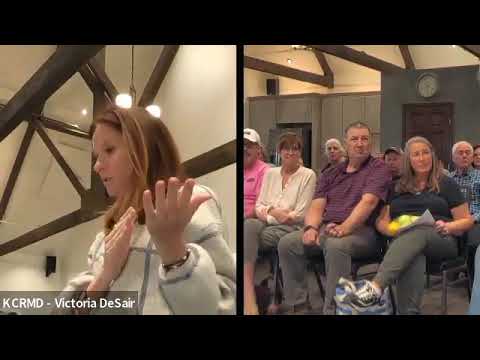
Ken-Caryl residents and board debate pickleball at Bradford Park amid noise, parking and planning concerns
Summary
The Ken-Caryl Metro District heard more than a dozen residents, players and board members on pickleball use at Bradford Park during its March meeting, as neighbors raised noise and parking concerns and players urged retention and expansion of courts.
The Ken-Caryl Metro District heard more than a dozen residents, players and board members on pickleball use at Bradford Park during its March meeting, as neighbors raised noise and parking concerns and players urged retention and expansion of courts.
The Metro District presented a timeline of actions already taken and said litigation filed last October had been dismissed. The district said it has prohibited tournaments at Bradford, contracted a security company (about $1,200 a month) to lock and unlock gates at 8 a.m. and dusk, published court rules and hours, and researched "quiet" pickleball options. Board members directed staff to work with stakeholders on short- and intermediate-term mitigation and to prioritize placing new courts in the Community Park master plan.
Why it matters: The district manages parks used by thousands of residents; Bradford Park is a small, 2.7-acre neighborhood park with limited parking. Players and neighbors said the current arrangement is producing friction: players say Bradford is the community's only practical public site for pickleball and fosters social ties; neighbors say the sport's distinct, repetitive sound and increased traffic have harmed their ability to use and enjoy adjacent private yards.
Players described the courts as a community hub. "What we became was friends and a community together," said Jennifer Thompson, a player who started a group that now draws multigenerational participants. Supporters urged data-driven steps before changes. "If we're gonna make a decision, let's base it in some data," Thompson said, proposing sound and parking studies.
Neighbors described repeated daytime and evening disruption tied to the courts' proximity to red-rock outcroppings that amplify sound. "It's almost like water torture where it just is that continual pop, pop, pop sound," said Melinda Brubaker, a resident. Several neighbors said noise measurements taken by Jefferson County/other agencies exceeded standard county thresholds and cited open-space rules prohibiting "unreasonably loud noises."
Multiple residents and players told the board that Bradford has about 16 parking spaces (the district counted roughly 16 plus a handicap space), and players said conversion of two tennis courts to four pickleball courts increases turnover and parking demand. Volunteer patrols and residents said overflow parking has blocked emergency access and prompted the master association to restrict parking on Kildeer Lane.
District staff recapped prior and ongoing steps: in fall 2024 the district (1) established an internal policy banning tournaments at Bradford; (2) posted rules including hours and reservation procedures on the district website and on-site; (3) contracted gate security to enforce hours; and (4) met with players about quiet-ball technology. The district said the litigation related to Bradford courts was dismissed and that staff will continue outreach.
Board members and staff discussed longer-term options already in planning documents: a Community Park master plan includes a pickleball component. The board said the Community Park location is farther from homes and can be designed with sound-mitigating fencing; staff said the initial Community Park design included a four-court complex and that building new, larger courts could take roughly 14 months in a best-case timeline.
Directives and next steps: Board members asked staff to convene a small working group of players, neighbors and staff to develop short- and intermediate-term mitigation concepts (for example, testing quieter balls, targeted sound measures, enforcement of posted hours and reservation rules) and to return with options and cost estimates. Several board members also urged staff to study accelerating funding and construction of the Community Park pickleball project.
What was not decided: The board did not approve any change that would close or remove the Bradford courts; it did not order a specific mitigation technology or adoption of a mandatory quiet-ball requirement. Several residents asked for formal, third-party sound and parking studies; the board asked staff to investigate evidence-based sound-reduction options and report back.
Public comments and community tone: The meeting included strongly held, often emotional testimony on both sides. Players emphasized social benefits and community-building; neighbors emphasized quality-of-life impacts, alleged violations of existing open-space noise rules, property-value concerns and safety risks from overflow parking. Many speakers urged the district to seek a solution that preserves access to recreation while reducing impacts on adjacent homeowners.
District comment and closing: Chad Minor, the district's newly seated district manager, said the district intends to be "solution oriented" and to continue dialogue. The board asked that interested residents and players contact staff (mdboard@kcranch.org) to join a working group and asked staff to return with mitigation options and a plan to accelerate the Community Park courts if feasible.
Ending: The board concluded the item by asking staff to prioritize short- and intermediate-term mitigation while advancing design and funding work for new courts farther from houses. No new rules or closures were adopted at the meeting.