Get Full Government Meeting Transcripts, Videos, & Alerts Forever!
Get email alerts on the Inspirato Lid topic
No spam. Unsubscribe anytime.
Inspirato developers propose LID to speed infrastructure; council asks for details and safeguards
Summary
Developers of the Inspirato project presented a proposal to form a local improvement district (LID) to finance bridges, traffic signals and utility upsizing; developers said they would structure the LID to avoid increasing residential tax bills, and council requested detailed financial and legal documentation before any action.
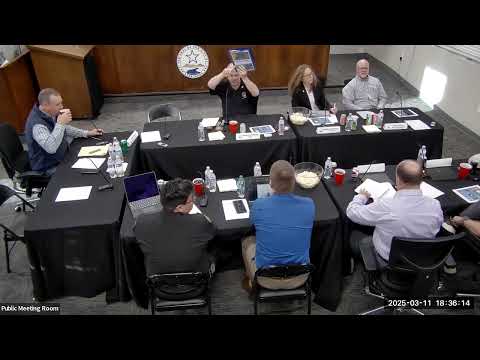
Developers of the Inspirato project presented a preliminary plan at the March 11 Star City Council workshop to form a local improvement district (LID) to finance major on-site and near-site infrastructure, and council members asked for more detail before committing to any action.
Tony, developer for Inspirato, told the council the proposed LID would help fund public infrastructure that includes bridges, traffic signals, an extension of Inspirato Drive, a water campus (well/booster/tank) and upsized wet and dry utilities that the commercial portion of the project will require. Taylor, a developer representative, explained the financing mechanics: the LID would allow bonds to be sold using the development land as collateral to obtain lower-cost, longer-term borrowing than typical construction loans. "LID stands for local improvement district," Taylor said in his opening description.
Developers said the LID would be limited to the Inspirato project area and that they would structure the financing to avoid increasing residential property taxes across the city. "We would agree and guarantee that there is no increase to residential tax bills across the board," Taylor said. He described typical market financing spreads and said bond-market financing for an LID is currently expected to be cheaper than construction debt (the presentation referenced roughly 7'8% bond yields versus about 12% construction financing as a comparative example).
Council members and staff pressed for clarifications. Questions and concerns included:
- Who ultimately pays and when. Developers said their plan is to bear the LID obligation on land they own and to use lot-sale proceeds or other receipts to retire liens; developers also said they would write in mechanisms to require payoff of the lien when a lot is sold to a builder so that individual homebuyers would not carry the lien over.
- Risk if markets decline. Council members asked what would happen in a major downturn or if lot sales stalled. Developers acknowledged the bondholder could seek recovery against the collateral land if levy receipts or lot-sale proceeds were insufficient.
- Geographic scope and participants. Council members asked whether residential lots should be included in the LID or whether it should be limited to the commercial parcels to reduce the perceived risk; developers said they could structure the district either way but argued including residential increases borrowing capacity and allows more of the needed infrastructure to be funded sooner.
- Timing and traffic impacts. Council members were concerned accelerating commercial development could increase traffic on Star Road before Highway 16 and other regional capacity improvements are complete. Developers said commercial build-out was likely several years out even if the LID were approved, and that the LID is a tool to speed infrastructure delivery if residential lot sales or other funding sources were insufficient.
Developers described other features of the proposed financing: bonds backed by the project would likely be sold to institutional investors; typical LID terms referenced in the presentation included a 30-year obligation with the expectation that developers would retire liens on lot sale; the developers said city administrative costs would be minimal and would be reimbursed within the LID financing. They also noted other jurisdictions (example given: Eagle'Val Nova CID) use mechanisms that require liens to be satisfied on sale.
Council members did not vote. Instead the workshop closed the presentation with requests that developers provide a formal, detailed package that shows mechanics, timing, safeguards, and third-party analyses of tax administration and title implications. One council member said she favored excluding residential lots from the district unless firm contractual protections were documented in the development agreement; another asked the developers to show third-party legal and title mechanics that demonstrate how a lien would be satisfied at lot sale.
Developers said they will return with a formal application and more detailed financial and legal documentation if the council wants to proceed. No LID was formed at the workshop and no city financial obligation or policy change was adopted.
Background items discussed during the presentation included the Inspirato project phasing (phases 1'4, with phase 1 completed and subsequent phases under construction or in planning), the presence of major infrastructure needs (two required traffic signals cited as roughly $1 million each in the presentation), and state and regional roadway projects (Highway 16 interchange work discussed with an expected completion in 2026'7 timeframe). Developers said the project team has been coordinating with Idaho Transportation Department, ACHD and local utility districts on infrastructure design and timing.
The council asked staff to work with developers to identify the information the city will need if a formal LID proposal is submitted, including title and lien mechanics, third-party financial analysis, and a clear scope of city administrative costs.