Get Full Government Meeting Transcripts, Videos, & Alerts Forever!
Get email alerts on the Election Security topic
No spam. Unsubscribe anytime.
House approves ban on deceptive AI audio/video targeted at elections; 90-day window and disclosure rules draw debate
Summary
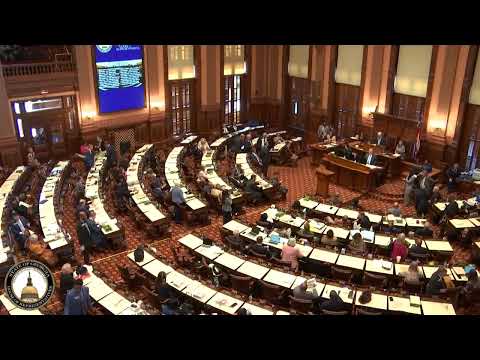
The Georgia House on Thursday passed Senate Bill 9, criminalizing knowingly distributed AI-generated or materially altered audio or visual media intended to deceive voters within 90 days of an election, 152–12.
The Georgia House on Thursday passed Senate Bill 9, a measure that makes it a crime to create and distribute materially deceptive AI-generated or altered audio or visual media intended to influence an election within 90 days of voting.
Supporters said the bill protects voters from realistic deepfakes and last-minute manipulations. "If no one can believe what they see, whose First Amendment rights have been taken away?" Representative Brad Thomas, who presented the bill, said on the floor. The measure passed 152–12.
The bill targets audio and visual files, not text, and requires prosecutors to prove a high bar: the defendant knowingly uploaded and disseminated media that (1) depicts real persons in speech or conduct that did not occur, (2) appears authentic to a reasonable observer, and (3) was distributed with the intent to deceive within 90 days of an election. Under the adopted language, a first offense is a misdemeanor; a second offense becomes a felony. The bill explicitly exempts satire and parody and allows the use of AI if a clear disclosure label states the content is AI-generated. Minor image edits and routine image-enhancement that do not change an observer's understanding are also excluded.
Opponents warned that the measure risked chilling speech and criticized the 90-day timeframe. Representative Charlice Byrd said the bill was "an attack on our rights," calling it a potential tool for censorship. Other opponents questioned who would determine whether content was "deceptive." Supporters, including Representatives Tran, Sanchez and Beckles, said the bill is narrowly tailored to prevent election interference and preserves parody and legitimate uses of AI.
The House adopted a rules committee substitute prior to final passage. Debate on the floor included multiple members pressing for clarification about minor edits, disclaimers, whether text-based AI is covered (it is not), and the technical scope (visual and audio only). Several proponents noted related laws in other states and said the measure had been drafted to withstand First Amendment review.
The bill instructs that labeled AI content is not deceptive for purposes of the statute. It also sets the 90-day pre-election window as the period when the prohibitions apply. Sponsors said that timeframe focuses enforcement on last-minute election interference while limiting constitutional risk.
The measure now goes to the governor.