Get Full Government Meeting Transcripts, Videos, & Alerts Forever!
Get email alerts on the Natcast Nstc Funding topic
No spam. Unsubscribe anytime.
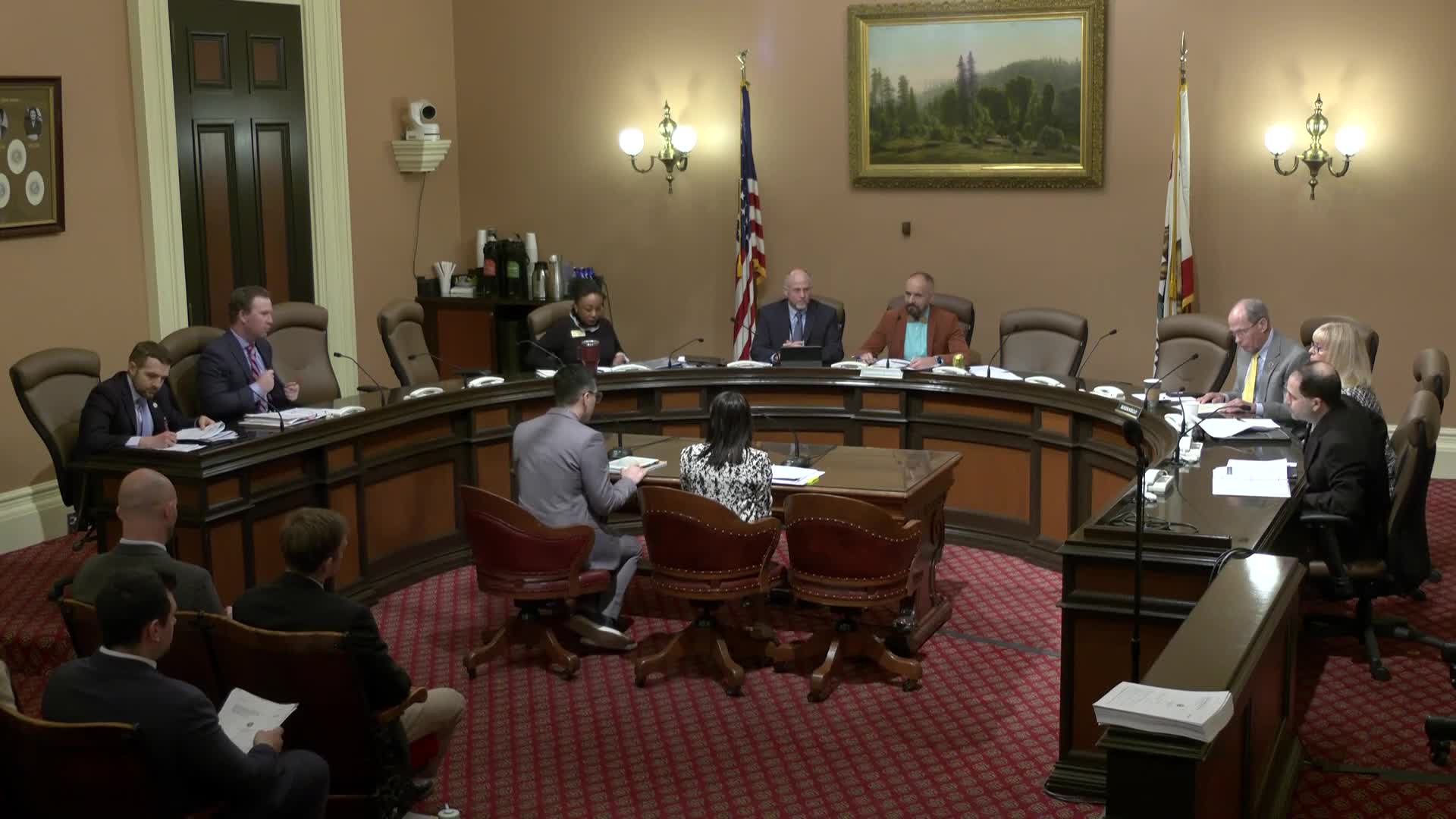
Panel splits over $25 million state incentive for NatCast design facility; LAO urges caution over federal reliance
Summary
The administration asked the committee for $25 million to support NatCast's design and collaboration facility for the National Semiconductor Technology Center in the Bay Area; LAO raised concerns about federal funding reliance and proposed alternatives that tie state reimbursements to capital spending thresholds.
The committee considered a governor's proposal to provide $25 million in state reimbursement authority to the nonprofit NatCast to support construction of a design and collaboration facility affiliated with the National Semiconductor Technology Center.
Derek Kirk of GoBiz said the allocation would help California win federal research and development dollars and support the semiconductor and microelectronics sector. Department of Finance testimony said the investment could help draw down federal funding and estimated the facility could drive roughly $1 billion in research funding and create more than 200 direct jobs over the next decade.
The Legislative Analyst's Office urged the committee to reject the proposal or to restructure it so that reimbursements more strongly incentivize actual capital expenditures on the facility rather than resembling a lump‑sum transfer. LAO analyst Seth Kirstein cited uncertainty in federal funding and said the state's precarious budget made the bar for noncore general fund spending high.
GoBiz and NatCast representatives — including Miriam Cope, vice president of government affairs, and Vivek Prasad, who described industry needs — defended the request. They argued the $25 million would be an important factor in NatCast's decision to locate the facility in California rather than states reportedly offering far larger incentives, and that NatCast as a federally created nonprofit is not eligible for other California incentives like tax credits or sales tax exemptions.
Committee members did not approve the allocation at the hearing and asked for additional structuring options that would link reimbursement to capital spending thresholds; the administration signaled willingness to work with LAO on alternative structures and the item was held open.